
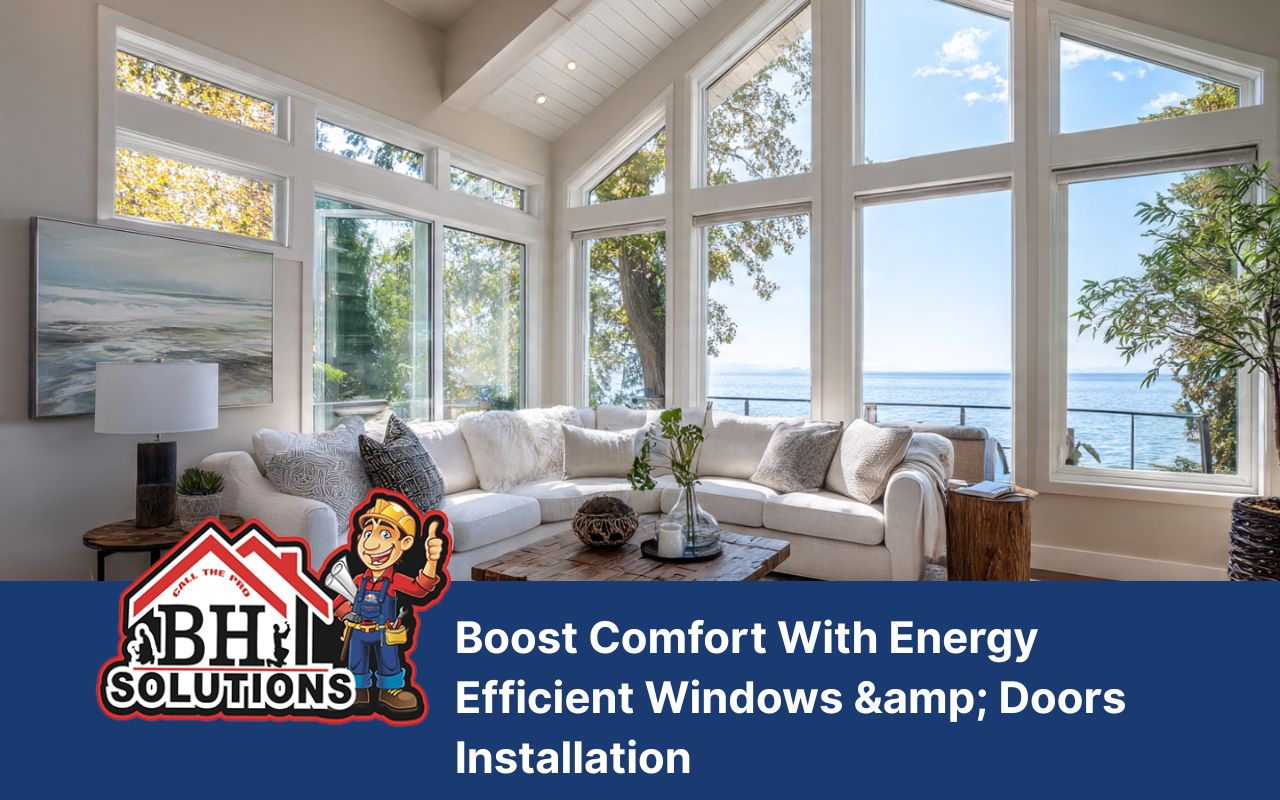
Energy Efficient Windows & Doors can make your home feel calmer, warmer, and more stable. With smart choices and careful fitting, cold drafts fade fast.
In addition, details like Low-E glass, Air sealing, and clear U-factor labels help cut energy waste. As a result, you get better comfort, less noise, and a path to Rebates.
Why Efficient Windows and Doors Matter
With Energy Efficient Windows & Doors, indoor air stays where you want it. Therefore, your HVAC works less and lasts longer.
Moreover, tight frames reduce moisture and help limit mold. So, your home feels healthier and easier to maintain.
- Fewer drafts in winter
- Less heat gain in summer
- Cleaner indoor air
Better Insulation, Steadier Temperatures
Good insulation and well-fitted units work as a team. As a result, rooms feel more even from wall to wall.
Meanwhile, lower heating and cooling demand can reduce monthly bills. Consequently, your home uses less energy overall.
Quieter Rooms With Better Seals
Noise can ruin comfort, even when temperatures feel fine. Fortunately, Energy Efficient Windows & Doors often use thicker panes and tighter seals.
In turn, bedrooms and offices feel calmer. Also, strong sealing supports both quiet and insulation at once.
Rebates That Can Lower Your Upgrade Cost
Rebates can reduce upfront costs for efficiency upgrades. However, rules vary by area and program.
So, check requirements early, especially for performance ratings and documented work.
- Ask your utility provider about current offers
- Review state and local energy programs
- Confirm required ratings and paperwork
U-factor Made Simple
U-factor shows how well a unit slows heat transfer. In general, a lower number means better insulation.
Therefore, comparing labels becomes easier. Also, pairing U-factor with your climate needs improves comfort year-round.
Air Sealing Steps That Stop Drafts
Air sealing closes gaps that leak air and waste energy. First, inspect the opening and repair weak framing.
Next, use flashing and the right sealants. As a result, you reduce cold spots and moisture risks.
- Use flashing tape for a continuous barrier
- Apply low-expansion foam carefully
- Finish with durable exterior caulk
Low-E glass That Keeps Light, Not Heat
Low-E glass reflects infrared heat while keeping rooms bright. So, you can stay comfortable without losing natural light.
In addition, it can reduce UV impact on fabrics. Consequently, furniture and floors may fade less over time.
Installation Best Practices That Protect Performance
Installation best practices are the difference between “good” and “great” results. With Energy Efficient Windows & Doors, a level opening and careful fastening matter.
Also, correct water management protects walls and insulation. If you want a wider scope of help, you can explore our home improvement services through this full services overview.
- Confirm openings are square and level
- Use a continuous flashing system
- Seal gaps with foam, backer rod, and caulk
Frequently Asked Questions
What should I check first before replacing windows and doors?
Start with drafts, visible gaps, and uneven room temperatures. Then, review labels and confirm the opening is sound.
How do I know if a product is a good fit for my climate?
Compare the U-factor and other performance labels. Also, match the ratings to your local heating and cooling needs.
Does sound control come from the glass or the seal?
Both matter. Thicker or layered glass helps, yet tight sealing often makes the biggest day-to-day difference.
Where can I find Rebates for energy upgrades?
Look at your utility provider first. Then, review state or local programs that list approved efficiency upgrades.
What is the most common installation mistake?
Rushed sealing is a big one. In particular, uneven frames and poor flashing can reduce comfort and durability.
Comfort, Savings, and a Clear Next Step
When you combine smart ratings, careful sealing, and solid fitting, Energy Efficient Windows & Doors deliver steady comfort and long-term value. Therefore, the upgrade can feel like a daily quality-of-life change.
If you are planning a draft-free improvement, schedule a home comfort assessment via our contact page to discuss the best path for your home.