Consider the peace you feel after a full roof check. Your home stays protected from harsh weather. A strong roof matters for comfort and structure. However, many owners delay checks until a small issue becomes a big repair.
With seasonal roof care and clear shingle damage signs to watch, a plan helps a lot. This roofing inspection checklist guides you through roof flashing inspection, roof leaks, roof deck issues, and gutter and fascia check tasks. Therefore, you can spot problems early and avoid surprise costs.
Why Regular Roof Inspections Matter
Regular checks help you catch minor damage early. As a result, you reduce the risk of sudden leaks during storms. Also, you can track changes over time and plan repairs with fewer surprises.
- Find early wear before it spreads
- Reduce the chance of roof leaks during heavy rain
- Support warranty needs with clear upkeep records
- Improve comfort and energy use through better roof health
Also, plan checks after big seasonal shifts. For example, look for winter wear in early spring. Then, clear debris before fall rains arrive.
Build Your Roofing Inspection Checklist
Use a clear roofing inspection checklist so nothing gets missed. First, list the roof surface, seals, airflow parts, gutters, and the attic. Then, review the same list each season, so you can compare results over time.
- Roof surface review for missing pieces
- Roof flashing inspection around vents and chimneys
- Airflow check for blocked vents
- Gutter and fascia check for clogs and rot
- Attic moisture check for stains and damp insulation
Also, adjust the list by roof type. For instance, wood roofing maintenance may include checking for split pieces or bugs. Meanwhile, tile roofs need crack checks and reset tiles.
Check the Outside Roof Surface
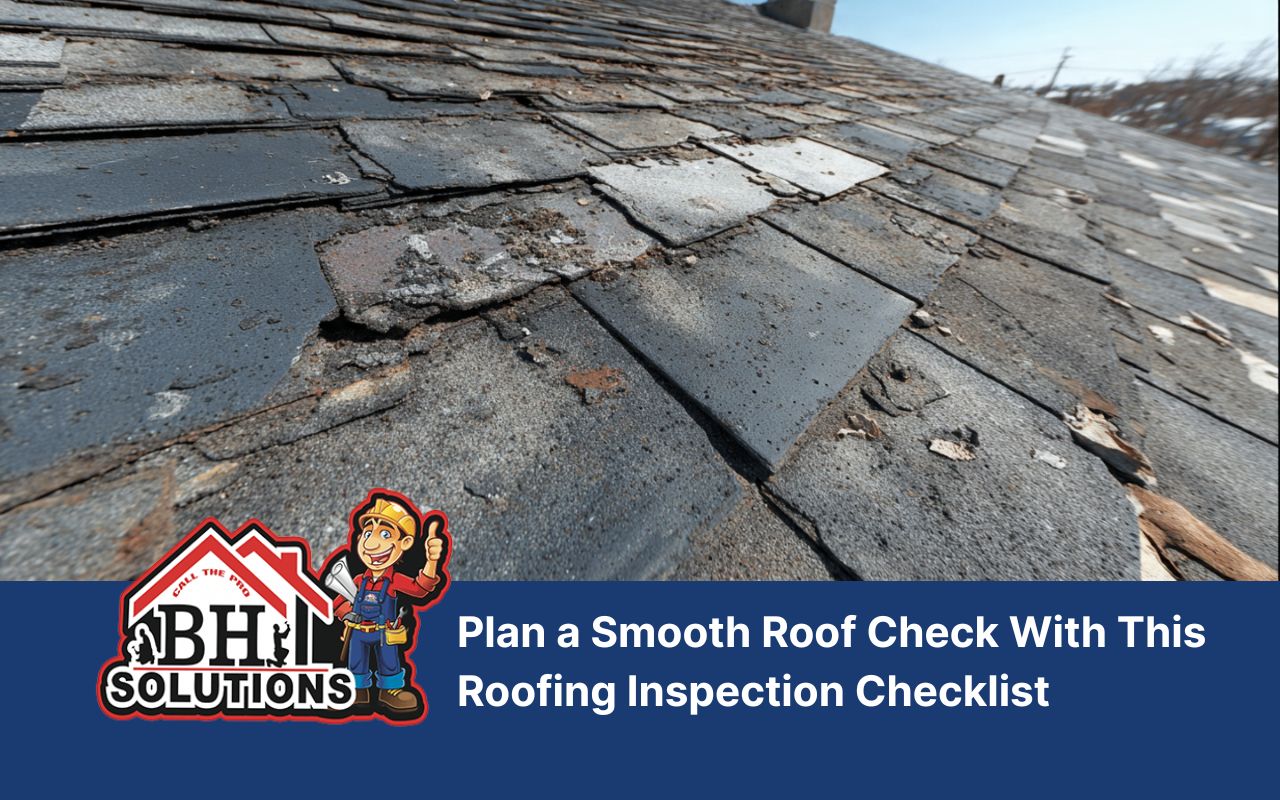
Start outside because it shows common issues fast. Use binoculars or a camera tool, so you can stay safe. Then, look for shingle damage signs like curling edges, missing tabs, or granule loss.
- Missing or lifted shingles
- Curled edges and uneven lines
- Granules collecting near downspouts
- Low spots where water may sit
Also, watch for sagging areas. Those can point to roof deck issues below. Therefore, early action can prevent bigger repairs later.
Review Flashing and Seal Areas
Next, do a roof flashing inspection around chimneys, vents, and skylights. Flashing helps steer water away from openings. However, rust, gaps, or cracked caulk can let water slip in and cause roof leaks.
Also, check where two materials meet. For example, metal edges near shingles can lift over time. Therefore, tighten loose fasteners and replace worn sealant when needed.
Check Airflow and Vent Paths
Good airflow helps control heat and damp air. As a result, it lowers the risk of mold and wood damage. So, include an attic moisture check after cold months, since warm indoor air can condense in the attic.
Also, make sure ridge, soffit, and attic vents stay clear. Then, remove nests, dust, or blocked insulation. Therefore, your roof stays cooler in summer and drier in winter.
Inspect Gutters, Fascia, and Drain Paths
Gutters protect your roof edge and walls by moving water away. However, clogged runs can push water under shingles. So, a gutter and fascia check should be part of every roofing inspection checklist.
- Remove leaves and roof grit from gutters
- Flush downspouts to confirm smooth flow
- Check joints for drips and loose sections
- Inspect fascia boards for soft wood or peeling paint
Also, consider simple guards to reduce buildup. Therefore, you spend less time cleaning between seasons.
Look Inside the Attic for Moisture and Stains
Now, check the attic because it reveals hidden problems. Use a flashlight and scan rafters and roof boards. Then, look for stains, mold, or damp smells. These clues can point to roof leaks you cannot see outside.
Also, feel insulation for damp spots. Wet insulation loses value fast. Therefore, replace damaged sections and confirm vents work well.
Spot Common Damage Early
Small clues often appear before major failure. So, use your roofing inspection checklist to track changes each season. Then, act quickly when you see new wear.
Look for shingle damage signs like cracks or missing pieces. Also, press lightly on attic roof boards to find soft areas. Soft boards can signal roof deck issues and need quick repair.
Fix Problems and Plan Next Steps
When you find issues, address them in order of risk. For example, stop roof leaks first to protect walls and wiring. Then, repair weak areas and improve drainage. Also, keep notes and photos, so each check is easier.
If you need a local crew for repairs or a full review, explore BH Solutions, LLC through this Danbury roof contractor service page. Also, if your deck edge shows rot near the roofline, review these deck rot prevention tips to support long-term protection.
For wood surfaces, keep up with wood roofing maintenance. For example, replace split shakes and treat for insects. Therefore, you reduce water entry and slow long-term decay.
Frequently Asked Questions
How often should I use a roofing inspection checklist?
In most cases, check twice per year. Also, inspect after big storms, since damage can appear quickly.
What are the easiest shingle damage signs to spot from the ground?
Look for missing shingles, curled edges, and bald patches. Also, watch for granules collecting near downspouts.
Why is roof flashing inspection so important?
Flashing seals roof openings. Therefore, small gaps can cause roof leaks and lead to hidden wood damage.
What should I include in an attic moisture check?
Look for stains, mold, damp insulation, and wet nails. Also, confirm vents are not blocked by insulation.
When should I call a pro instead of fixing it myself?
Call a pro if you see widespread leaks, sagging areas, or major roof deck issues. Also, call if the roof is steep or high.
Keep Your Roof Strong All Year
A simple routine prevents costly surprises. By following seasonal roof care and acting on early clues, you protect your home. Use your roofing inspection checklist each season, and keep notes for future checks. If you want expert help, reach out through the BH Solutions, LLC contact page.