
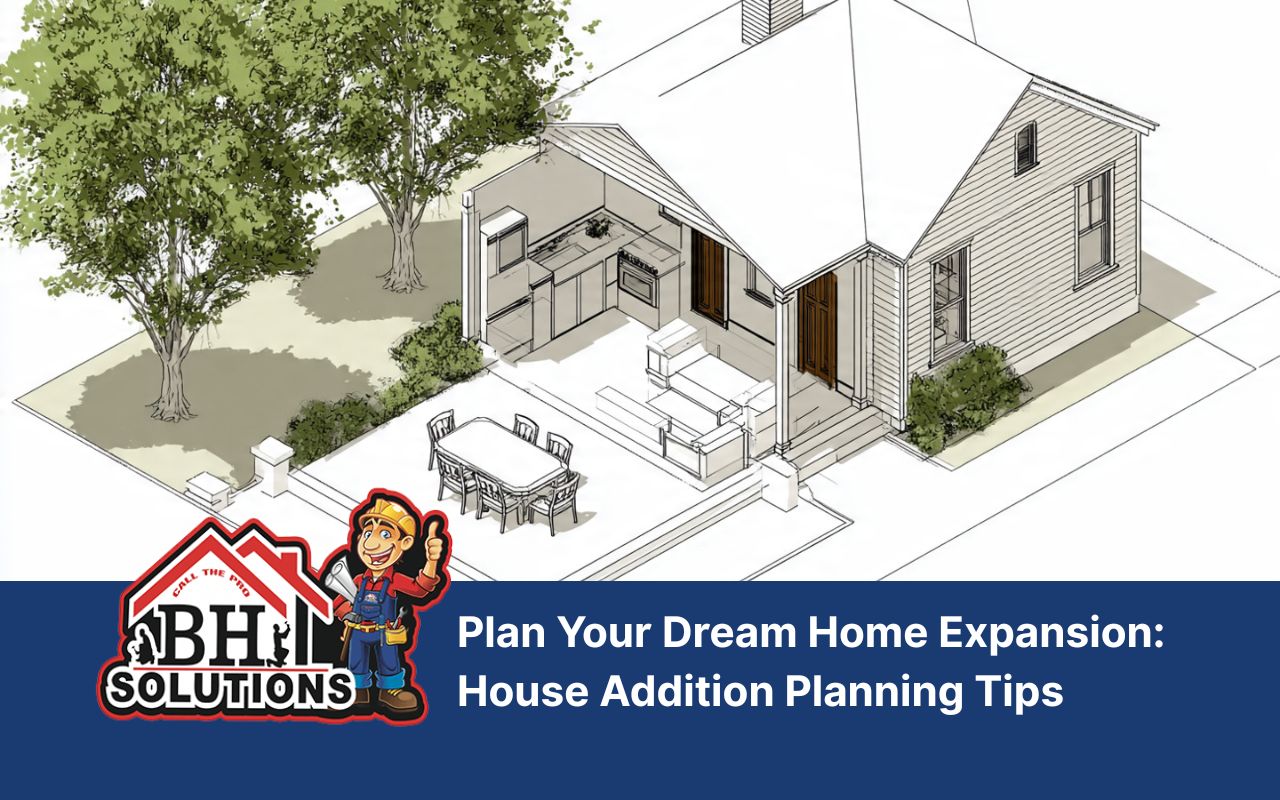
Building your dream home is exciting, and expanding your space can help you reach that goal. With House addition planning tips, you can add space without starting over. Still, the goal is not just more square footage. Instead, it is about creating rooms that match your life and daily needs.
As you plan, think about the timeline for home projects and possible utility moves. Also, focus on smart space planning for additions, so each area works well. In this guide, you will find House addition planning tips for home layout design, garage additions, bathroom upgrades, and more.
Understand Your Home’s Space Options
To use House addition planning tips well, start by reviewing your current layout. Walk through each room and notice where your home feels tight. Then, look at shared walls, support beams, and roof lines. These details show where an addition can work safely.
Next, review your lot lines, setback rules, and yard features. For example, trees, slopes, and drainage can limit where you build. Also, sunlight direction affects comfort and energy use. With this in mind, space planning for additions becomes simpler and more realistic.
- Check how rooms connect and where traffic gets stuck.
- Measure halls, doors, and key living areas for better planning.
- Review yard limits, slope, and water flow before choosing a footprint.
Set Clear Goals Before You Design
Before drawings begin, write down what you need from the addition. For instance, you might want a guest room, a home office, or an open concept transition. Also, you may need garage addition tips if parking is tight. Likewise, bathroom extension ideas help when your home needs another bath.
In addition, if you want in-law suite plans, define privacy and access early. This keeps the project focused. As a result, you avoid late changes that can slow permits and raise costs.
- List must-haves first, then add nice-to-haves.
- Decide who will use the space and how often.
- Note light, storage, and entry needs from day one.
Build a Budget That Fits Real Life
A smart budget is one of the most important House addition planning tips. First, compare local project ranges for your type of addition. Then, include design fees, permits, taxes, and site prep. Also, set a 10–15% cushion, because hidden issues can appear during demolition.
At the same time, align spending with your timeline for home projects. If you expect utility relocation tips to apply, plan extra funds and time. That way, you can make steady decisions without rushing.
- Split costs by phases: planning, structure, and finishes.
- Plan a cushion for surprises behind walls or under floors.
- Pick durable finishes that match how your family lives.
Work With a Designer for a Better Layout
Although you can collect inspiration online, a pro designer or architect turns ideas into build-ready plans. They also support better home layout design, which helps rooms feel natural. In addition, they know local rules, so permits are often smoother.
When you compare options, review similar past work and ask clear questions. For example, discuss your goals for an in-law space or a brighter kitchen area. Then, set a written scope so expectations stay clear from start to finish.
If you want a team that understands additions and detached builds in your area, explore BH Solutions’ services on home additions and detached garages in Danbury CT.
Use Space Better, Not Just Bigger
Space planning for additions can make a small build feel large. For example, built-in storage reduces clutter. Also, flexible rooms can serve two purposes. As a result, you gain comfort without wasting square footage.
Moreover, an open concept transition can improve flow between kitchen and living areas. However, keep quiet zones where privacy matters. In short, good planning helps every corner earn its place.
Blend the New Addition With the Old Home
For the best look, match exterior finishes, roof angles, and trim lines. Inside, repeat details like baseboards and door styles. Then, check floor height and ceiling lines so the change feels smooth. Consequently, the new rooms will feel like they always belonged.
Also, plan heating and wiring routes early. That way, you avoid awkward vents or visible patchwork later. These details keep your home layout design clean and comfortable.
Add Energy-Smart Choices While You Build
Because additions open up walls, it is a great time to improve comfort and efficiency. For instance, better insulation and modern windows can reduce drafts. Also, LED lighting helps lower power use. If you plan line moves, follow utility relocation tips to avoid wasted runs and extra cuts.
Furthermore, smart thermostats can help you control temperatures by zone. As a result, the new space stays comfortable without raising bills as much.
Handle Permits and Rules Early
Permits matter, so start early with your local building office. Ask about setbacks, height limits, and inspection steps. Also, include approval time in your timeline for home projects. Otherwise, delays can stack up quickly.
Working with a team that knows local steps can reduce stress. Therefore, if you are planning a broader interior update alongside your addition, review custom home renovation services to see how a coordinated plan can keep the process simpler.
Pick Materials That Hold Up Over Time
Quality finishes can protect your investment. For example, choose moisture-safe walls for baths and strong flooring for busy areas. Also, pick fixtures with solid warranties. Then, lock your finish choices early, because late swaps can slow orders and raise costs.
In addition, match colors and textures to the original home. Consequently, the space feels unified and more valuable long term.
Build, Wrap Up, and Enjoy the Results
Once permits are approved and materials are ordered, construction begins. A clear schedule keeps work moving through foundation, framing, roofing, and finishes. Also, regular check-ins help solve surprises fast, like hidden wiring or uneven framing.
Afterward, complete final inspections and tackle punch-list items. Then, add the finishing touches, like lighting placement and furniture flow. With House addition planning tips, your expansion can feel seamless and truly useful.
Frequently Asked Questions
How early should I start planning an addition?
Ideally, start months ahead. That way, design, permits, and bids fit your timeline for home projects.
What makes an addition feel “natural” in the home?
Consistent trim, matching materials, and smooth floor transitions help the new space blend with the original layout.
When do utility changes become necessary?
They are common when moving kitchens, baths, or HVAC zones. In that case, utility relocation tips help you plan time and access.
Are in-law suites better attached or separate?
It depends on privacy and lot space. In-law suite plans often work best with a private entry and clear sound separation.
How do I keep an open layout without losing privacy?
Use zones, partial dividers, and smart furniture placement. This supports an open concept transition while keeping quiet areas.
Conclusion
With clear goals, smart design, and realistic planning, your addition can feel like part of your original home. From space planning for additions to permits and materials, each step supports better results. Most importantly, House addition planning tips help you build a space that fits your life today and grows with you tomorrow.
If you are ready to discuss your next step, connect through the BH Solutions contact page.