
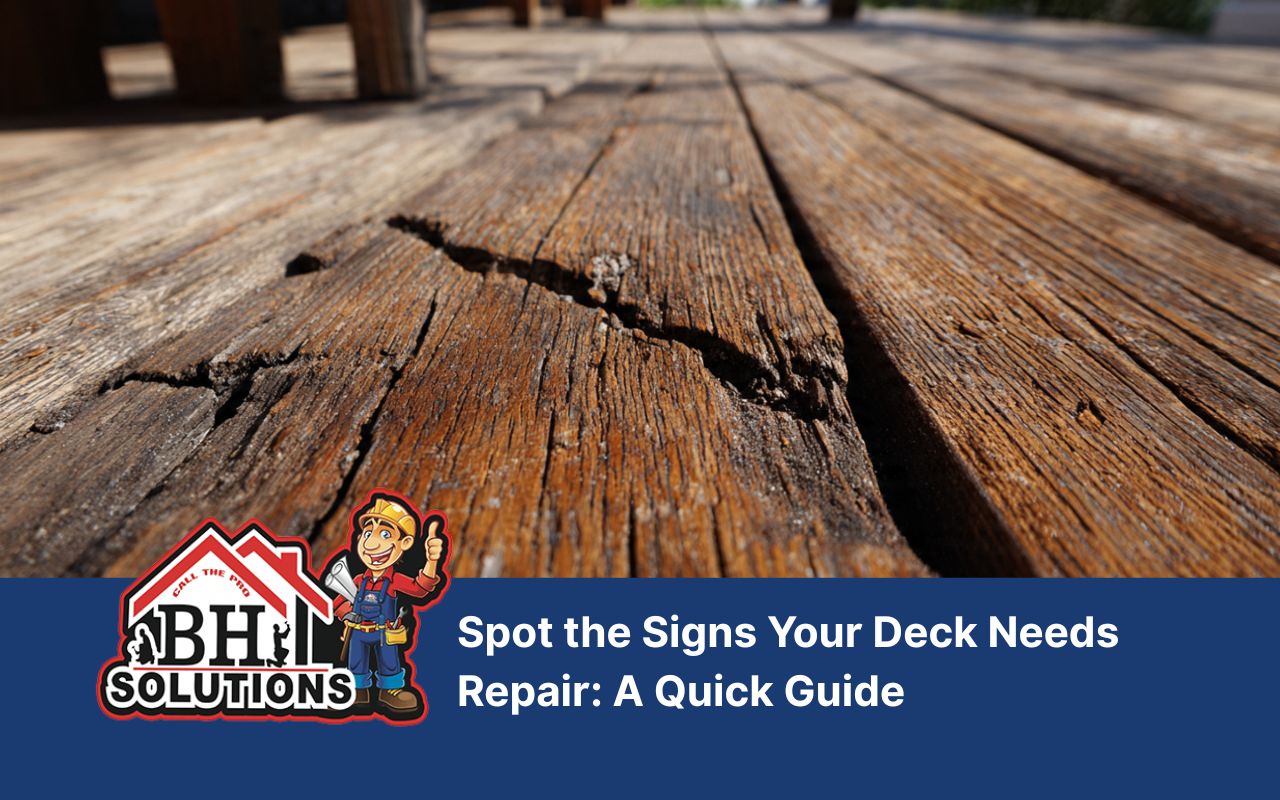
Signs your deck needs repair can appear sooner than you expect. Evaluate your deck’s condition before it becomes unsafe. Many homeowners miss early warnings, like splinters or a soft spot in the wood. However, these small issues can grow into bigger hazards. With the right knowledge, you can act early and avoid costly damage.
From rotting boards to wobbly railings, knowing what to look for matters. For example, you may see loose nails sticking up from the deck floor. Or you might feel a section that sags more than it used to. These are not small annoyances. Instead, they often point to deeper problems that need attention.
Check for Rotting or Weak Wood
Start by testing each board with a screwdriver or awl. Then, focus on soft spots in wood or areas that feel spongy. These often signal rotting boards caused by moisture or poor airflow under the deck. Also, check the underside of boards. Water can collect there and hide damage until it spreads.
- Press boards to find soft spots in wood
- Inspect undersides for hidden moisture damage
- Look for mildew presence and dark stains
- Notice splinters that suggest wood is breaking down
Next, watch for surface cracks and mildew presence. Even small cracks can let water sink deeper. As a result, rot can speed up over time. If you see splinters, look closer right away. Once wood starts to fail, splinters often multiply and create unsafe footing.
Test Support Posts for Strength
Support posts hold the deck steady, so movement here is a warning. Push each post gently from different angles. If it shifts, you may have loose connections or soil loss around the base. Over time, this can lead to sinking or leaning, which raises safety risks.
- Push posts to check for wobble or tilt
- Inspect the base for rot and mildew presence
- Check for vertical cracks that may expand
Even treated wood can decay if water pools near the footing. Therefore, look closely at ground contact areas. Fixing problems early with brackets, adjusted footings, or replacement sections can prevent major rebuild work later.
Walk the Surface and Look for Damage
Walk slowly and scan for surface cracks, worn stain, or peeling paint. These exposed areas invite water in, so decay can happen faster. If wood flakes or splinters underfoot, sanding and resealing may be needed to protect the surface again.
- Scan for surface cracks and exposed wood
- Watch for splinters that can injure feet
- Find loose nails or screws that stick up
Also, check for loose nails or screws backing out. Even one fastener can cause a trip or cut. A stiff broom can help clear debris, which makes uneven areas easier to notice. If the deck feels soft in places, test for soft spots in wood again.
Inspect Railings and Banisters for Safety
Railings help prevent falls, so stability matters. Shake each section up and down. If it moves, you may have wobbly railings caused by loose nails or worn brackets. In addition, joints often show early damage because they carry stress.
Signs your deck needs repair often appear where railings meet the deck and where posts connect to banisters. Therefore, look for small cracks, rusted hardware, or gaps. Tighten screws and replace corroded fasteners quickly to keep the grip solid.
Fix Loose or Missing Fasteners
Fasteners loosen as wood expands and shrinks with weather changes. So, check nails, screws, and brackets often. If a nail head shifts under light pressure, it likely needs tightening or replacement. Missing fasteners can leave boards loose and create tripping gaps.
For longer-lasting fixes, use corrosion-resistant screws or galvanized nails made for outdoor use. This simple upgrade improves safety and slows wear. If you want more practical repair planning, explore deck repair ideas that match common deck problems.
Watch for Pest Damage
Termites and carpenter ants can weaken wood from the inside. Look for tiny holes, frass that looks like sawdust, or tunnel marks. When soft spots in wood show up with these clues, pests may be the cause. Because hidden damage can spread, early action is important.
Use a flashlight to check cracks and corners, especially near damp areas. If you spot signs, remove damaged boards and treat nearby wood. In many cases, a pest control pro can confirm the cause and stop the spread.
Check for Sagging and Shifting
Decks can shift over time, which creates dips and uneven walking paths. Place a long level or straight board across several areas. Structural sagging often appears near the center or edges where support has weakened. As a result, the deck may feel bouncy or uneven.
Also, inspect joists underneath to ensure they are straight and firmly attached. If you see bowing, it may point to moisture damage or weak support. Fixing sagging areas can include adding support, reinforcing joists, or adjusting footings.
Frequently Asked Questions
What are the most common signs your deck needs repair?
Common warning signs include rotting boards, wobbly railings, loose nails, splinters, and structural sagging. Surface cracks and mildew presence can also signal deeper issues.
How can I tell if wood rot is serious?
If boards feel spongy, show soft spots in wood, or crumble when pressed, rot may be advanced. In that case, replacing the damaged boards is often safer than patching.
Are loose nails a real safety problem?
Yes. Loose nails can cause trips, cuts, and unstable boards. Also, they may point to shifting wood or fasteners that no longer hold properly.
Why do deck railings start to wobble?
Wobbly railings often come from loose nails, worn brackets, or wood movement over time. Moisture and rust can also weaken connections and reduce stability.
How often should I inspect my deck?
Inspect your deck at least seasonally, and after heavy rain. Consistent checks help you catch issues early and reduce the risk of bigger repairs.
Know When to Call a Pro
Small tasks like tightening screws or replacing a board can be manageable. However, severe structural sagging, widespread rotting boards, or major pest damage often needs expert help. A contractor can find hidden issues and recommend safe repairs. If you want guidance on long-term upkeep, review prolonging deck lifespan to reduce repeat damage.
If you’re ready to discuss next steps with BH Solutions, LLC, reach out through the contact page to plan a safe repair approach.
Keep Your Deck Safe for Years
Deck care takes steady attention. When you spot rotting boards, wobbly railings, loose nails, surface cracks, or splinters, take action fast. Signs your deck needs repair should never be ignored, because small problems can grow. With simple checks, regular cleaning, and timely fixes, your deck can stay sturdy and enjoyable for many seasons.