
Cold rooms, high utility bills, and drafty walls often start at the outside of the home. If you are comparing exterior upgrades, Energy Efficient Windows & Doors: Comfort & Savings can also help you understand how openings affect comfort.
What Siding Insulation Benefits Improve Home Comfort Most?
Siding insulation benefits include better temperature control, less draft movement, stronger weather protection, and improved daily comfort. Insulated siding adds a protective layer outside the home, so rooms can feel more stable during hot, cold, windy, or damp weather.
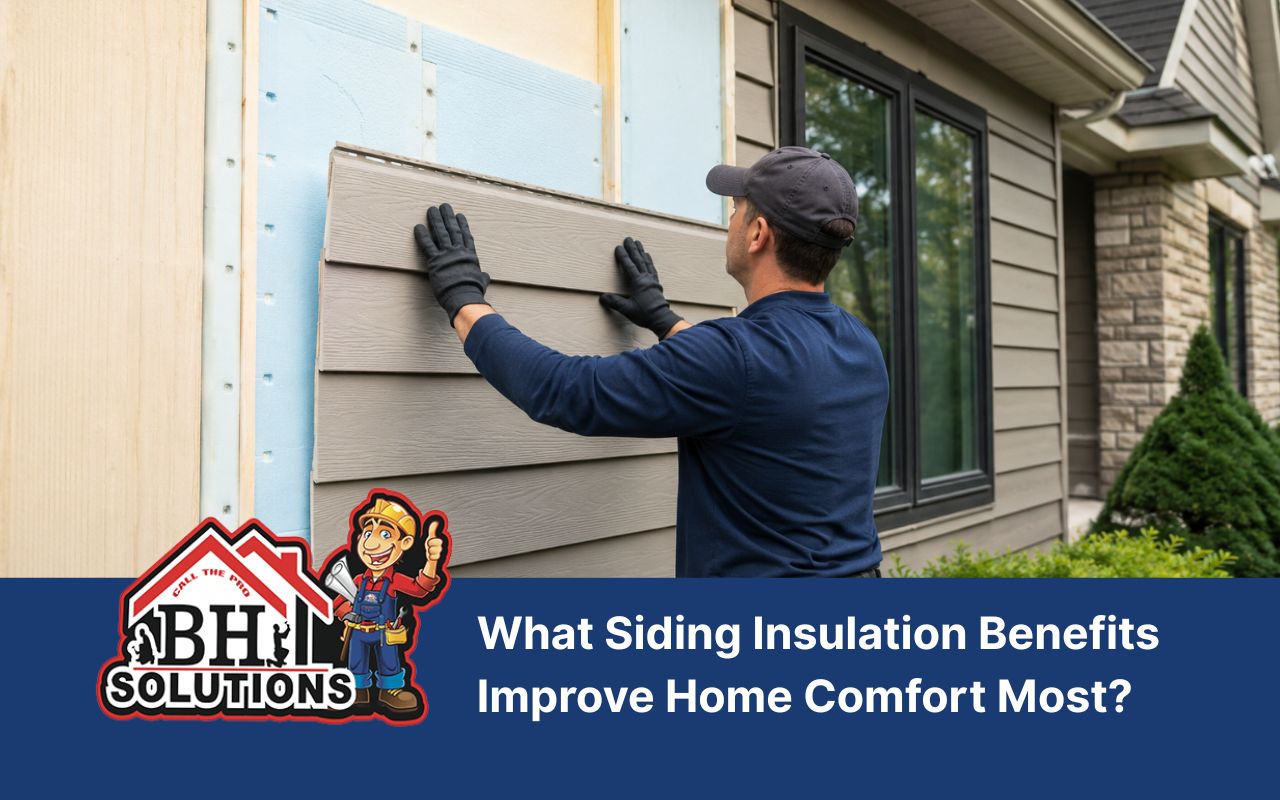
Exterior siding with insulation uses a foam-backed layer or added exterior wall insulation behind the panels. Homeowners need it when walls feel cold, rooms change temperature fast, or older siding no longer protects well. It helps reduce heat movement, air gaps, and comfort problems across the home.
Siding Insulation Benefits Create More Consistent Indoor Comfort
Comfort improves when the exterior wall system slows outdoor heat, cold, and air movement. The most useful siding insulation benefits are felt in rooms near outside walls, where drafts and temperature swings often bother homeowners first.
At BH Solutions, LLC, we look at siding condition, wall exposure, and visible gaps before explaining upgrade options. According to ENERGY STAR, sealing air leaks and adding insulation can improve comfort and energy efficiency. That matters because small exterior gaps can affect entire rooms.
- Rooms can feel steadier during cold mornings.
- Wall surfaces may feel less chilly.
- Draft reduction can make sitting areas more usable.
- Less temperature swing can support better HVAC performance.
Insulated Siding Reduces Drafts Across Older Exterior Walls
Insulated siding can reduce drafts by covering weak spots that traditional siding may leave exposed. This upgrade works best when the exterior is checked carefully before new materials are installed.
Older siding can loosen, crack, warp, or separate near windows, doors, trim, and corners. As a result, outdoor air can move through small openings. When customers contact BH Solutions, LLC, we ask about cold rooms, noisy walls, and moisture concerns before recommending the next step.
Homeowners unsure about repair or replacement can review Siding Repair vs Replacement before deciding. In many cases, damaged siding should be inspected before insulation is added, because hidden water problems need attention first.
Energy Efficient Siding Lowers Heating And Cooling Strain
Energy efficient siding supports the home by reducing heat loss in winter and heat gain in summer. It does not replace a full energy plan, but it can become an important part of a better exterior envelope.
The U.S. Department of Energy explains that insulation resists heat flow, and higher resistance can improve thermal performance when installed correctly. That is why exterior wall insulation is often discussed with air sealing, windows, doors, and siding condition.
- Winter benefit: less heat escapes through weak wall areas.
- Summer benefit: rooms may gain heat more slowly.
- System benefit: HVAC equipment may face less strain.
- Comfort benefit: occupied rooms can feel more balanced.
With BH Solutions, LLC, you get clear guidance before the work begins. We explain where siding and comfort connect, so you can choose improvements that fit the home’s needs.
Weather Resistant Siding Protects Materials During Seasonal Changes
Weather resistant siding helps protect the outer wall from wind, rain, sun, and temperature changes. When insulation is added correctly, the exterior can support comfort while also helping the siding stay more stable.
Rain and wind can expose weak seams, trim gaps, and old panels. However, siding work should not only focus on appearance. During reviews with BH Solutions, LLC, our team checks visible problem areas and explains what should be corrected before installation.
Thermal siding benefits may include a quieter home, steadier wall temperatures, and stronger resistance to everyday impacts. Still, moisture control must come before cosmetic upgrades. If walls show stains, soft areas, or swelling, those signs should be reviewed before new siding covers them.
Exterior Insulation Upgrade Guides Better Replacement Decisions For Homes
An exterior insulation upgrade makes sense when existing siding is failing, comfort problems continue, or the home needs a broader efficiency update. The best decision depends on siding age, wall condition, and the goals of the homeowner.
Some homes only need targeted siding repair. Others need full replacement with insulated siding because the exterior no longer performs well. Before choosing materials, consider these decision points:
- Are drafts common near outside walls?
- Does siding show cracks, gaps, or warping?
- Are some rooms harder to heat or cool?
- Is exterior noise more noticeable than before?
- Will new windows or doors also be upgraded?
For homes with multiple comfort problems, pairing siding with Energy Efficient Windows & Doors: Comfort & Savings may create a stronger improvement plan.
Our Project Review Clarifies Every Siding Upgrade Step
A clear siding process helps homeowners know what to expect before work begins. We start by learning what problems you notice, then review the exterior and explain practical options without making unsupported promises.
When you contact BH Solutions, LLC, we can ask about draft reduction, damaged panels, moisture signs, and comfort concerns. Then we review the home’s exterior condition and discuss whether repair, replacement, or an exterior insulation upgrade fits better.
- First, we ask about comfort and siding concerns.
- Next, we inspect visible siding and wall details.
- Then, we explain repair or replacement options.
- Before work begins, we review preparation needs.
- After completion, we share basic care guidance.
This process keeps the project easier to understand and helps you make a confident choice.
Frequently Asked Questions
Can insulated siding help rooms feel warmer in winter?
Yes, insulated siding can help rooms feel warmer by slowing heat loss through exterior walls. Results depend on the home’s condition, existing insulation, windows, doors, and air leaks. For related comfort upgrades, review Energy Efficient Windows & Doors: Comfort & Savings.
Does exterior wall insulation reduce noise from outside?
Exterior wall insulation may reduce some outdoor noise because the added layer can dampen sound movement. It will not soundproof a home, but many homeowners notice a quieter feel when siding gaps, weak panels, and wall exposure are improved together.
When should homeowners consider an exterior insulation upgrade?
Homeowners should consider an exterior insulation upgrade when siding is old, rooms feel drafty, or exterior walls allow fast temperature changes. If siding damage is visible, compare options with Siding Repair vs Replacement before choosing full replacement.
Is energy efficient siding different from regular siding?
Yes, energy efficient siding is designed to support better thermal performance than standard siding. Insulated options add a foam-backed layer or work with exterior insulation. The goal is to improve comfort, reduce air movement, and support the home’s outer envelope.
What should I ask before starting siding work?
Ask about siding condition, hidden moisture risks, insulation options, material choices, and what preparation is needed. You can also request guidance through Contact BH Solutions, LLC so your concerns are reviewed before the project begins.
Plan Your Siding Upgrade With Clear Next Steps
Siding insulation benefits are easier to understand after your home’s exterior is reviewed. If drafts, wall discomfort, or aging siding concern you, contact Contact BH Solutions, LLC. We can discuss your goals, review practical options, and help you decide whether insulated siding is the right next step.