
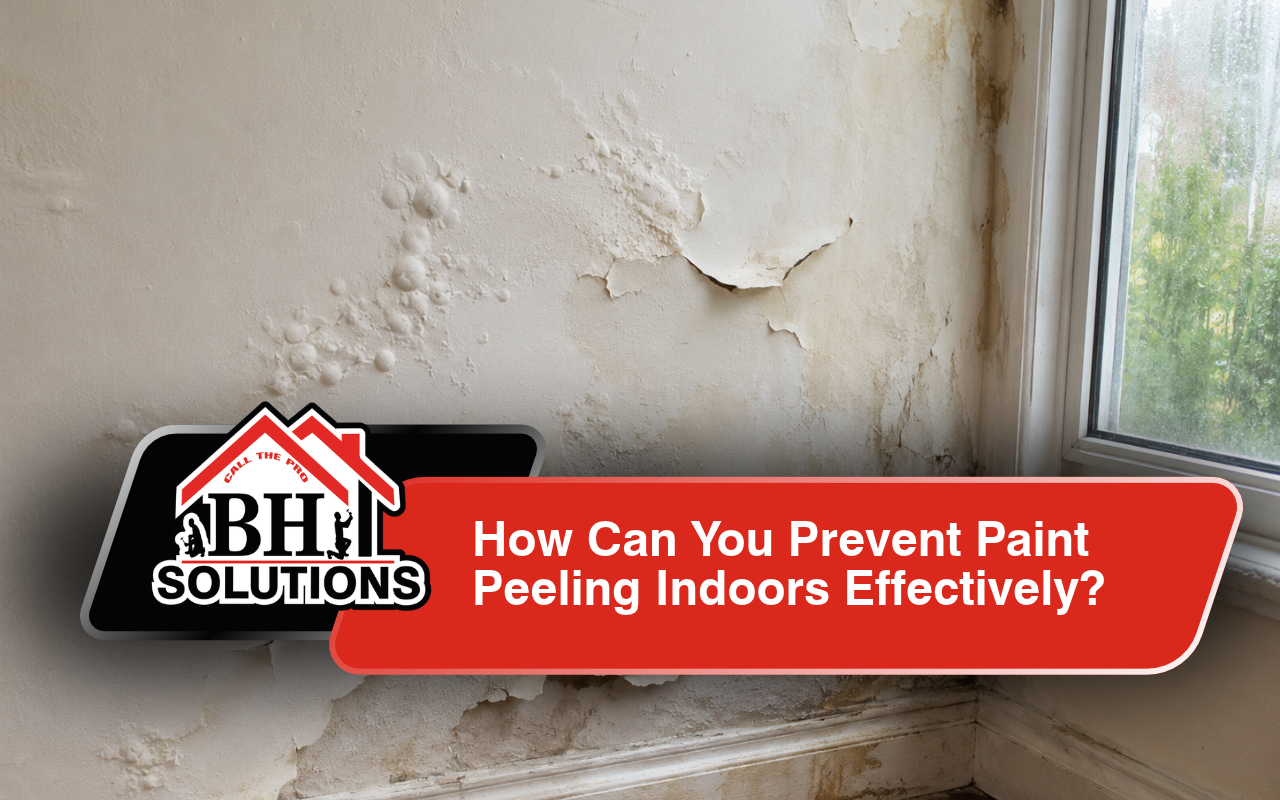
To prevent paint peeling indoors, control moisture, clean surfaces, repair damage, apply suitable primer, and choose quality interior paint. Additionally, allow each coat to dry according to product instructions. These steps improve paint adhesion and help walls stay smooth longer. At BH Solutions, LLC, we focus on careful preparation because a beautiful finish needs a strong foundation.
Identify Common Causes Before Interior Paint Damage Spreads Further
First, understanding why paint separates from walls helps you choose the right solution. Peeling interior paint often starts when moisture or surface problems weaken the bond between paint and drywall.
For example, bathrooms experience frequent steam exposure, while kitchens collect grease and moisture. Meanwhile, older walls may contain loose paint layers that cannot support new coatings.
Watch for these common warning signs:
- Bubbling paint near showers, sinks, or windows.
- Flaking surfaces around damp corners and ceilings.
- Visible paint cracking on walls after repeated temperature changes.
- Loose coatings over dusty or greasy surfaces.
- Discolored patches suggesting possible water damage.
Furthermore, poor paint adhesion can result from painting over glossy surfaces without proper preparation. Applying another coat without fixing the underlying problem often leads to repeated peeling.
At BH Solutions, LLC, we recommend identifying the cause before beginning repairs. Consequently, homeowners can avoid covering damage that needs more attention.
Control Indoor Humidity to Protect Your Painted Walls Longer
Excess humidity is a major factor behind moisture causing peeling paint. When indoor air contains too much moisture, condensation can collect on cooler surfaces.
As a result, paint may bubble, soften, or separate from the wall. Fortunately, steady moisture control can reduce these problems significantly.
Try these practical prevention methods:
- Keep indoor humidity around 30% to 50% when practical.
- Run bathroom exhaust fans during and after showers.
- Use kitchen ventilation while cooking.
- Place dehumidifiers in damp basements or poorly ventilated rooms.
- Check humidity levels regularly with a simple hygrometer.
Additionally, inspect windows, plumbing, and ceilings for leaks. If water continues entering a wall, ventilation alone will not solve the problem.
For additional guidance, explore our painting tips for humid areas before starting your next project.
At BH Solutions, LLC, we encourage homeowners to address moisture early. Therefore, their walls have a better chance of maintaining a lasting finish.
Prepare Interior Surfaces Carefully for Stronger Paint Adhesion Results
Even premium paint can fail when the surface underneath is dirty or unstable. Therefore, proper wall preparation is essential for preventing peeling interior paint.
Start by checking for cracks, grease, dust, and loose coatings. Next, clean the surface with a suitable mild cleaning solution.
Allow everything to dry completely before continuing. Otherwise, trapped moisture can weaken the new paint layer.
Follow these preparation steps:
- Inspect walls for damaged paint and damp patches.
- Remove loose coatings using appropriate tools.
- Clean dirt, grease, and remaining dust.
- Fill small holes and cracks with suitable repair compound.
- Sand repaired areas smoothly when safe.
- Apply primer where the surface requires it.
However, homes built before 1978 may contain lead-based paint. Therefore, arrange appropriate lead-safe testing and work practices before disturbing old coatings.
At BH Solutions, LLC, we understand that careful preparation supports lasting interior finishes. Moreover, smooth surfaces improve the appearance of the final paint coat.
Select Suitable Paint Finishes That Resist Everyday Interior Wear
Choosing the correct product makes a noticeable difference in paint durability. However, not every interior paint works equally well in every room.
For bedrooms and living rooms, eggshell or satin finishes can balance appearance and cleaning needs. Meanwhile, moisture-prone spaces often benefit from washable, bathroom-rated coatings.
Semi-gloss finishes are also useful for doors and trim. Nevertheless, excessive shine can make small surface flaws more visible.
When choosing paint, consider flexibility, washability, moisture resistance, and product instructions. Additionally, select interior coatings designed for the specific wall material.
For peeling bathroom paint, moisture-resistant products can improve durability. However, they cannot replace proper ventilation or repairs to hidden leaks.
At BH Solutions, LLC, we help homeowners discuss suitable painting options for different rooms. You can also explore our interior painting expertise in Fairfield, CT, for more information.
Repair Peeling Paint Correctly to Restore Smooth Interior Walls
Small peeling areas can sometimes be repaired without repainting an entire room. However, repairs should begin only after moisture problems are resolved.
Remove Loose Paint and Smooth Damaged Areas
First, protect nearby furniture and flooring. Then, carefully remove loose paint using a scraper when the coating is safe to disturb.
Next, smooth uneven edges and remove remaining dust. If necessary, use repair compound to fill shallow holes or damaged areas.
Once the compound dries, prepare the surface for primer. Consequently, the fresh coating can bond more evenly.
Apply Primer Before Adding Fresh Interior Paint
Primer helps create a stable base, especially on repaired drywall and exposed surfaces. Additionally, some primers help block stains that might otherwise show through.
Choose a product compatible with your wall and finish coat. Then, follow the manufacturer’s drying instructions before painting.
Apply thin, even coats rather than one heavy layer. Finally, allow enough drying time between applications to reduce bubbling and uneven coverage.
If damage extends beyond the surface, identify and fix the underlying problem before continuing. Otherwise, moisture may cause the new paint to fail again.
Maintain Painted Surfaces Regularly to Reduce Future Peeling Problems
Routine care makes small paint problems easier to notice. Therefore, inspect painted walls every few months, especially in bathrooms and kitchens.
Look for bubbling, new cracks, damp patches, or changing colors. Additionally, check areas near plumbing fixtures and exterior-facing walls.
Clean painted surfaces gently with a soft cloth and suitable cleaner. However, avoid aggressive scrubbing that could damage the finish.
Keep a small amount of matching paint for minor touch-ups. Before applying it, confirm that the existing coating remains firmly attached.
Also, avoid adding unnecessary clear sealers to painted walls. Some products can change the finish or cause compatibility problems.
Instead, choose coatings designed for the room and follow their care instructions. As a result, regular maintenance becomes simpler and more effective.
Recognize Serious Wall Damage and Plan Professional Painting Repairs
Some paint problems need more than sanding and repainting. For example, widespread bubbling can indicate moisture trapped behind the wall surface.
Similarly, recurring stains, soft drywall, and musty smells may suggest hidden water damage. Therefore, these issues deserve closer attention before cosmetic repairs begin.
At BH Solutions, LLC, we discuss interior painting concerns and help homeowners understand suitable project options. Moreover, we consider preparation and surface condition when planning painting work.
For homeowners in Danbury and nearby Fairfield County communities, our team can discuss painting improvements that match their needs.
If your walls continue peeling despite previous repairs, discuss your interior painting concerns with our team. Together, we can review your goals and possible next steps.
Build Lasting Painting Habits That Preserve Your Home’s Appearance
Preventing paint peeling indoors requires more than choosing an attractive color. Instead, long-lasting results depend on moisture control, preparation, suitable products, and regular care.
By addressing problems early, you can reduce repeated repairs and protect your interior surfaces. Furthermore, simple inspections help you recognize warning signs before damage spreads.
At BH Solutions, LLC, we believe well-maintained walls make your home feel cleaner, brighter, and more comfortable. Therefore, we encourage thoughtful painting decisions that support lasting results.
Frequently Asked Questions
1. What causes paint to peel inside a house?
Usually, moisture, dirty surfaces, unsuitable coatings, or poor preparation cause indoor paint to peel. Additionally, leaks can weaken drywall and paint layers. Our home improvement services and guidance can help you explore options for addressing related concerns.
2. How can I stop bathroom paint from peeling?
First, improve ventilation and repair any leaks. Next, prepare dry surfaces and select bathroom-rated paint. For more details, read our humidity control and painting recommendations before repainting.
3. Can I paint directly over peeling interior paint?
No, painting over loose coatings usually produces another weak finish. Instead, remove unstable paint safely and repair the surface. Then, use suitable primer and paint. Learn more about our interior painting preparation and finishing services.
4. When does peeling paint indicate serious water damage?
Recurring stains, soft drywall, damp odors, or widespread bubbling may indicate deeper moisture problems. Therefore, identify the water source before repainting. If you are unsure about the damage, ask our team about your wall concerns before proceeding.
5. How do I choose help for an interior painting project?
Start by explaining the affected rooms, current wall condition, and desired results. Additionally, ask about preparation, materials, and project steps. Our home renovation and improvement services provide a starting point for planning your project.
References:
- The Spruce — 21 Tips to Lower Humidity in Your House That Are Actually Effective
- Apartment Therapy — How To Repair and Prep Cracked and Crumbling Walls for Painting