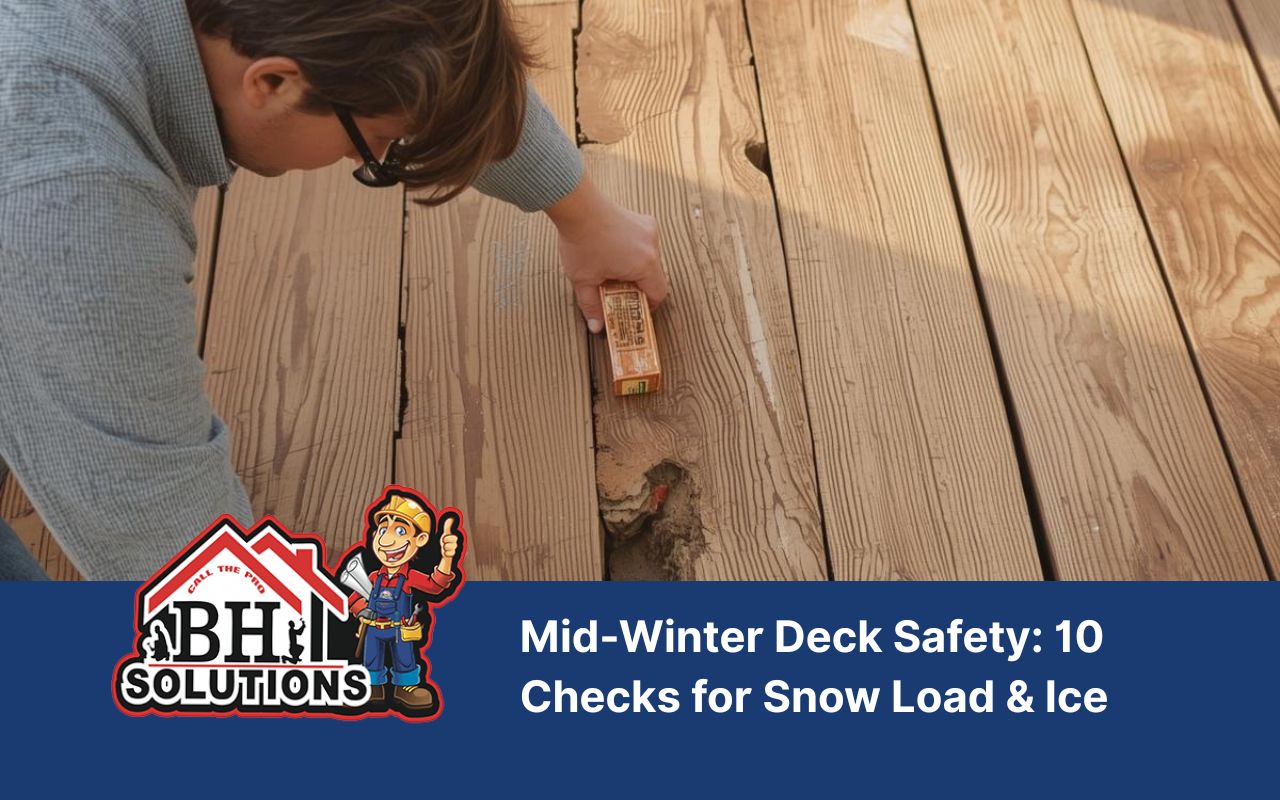
Winter beauty can hide structural risks. A timely deck safety inspection helps prevent failures, slips, and costly repairs. Use these focused checks to keep your deck safe during snow and ice.
Why a mid-winter deck safety inspection matters
Cold, moisture, and freeze–thaw cycles stress every connection and surface. A scheduled deck inspection reveals small issues before storms magnify them.
- Protects structure under heavy snow loads.
- Reduces slip hazards on stairs and landings.
- Extends lifespan of hardware and coatings.
- Prevents water intrusion at the house.
Ledger flashing inspection
Start at the house connection. Proper ledger flashing diverts meltwater away from framing. Look for rust, gaps, and failed sealant.
Quick checks
- Probe the top edge for soft wood or daylight.
- Confirm the flashing laps over siding correctly.
- Seal minor gaps with exterior-grade caulk.
- Replace damaged metal to restore drainage.
Checking railings for stability
Safe railings matter when ice reduces footing. Push and pull each section. Tighten loose fasteners and replace cracked members.
Connection focus
Inspect post bases and brackets. Corrosion or movement under load signals repair needs during your deck safety inspection.
Assessing joist rot and decay
Hidden moisture accelerates joist rot. Check discoloration, fungal growth, and softness with a screwdriver.
Remedies
Stabilize minor decay with hardener. Replace compromised joists. Seal new wood to block winter moisture.
Post connections and support posts
Secure posts carry snow weight safely. Examine brackets, bolts, and bearing. Tighten hardware and swap any cracked components.
Foundations under load
Check for tilting or settlement. Improve drainage with gravel, or add footings below the frost line during a deck safety inspection.
Managing ice dams and drainage
Ice ridges trap meltwater and drive moisture into seams. Your deck safety inspection should verify slope and runoff paths.
- Clear small dams with plastic tools.
- Use heat cables on persistent edges.
- Test slope with a small water pour.
- Add diverters to guide runoff safely.
Anti-slip measures for safety
Add anti-slip treads to stairs and high-traffic zones. Improve traction without harming finishes.
- Place grip strips on nosings first.
- Use removable textured mats where pooling occurs.
- Verify adhesion in cold temperatures.
Effective de-icing techniques
Select deck-friendly de-icing products. Avoid rock salt that dries wood and corrodes metal. Sweep residues after melting.
Stubborn ice plan
Apply a thin layer at night, then shovel softened ice. Light sanding adds grip until temperatures rise.
Frequently Asked Questions
How often should I schedule a deck inspection in winter?
Perform one before the first major storm and again after severe weather or noticeable movement.
What snow depth threatens my deck?
It varies by design. When in doubt, remove accumulations and book a professional deck safety inspection.
Can I DIY flashing repairs in cold weather?
Small sealing is possible, but full flashing replacement is best handled by pros in safe conditions.
What’s the safest way to improve traction quickly?
Install quality treads on stairs first. Clear snow promptly and use a deck-safe de-icer.
When should I replace corroded connectors?
At the first sign of cracking or heavy rust. Replace hardware rated for exterior structural use.
Schedule a deck safety inspection
Keep your outdoor space secure all season. Request a professional deck safety inspection today via our Contact page.
Explore more solutions on All Services. A comprehensive deck safety inspection now helps you enjoy winter with confidence.