
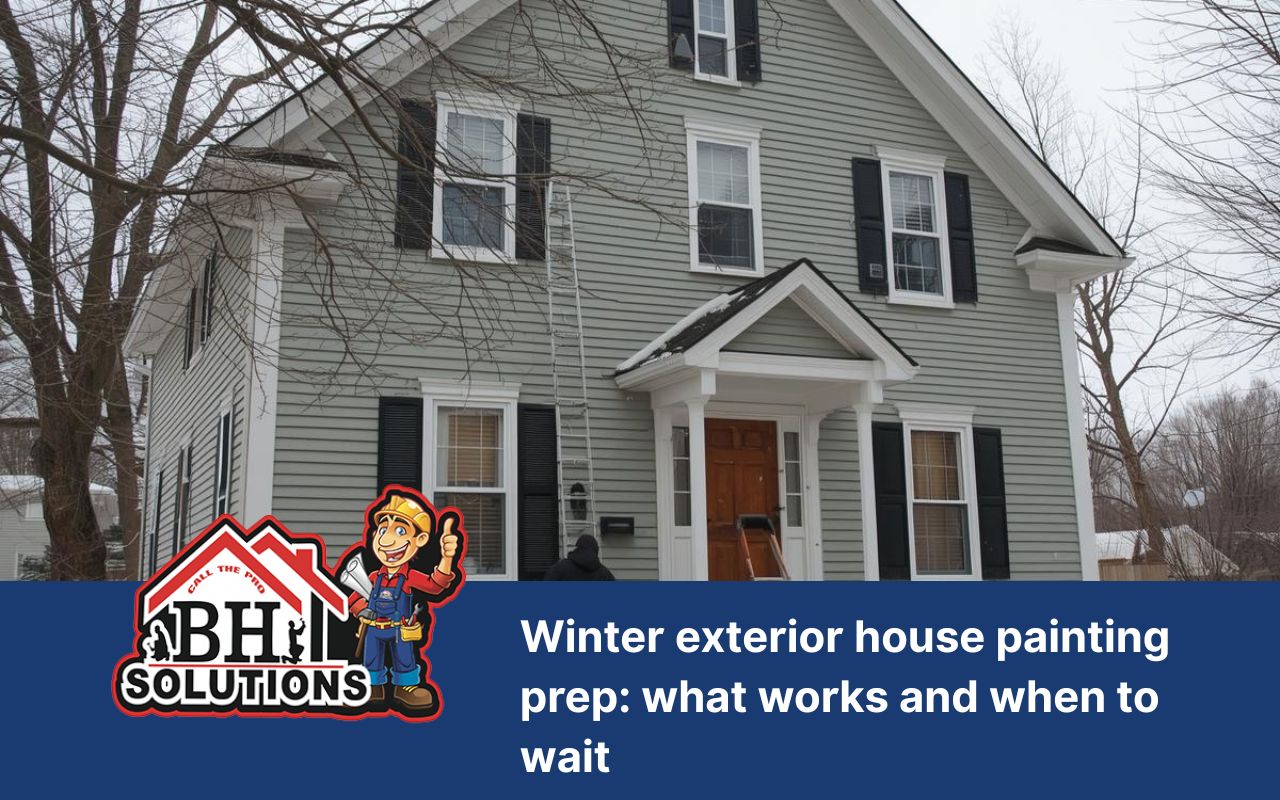
Painting in winter demands smart planning. The core is exterior house painting prep done for cold conditions. Temperature minimums, primers, and surface moisture all matter. Use moisture meters to verify dryness before you paint. Address siding repair and caulking early. When weather dips, sometimes waiting wins. This guide explains what to do now, and when to pause until spring.
Understanding the impact of temperature on paint application
Cold slows curing and thickens paint. Below a product’s temperature minimums, adhesion suffers. Brush marks linger, and peeling risks rise. Always read labels and watch forecasts, including overnight lows. Wind chill cools surfaces fast, so choose calm windows.
- Confirm manufacturer temperature minimums for each coat.
- Check both daytime highs and overnight lows.
- Work on sunlit walls to keep surfaces warmer.
Good exterior house painting prep starts with weather timing. If the day looks marginal, scale back to priming or repairs only.
Importance of proper surface preparation in winter painting
Clean, dry, and sound substrates are essential. Dirt, salts, and loose paint block adhesion. Moisture meters reveal hidden dampness in wood and trim. Wash with mild detergent, rinse, and allow full drying.
- Scrape and sand failing paint to a firm edge.
- Rinse residue and let surfaces dry thoroughly.
- Verify safe moisture readings before coating.
Thoughtful exterior house painting prep improves longevity. A dry, clean surface helps coatings level and cure evenly in the cold.
Choosing the right type of paint for cold weather conditions
Pick coatings rated for low temperatures. Many acrylics cure better in the cold than oils. Look for “all-season” labels and the lowest listed temperature minimums. Premium options cost more but save labor and callbacks.
Match primers and topcoats from the same system. That pairing boosts bonding and durability during chilly spells.
The role of primers in ensuring adhesion
Primers create a uniform, grippy base. Low-temp primers fill hairline defects and seal porous areas. They help color hide and reduce lap marks. Apply only when air and surface meet listed temperature minimums.
Solid priming is central to exterior house painting prep. It prevents peeling and supports a smooth, even finish.
Tips for managing moisture and humidity in winter
Moisture causes blistering and poor adhesion. Aim for drier days, typically under 60% relative humidity. After rain or snow, wait longer because surfaces dry slowly in winter. Stir paint well to disperse any condensation.
Use dehumidifiers on covered porches. Outdoors, test suspect spots with moisture meters before coating.
Tools and techniques for efficient cold-weather work
Quality gear speeds results. Choose brushes and rollers suited to thicker paint. Extension poles improve reach and safety on icy ground. Keep tarps ready for surprise flurries.
- Warm paint and tools indoors before use.
- Apply thinner coats to aid curing.
- Back-brush sprayed areas for better penetration.
Plan small sections. This approach keeps a wet edge and cleaner lines in brisk conditions.
Addressing siding repair challenges in winter
Cold stiffens materials and shrinks gaps. Inspect boards, trim, and joints carefully. Use patching compounds rated for low temperatures. Sand smooth after cure to avoid telegraphing through the topcoat.
Targeted siding repair supports durable results. It is a critical piece of exterior house painting prep in winter.
Caulking best practices for sealing in the cold
Choose caulking labeled for low temperatures. Remove failed material first. Lay a steady bead and tool it for full contact. Allow extra curing time per instructions.
Good caulking blocks drafts and moisture, keeping paint stable through seasonal swings.
Frequently Asked Questions
What is the lowest temperature I can paint at?
Follow the label. Many low-temp acrylics allow application near 35–40°F, but check overnight lows too.
Do I really need primers in winter?
Yes. Primers improve adhesion and uniformity, which are harder to achieve in cold weather.
How do moisture meters help?
They confirm substrates are dry enough to paint, preventing blistering and peeling later.
Can I repair siding and paint the same day?
Only if repair products cure at low temperatures and moisture readings are safe.
When should I postpone the job?
Postpone if temperatures fall below temperature minimums for more than a day, or if dampness persists.
Knowing when it’s time to wait for spring
If frost forms on walls or wind chills are severe, pause. Tacky spots hours later signal poor curing. Waiting protects your investment and avoids rework.
Need help planning exterior house painting prep or scheduling around winter weather? Visit All Services or contact us for tailored support.