
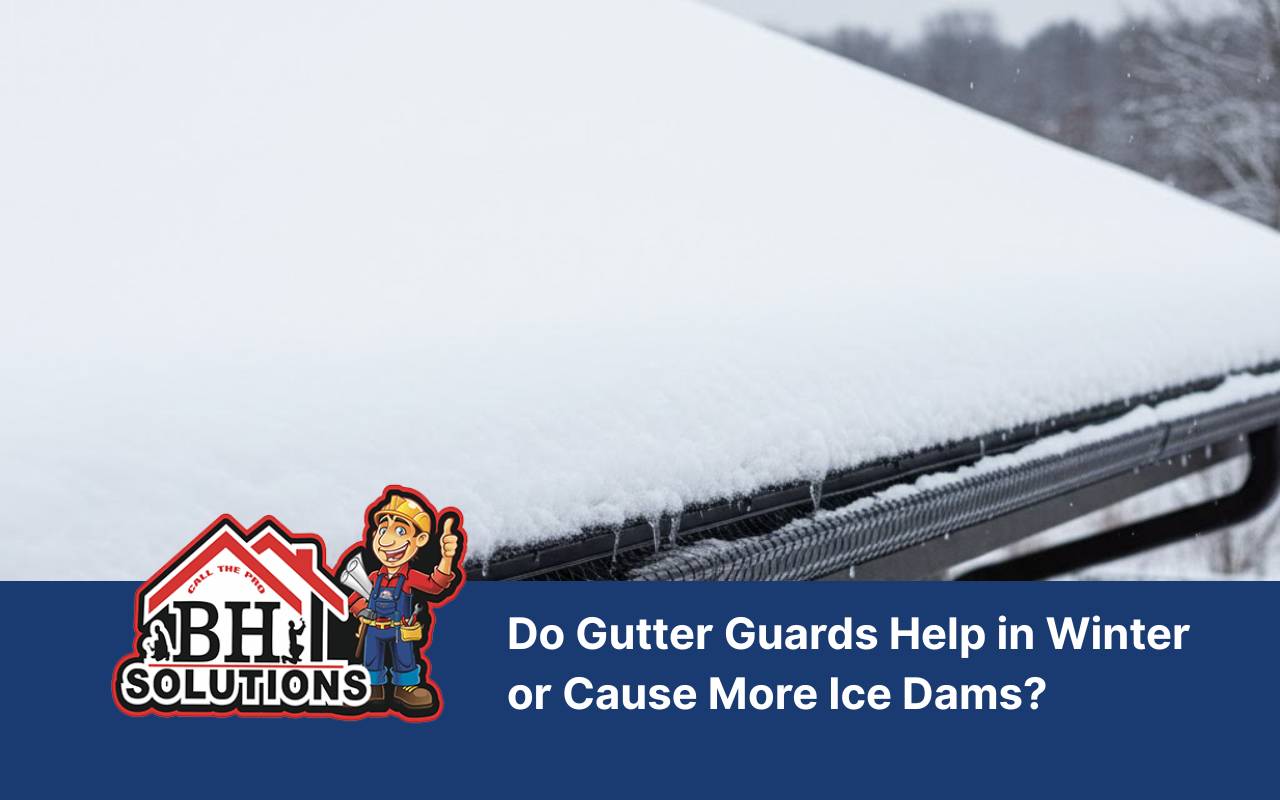
Gutter Guards in Winter can help your home handle snow and ice, but they can also create worries. Many homeowners wonder if these systems really protect their house or if they make ice dams worse when temperatures drop.
Understanding how Gutter Guards in Winter interact with snow, ice, and meltwater is vital to protect your fascia and avoid overflow. This guide explains how leaf guards behave in cold weather and how simple maintenance can prevent costly winter damage.
How Gutter Guards in Winter Work
When you add Gutter Guards in Winter, they act as a first line of defense against leaves and small branches. By keeping debris out of your gutters, they help melting snow and rain move toward the downspouts instead of backing up.
As sunlight or indoor heat warms the roof, snow melts and water looks for a way down. In mild conditions, well-installed leaf guards guide this water into the gutters and away from your home. However, in freezing weather, snow and ice can sit on top of the guards.
This build-up can slow water flow and create overflow along the gutter edge. If that water refreezes, it may start forming ice dams that spread across shingles and toward the fascia board. Because of this, regular winter maintenance is still important, even with a protection system in place.
Common Issues with Gutter Guards in Cold Weather
During winter, gutter protection faces added stress from heavy snow and ice. The weight of packed snow can bend thin mesh or push against solid covers, sometimes shifting them out of place. When guards move, they stop lining up with the gutter edge correctly.
Misaligned systems create openings where leaves, pine needles, or roof grit can slip into the channel. Over time, this debris may clog the gutter and cause overflow along the fascia. In addition, sliding snow can pull on weak fasteners and loosen sections of the guard.
- Mesh guards can warp under heavy snow or ice.
- Solid covers may lift or shift when snow slides off the roof.
- Gaps appear where debris can enter and block the gutter.
- Overflow can stain siding and damage landscaping below.
- Loose sections increase the risk of future ice dams and leaks.
Snowmelt may also freeze underneath the guard, bonding it tightly to the roofline. This hidden ice can trap water above the system, which then spills over the edge. As the water drips and freezes, it can form sharp icicles that hang from the gutters and create safety hazards.
Impact of Snow and Ice on Gutter Guard Performance
When temperatures sit below freezing, melted snow can quickly refreeze inside the openings of your guard. Small holes or slots that usually drain water become blocked with ice. This frozen layer acts like a mini dam on top of the gutter.
Instead of flowing down into the channel, water backs up toward the roofline. As it creeps under shingles, it can leak into the attic or wall spaces. Over time, these leaks may stain ceilings, damage insulation, and weaken framing.
Heavy ice build-up also puts extra pressure on the guard fasteners. As frozen chunks expand, clips or screws may loosen. This movement lets debris slip under the guard and lowers the overall performance of the system. In serious cases, whole sections of the gutter and guard can pull away from the fascia.
Preventing Ice Dams with Gutter Guards
To reduce ice dams, you need to keep your gutter system as clear as possible. Ice dams start when melted snow runs down the roof and refreezes at the cold gutter edge. There, it forms a solid ridge that blocks more water from draining away.
A guard design that sheds snow instead of holding it can help water reach the downspouts more quickly. When less water lingers near the edge, there is less chance for refreezing. Pairing the right system with good insulation and ventilation makes a big difference.
- Use leaf guards that allow water in but encourage snow to slide off.
- Improve attic insulation to keep roof temperatures more even.
- Add ventilation to reduce warm spots that cause uneven melting.
- Clear heavy snow near the eaves after major storms when it is safe.
- Watch for early signs of overflow along the fascia or down walls.
Moreover, strong attic insulation reduces the heat that escapes into the roof deck. With a more even roof temperature, there are fewer melt and refreeze cycles. Together, leaf guards, insulation, and airflow make it harder for thick ice dams to form and spread.
Pros and Cons of Heat Trace Systems with Gutter Guards
Benefits of Heat Trace Systems
Heat trace cables sit along the roof edge or inside the gutter channel. When turned on, they warm the surrounding area just enough to melt snow and ice. This steady melting helps water move into the gutters instead of freezing at the edge.
When paired with mesh or solid leaf guards, heat trace can keep channels open in harsh weather. It lowers the risk of blocked openings, overflow, and ice buildup around the fascia. As a result, the system can reduce leaks and icicles along walkways and entrances.
Drawbacks of Heat Trace Systems
However, heat trace systems do have downsides. They rely on electricity and must be installed carefully to follow the natural path of melting water. If the cables are placed in the wrong spots, they may leave cold zones where ice still forms.
In addition, the cables and guards both need yearly inspections. You must check that the lines still work and that they have not pulled away from the roof or gutter. Although this extra effort adds maintenance, many homeowners accept it for the added winter protection.
Choosing the Right Type of Gutter Guard for Winter
Different guard styles behave in different ways during winter. Fine mesh guards block small debris and roof grit, and they usually handle heavy rain well. Yet their tiny openings can fill with ice more easily during long cold spells.
Solid-surface guards, sometimes called helmet-style covers, use a curved or sloped plate to direct water into the gutter. They tend to shed snow better but may let small debris slip into the channel. Hybrid designs combine a solid section with a coarser screen to balance both goals.
In areas with heavy snow, a strong solid guard that resists bending often performs better over time. In regions with frequent freeze–thaw cycles, a hybrid design can lower the risk of ice blocking the surface. While you compare options, also look at material quality, warranty, and how well the system connects to your existing fascia and shingles.
If your current roof already shows wear or leaks, it is wise to address those issues first. You can explore professional help through roofing services before investing in new leaf guards, so the whole system works together.
Maintenance Tips for Gutter Guards in the Winter
Even the best guard system still needs basic care during the cold season. After a major snowfall, and only when conditions are safe, you can use a roof rake or similar non-metal tool to gently remove extra snow from the eaves.
Regular cleaning also matters. Before deep cold arrives, clear any leftover sticks, seed pods, or roof grit sitting on top of the guards. Doing this helps prevent frozen clumps that block water flow and cause overflow during sudden thaws.
- Inspect guards at the start of winter and after big storms.
- Look for areas where snow piles up more than elsewhere.
- Clear small debris from guard surfaces when temperatures allow.
- Check downspouts to confirm water flows freely during a melt.
- Fix loose fasteners or minor gaps right away.
Because every home is different, some homeowners prefer to schedule a professional inspection. A trained eye can spot misalignment, sagging gutters, or fascia damage early. If you are unsure about climbing ladders, you can safely contact the BH Solutions USA team to review your system before peak winter arrives.
Signs of Damage to Gutter Guards Caused by Ice and Snow
Throughout winter, you should watch for bending or warping along the gutter line. When ice presses on the guard, it can slowly change its shape. Even a small curve may create pockets where leaves or dirt gather once spring arrives.
Cracks, rust spots, or split seams also point to trouble. Repeated freeze–thaw cycles weaken plastic and thin metal pieces over time. Pay close attention to the places where guards attach to the fascia and gutter brackets. Loose or missing screws suggest that ice loads have pulled sections away from the home.
Comparing Different Gutter Guard Materials for Winter Durability
Material choice has a direct impact on winter performance. Aluminum guards resist rust and are fairly stiff, yet thin versions can dent or bend under packed ice. Plastic screens stay flexible at first but may turn brittle in very low temperatures.
Stainless steel mesh is usually more durable. Its woven pattern allows water through while still shedding snow quickly. Although it often costs more, it resists warping and handles repeated freezes better than many other materials.
Aluminum remains a popular middle-ground option thanks to its cost and simple installation. Plastic may work in milder climates with fewer freeze events. However, in areas with heavy snow and ice, stainless steel or thick aluminum usually give better long-term value and fewer overflow headaches.
Frequently Asked Questions
Do Gutter Guards in Winter always stop ice dams?
No, Gutter Guards in Winter do not guarantee that ice dams will never form. They help keep gutters clear, but roof insulation, ventilation, and weather patterns also play big roles. You still need good attic insulation and regular winter maintenance for best results.
Can leaf guards cause overflow during heavy snow?
Yes, leaf guards can sometimes contribute to overflow if snow and ice cover the guard surface. When the openings are blocked, meltwater cannot reach the gutter channel. It may then run over the edge, where it can freeze again and add to ice dams or form icicles.
Are heat trace cables safe to use with all gutter guard types?
Most heat trace systems can work with many guard styles, but they must be installed correctly. The cables should be rated for outdoor use and placed according to the manufacturer’s instructions. It is often best to hire a professional to avoid damage to the guards, shingles, or fascia.
How often should I inspect my gutter guards in winter?
During an active winter season, a quick visual check after major storms is helpful. In addition, a more detailed inspection at the start and end of winter lets you spot warping, loose fasteners, or overflow marks on the fascia and siding.
When should I replace damaged gutter guards?
You should replace guards when they are cracked, severely warped, or pulling away from the gutter. If repairs no longer hold or overflow keeps coming back, a fresh system may protect your roofline and fascia more reliably through future winters.
Optimizing Gutter Guards in Winter for Protection
To sum up, you get the best results when you combine smart product choices with simple, steady care. The right guard style lowers debris buildup, while regular checks keep your gutters open when snow and ice arrive.
By choosing strong materials, watching for early signs of damage, and using tools like heat trace when needed, you can keep ice dams under control. With this balanced approach, your gutters, fascia, and foundation stay safer all season, and your home remains dry and comfortable through the coldest months.