Winter brings roof risks that you can manage with planning. Icicles look charming, yet they warn of hidden moisture. Understanding the cycle behind ice dams helps you choose fixes. This guide explains causes, prevention, and safe ice dam removal methods to protect your roof, walls, and budget.
The science behind ice dams
Snow melts on warm roof sections, then refreezes at colder eaves. An icy ridge traps water and forces it beneath shingles. That water can leak into ceilings and walls. A quality water shield reduces leak risk, but root causes matter. Limit attic heat escape to minimize melt cycles.
Temperature imbalance explained
Uneven roof temperatures create melt lines and refreeze bands. Warm spots speed melting; cold edges rebuild the ridge. Tight air sealing and balanced attic temperatures reduce this pattern and protect materials.
Primary causes of ice dams
Warm air leaks into the attic and heats the roof deck. Meltwater then refreezes at overhangs, building an ice barrier. Weather swings with sun and deep freezes worsen the cycle. Poor insulation and weak ventilation amplify these effects.
How ice dams damage your home
Trapped water travels under shingles and saturates decking. Moisture degrades insulation R-values and fosters mold. Heavy ice strains gutters and can deform roof edges. Address problems early to avoid costly structural repairs.
Prevention: increasing insulation R-values
Upgrading attic insulation slows heat transfer into the roof deck. Higher insulation R-values help keep surface temperatures consistent. Start by measuring current depth and comparing regional targets. Seal gaps first, then add insulation.
- Air-seal around lights, chases, and hatches.
- Add blown-in or batt layers to meet target insulation R-values.
- Protect recessed lights with rated covers.
- Pair insulation with an ice and water shield at eaves.
Prevention: ventilation with soffit vents and a ridge vent
Balanced airflow keeps the roof deck near outdoor temperatures. Cool air enters through soffit vents and exits at a continuous ridge vent. This movement reduces melt lines and moisture levels.
- Install baffles so insulation never blocks soffit vents.
- Extend the ridge vent across the entire peak.
- Maintain clear channels from soffit vents to the ridge vent.
- Inspect ventilation annually for debris and nesting.
Prevention: installing heat cables
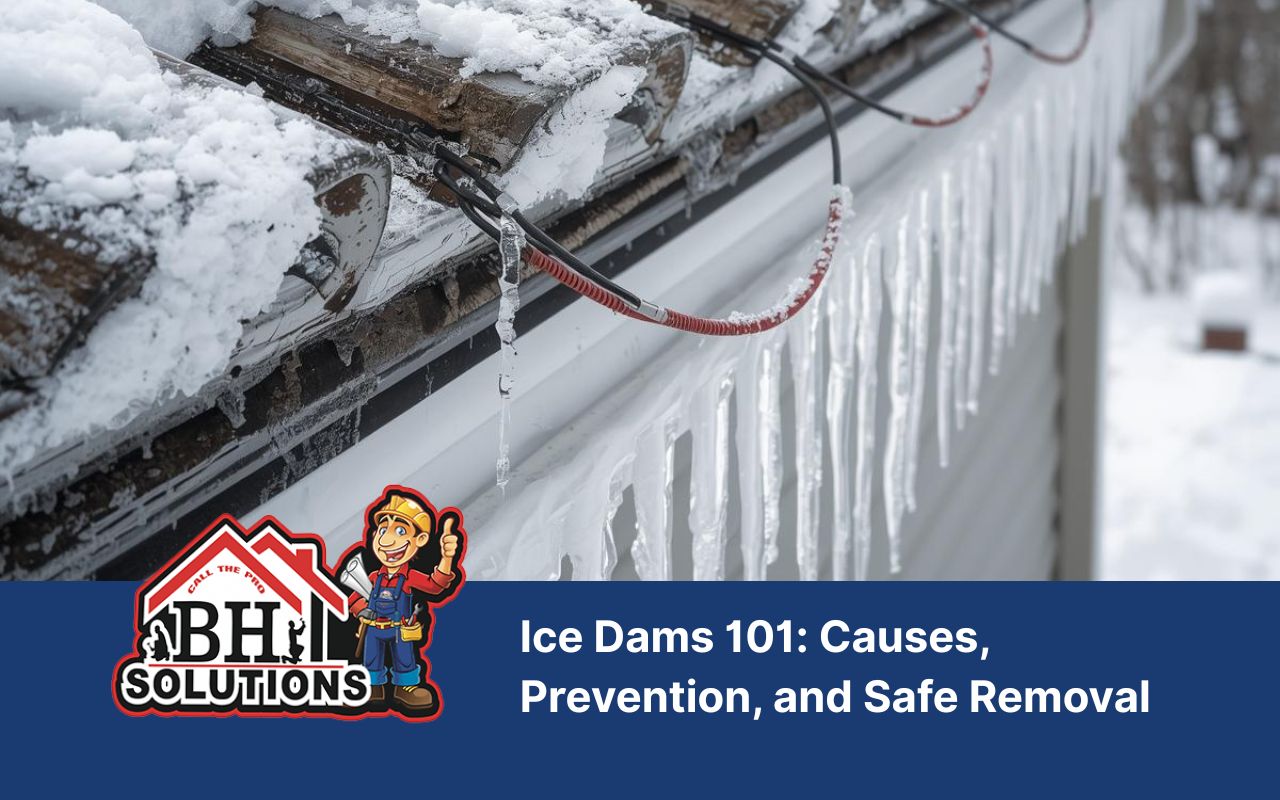
Heat cables provide targeted melting paths along eaves and in gutters. They are a supplement, not a substitute, for insulation and ventilation. Choose models with thermostats to limit energy use. Test systems before freezing weather.
Safe ice dam removal techniques
Even with prevention, conditions may demand ice dam removal. Use a roof rake from the ground to pull snow off safely. Clear the first few feet above the eaves to limit meltwater. Avoid standing beneath overhangs.
For stubborn ridges, create drainage channels using plant-friendly ice melt socks. Never chip with sharp tools that gouge shingles. When risk is high, schedule professional ice dam removal to protect people and property.
Frequently Asked Questions
How do I know I need ice dam removal?
Look for interior stains near exterior walls, sagging drywall, or large icicles. These signs suggest trapped water. Prompt ice dam removal limits damage.
Do heat cables replace insulation and ventilation?
No. Heat cables assist drainage but cannot fix heat loss. Pair them with proper insulation R-values, soffit vents, and a ridge vent.
Is a water shield enough to stop leaks?
A water shield reduces leak risk at eaves and valleys. However, addressing attic heat and airflow prevents recurring dams and hidden moisture.
Can I perform ice dam removal myself?
Light snow raking is usually safe from the ground. For thick ice, steep roofs, or multi-story homes, hire professionals for ice dam removal.
Who can help with full winterization?
Explore services on All Services. For quotes or scheduling, use the contact page.
Protecting your home: maintenance checklist
Plan seasonal tasks to prevent future dams and reduce emergency ice dam removal. Keep gutters clean, monitor attic temperatures, and verify airflow paths. Confirm water shield coverage at eaves during reroofing.
- Clear gutters and downspouts each fall.
- Check soffit vents and ridge vent for airflow.
- Top up insulation R-values where needed.
- Test heat cables before storms.
- Schedule professional ice dam removal if hazards arise.
Need help now? Reach out at Contact Us for fast guidance and safe ice dam removal options.