
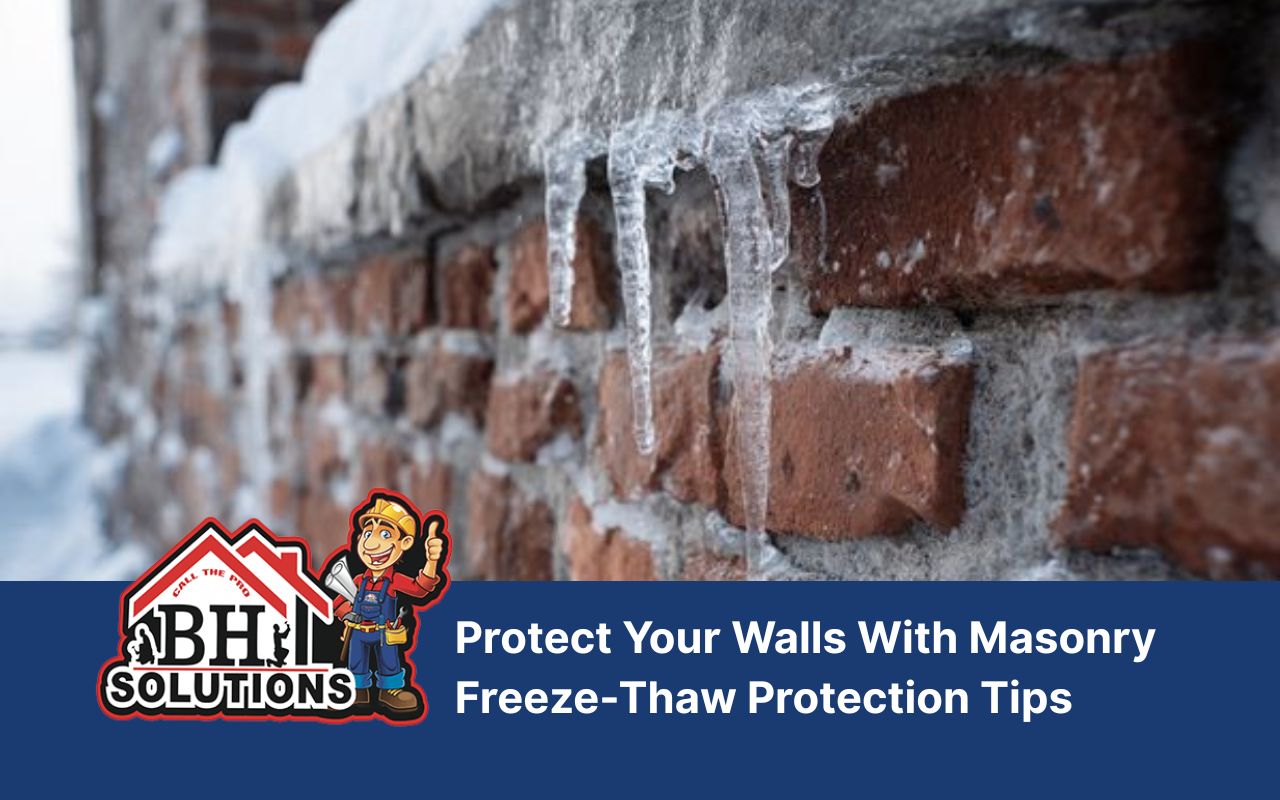
Masonry Freeze-Thaw Protection helps guard your home against winter’s repeat freeze and thaw. As temperatures swing, masonry expands and shrinks, which can lead to cracks and water entry.
However, smart steps can keep walls strong. For example, you can combine moisture control and movement planning to reduce cracking, erosion, and long-term damage.
Why Masonry Freeze-Thaw Protection Matters
When water sits in tiny gaps and freezes, it expands and pushes on brick and mortar. Over time, that stress can create larger cracks and even structural issues. Therefore, early protection can prevent costly repairs and keep walls looking great.
- Helps block moisture before it enters pores.
- Reduces cracking, spalling, and joint breakdown.
- Supports long-term curb appeal and performance.
How Freeze-Thaw Cycles Damage Masonry
Each time water freezes, it grows by about nine percent, which stresses pores and widens small cracks. Then, when ice melts, empty space invites more water for the next cycle. As a result, damage speeds up each winter if moisture keeps getting in.
- Visible cracking and surface flaking can appear.
- Mortar joints can weaken and crumble.
- Loose bricks or stones may shift over time.
Choose the Right Surface Barrier
Sealants can reduce water soak-in while still letting vapor escape. For Masonry Freeze-Thaw Protection, pick breathable, water-resistant products that handle sun and temperature swings. Before application, clean the wall well, and then apply thin coats for even coverage.
Move Water Away From the Wall
Drainage keeps water from pooling near masonry, which lowers freeze-thaw risk. Make sure soil slopes away from the home, and keep gutters clear so runoff does not spill down walls. Also, use downspout extensions so water lands farther from the foundation.
- Regrade soil to guide runoff away.
- Add splash blocks or downspout extensions.
- Consider gravel beds in problem areas.
Plan for Safe Wall Movement
Expansion joints help masonry handle natural shifts without cracking. These flexible breaks reduce stress buildup as temperatures change. Typically, longer walls need regular spacing, and the joint should be sealed to stay weather-tight. Meanwhile, inspect joints often and renew failing sealant.
Restore Joints Before Moisture Wins
Repointing replaces weak mortar so gaps stop pulling in water. Remove damaged mortar, clean the joint, and pack in fresh material that matches the wall’s needs. Consequently, the wall regains strength, sheds water better, and resists winter cycles longer.
Prevent Chemical Wear in Winter
De-icing salts can harm masonry when they splash and soak into brick or mortar. Harsh salts may attract moisture, which can worsen freeze-thaw stress. Instead, limit use near walls, sweep leftovers quickly, and rinse residues in spring to reduce erosion risk.
Frequently Asked Questions
What is the main cause of freeze-thaw masonry damage?
Water enters pores or small cracks, then freezes and expands. Over time, that repeated pressure breaks down brick, stone, and mortar.
How often should I inspect exterior masonry?
Check it at least once a year, and also after harsh winters. Look for new cracks, loose units, and failing joints.
Can small cracks really turn into bigger problems?
Yes. Small gaps hold water, and repeated freezing can widen them. Therefore, early sealing and repairs help stop the cycle.
Do I need a full plan, or can I do one fix at a time?
A layered plan works best. Masonry Freeze-Thaw Protection improves when you reduce moisture entry and manage movement together.
Where can I learn what services fit my wall type?
You can review options by exploring masonry and waterproofing services that match your wall and climate.
Keep Your Walls Strong Through Every Winter
Masonry Freeze-Thaw Protection works best when you limit moisture, support drainage, and maintain joints. In addition, steady inspections help you catch small issues before they grow.
If you want help choosing the right approach for your home, Masonry Freeze-Thaw Protection planning is easier with expert input, so you can request a masonry wall assessment and target the real weak spots.