Roof Repair in Danbury is more than a quick fix when your home starts to show signs of a leak. In this New England city, sudden storms can push water into tiny gaps, turning small issues into serious damage. Because of this, quick action and clear information are essential to protect your home.
Throughout this guide, you will see how leak diagnostics, infrared tools, flashing, and underlayment work together to stop water entry. You will also learn why a solid warranty matters. By understanding each repair step, you can talk confidently with local roofers and choose services that truly protect your house.
Importance of Timely Leak Detection
Fast leak detection saves stress and expensive repairs. When experts handle Roof Repair in Danbury, early leak diagnostics are their first priority. In a place with sudden storms and freeze-thaw cycles, small drips can spread quickly. With infrared scanning, roofers spot hidden moisture under shingles before it reaches attic insulation, wood framing, or ceilings.
Moreover, keeping a simple inspection schedule after heavy rain or snow helps catch leaks while they are still small. Infrared cameras show temperature changes caused by damp spots, so crews can seal problem areas early. This quick response stops water from weakening flashing or underlayment and reduces the chance of a major, disruptive repair.
- Reduce the risk of hidden structural damage inside your home.
- Lower the chance of mold growth and indoor air problems.
- Protect the roof system so warranty coverage stays valid.
- Avoid sudden, high repair costs caused by long-term leaks.
Understanding Common Roofing Issues in Danbury, CT
Danbury weather changes quickly, so roofs face wind, snow, and humid summers. Because these shifts are intense, Roof Repair in Danbury must address lifted shingles, ice dams, and heavy rainfall. Wind can loosen roofing materials, while uneven melting snow can push water under shingles and into vulnerable roof layers.
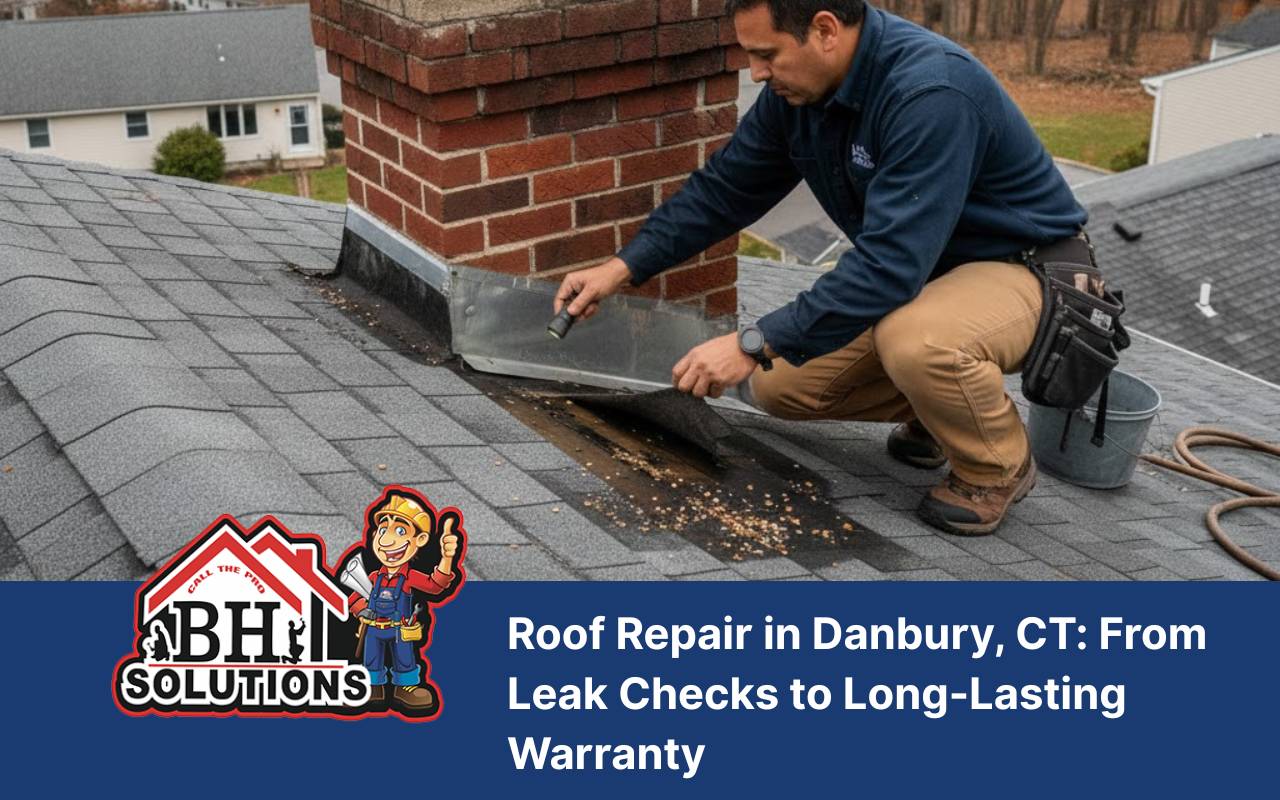
When you check your attic, you might notice dark stains, peeling paint, or musty smells. These are clear signs of long-term moisture. Outside, missing shingles, cracked flashing around chimneys or vents, and clogged gutters all raise the risk of leaks. Regular visual checks and basic leak diagnostics reveal problems before they grow.
- Lifted or broken shingles that expose the roof deck.
- Ice dams along eaves that push water back under shingles.
- Cracked flashing around skylights, chimneys, and vent pipes.
- Blocked gutters that force water to pool near the roof edge.
Effective repair also depends on choosing materials and solutions that handle ice, snow, and heavy rain. By watching for curling shingles, small roof stains, or early mold spots, you can schedule repairs on your own terms. As a result, your home stays safer during storms and your warranty protection remains strong.
The Role of Flashing in Roof Repair
Flashing is the thin metal that seals joints and roof openings. In Danbury’s changing temperatures, it guides rain and melting snow away from weak areas so water cannot slip between shingles and reach the roof deck. Common flashing materials include aluminum and galvanized steel because they resist rust and handle harsh weather.
During any roof project, checking flashing is just as important as checking shingles. Damaged or poorly installed flashing fails first under stress and leaves underlayment exposed. When professionals replace it, they overlap pieces correctly and secure them tightly. This careful work creates a watertight seal that helps your roof stand up to storms.
When flashing is installed well, it works closely with underlayment and shingles to form a layered water barrier. This teamwork reduces future leak calls, lowers long-term repair needs, and supports better warranty coverage. Consequently, a small investment in quality flashing helps your roof last longer in Danbury’s wet seasons.
Exploring Different Types of Roofing Materials
Choosing the right roofing material affects long-term performance and your overall budget. Asphalt shingles are very popular in Danbury because they balance cost, simple installation, and solid resistance to wind and rain. Additionally, these shingles respond well to infrared leak diagnostics, since thermal images highlight damp areas where water gets trapped.
Metal roofing offers outstanding durability and sheds snow quickly, which is helpful in cold weather. However, it may need special underlayment to prevent condensation. Rubber slate and composite tiles copy the look of wood shakes or natural slate while adding fire resistance and lower weight. Each material choice changes how flashing and underlayment work together.
- Asphalt shingles for budget-friendly, reliable protection.
- Metal panels for snow shedding and long service life.
- Rubber slate or composite tiles for style with less weight.
- Specialty systems designed for energy savings or unique looks.
When planning a project, consider each material’s lifespan, maintenance needs, and warranty details. Sometimes, a slightly higher upfront cost leads to fewer repairs and stronger warranty terms. For detailed options, you can review local roofing services in Danbury that match your home’s style and your long-term goals.
Assessing the Condition of Underlayment
Underlayment is the thin layer between shingles and the roof deck that serves as a backup water barrier. It is usually made from felt or synthetic sheets and steps in when outer layers are damaged. Over time, heat, humidity, and trapped moisture can cause it to crack, tear, or lose strength.
During a careful inspection, professionals lift small shingle sections to see the underlayment underneath. If they find brittle spots, rips, or water stains, replacement is usually necessary. Modern synthetic products often resist mold and tears better than older felt. Therefore, they can provide stronger, longer-lasting protection for the whole roof system.
Healthy underlayment supports both shingles and flashing. When you combine routine checks with infrared leak diagnostics, you create a strong defense against hidden moisture paths. This simple habit helps prevent costly interior damage and also supports the conditions required to keep your warranty active.
Choosing the Right Roofing Contractor
Working with the right contractor is essential for any successful repair. Look for roofers licensed in Connecticut who carry insurance and provide clear, written estimates. Because they know local codes and weather patterns, experienced teams can suggest practical solutions that handle Danbury’s storms and freeze-thaw cycles without unnecessary extras.
Additionally, ask how they perform leak diagnostics. Do they rely on infrared cameras? How do they test flashing seams and underlayment quality? Request examples of past jobs and read online reviews about communication and clean-up. A trustworthy contractor will also explain material and labor warranty coverage in simple terms and help with any registration forms.
When you are ready to discuss Roof Repair in Danbury with a specialist, take time to compare a few detailed proposals. Choose a team that communicates clearly, respects your property, and offers strong warranty support. If you have questions or want to schedule a visit, you can easily contact our team for guidance.
Steps Involved in Roof Repair Process
Initial Inspection and Leak Diagnostics
Every repair project starts with a careful inspection. A trained technician combines visual checks with leak diagnostics and, when needed, infrared imaging. This process highlights hidden moisture, loose shingles, and weak flashing. With this information, the crew can plan targeted repairs instead of guessing, which saves time and prevents missed problem areas.
Repair Work and Final Checks
Next, damaged shingles and worn sections of underlayment are removed so the roof deck can be inspected. The team then installs new underlayment and secures flashing around vents, chimneys, and valleys. Fresh shingles that match your roof are nailed and sealed to manufacturer guidelines, followed by a detailed walk-through and tidy clean-up.
- Inspect the roof using visual checks and infrared tools.
- Identify damaged shingles, flashing, and underlayment sections.
- Remove worn materials and prepare the roof deck.
- Install new underlayment, flashing, and matching shingles.
- Review the finished work, clean up, and confirm warranty details.
Once work is complete, many contractors provide documentation that explains how leak diagnostics, flashing upgrades, and fresh underlayment support your roof’s warranty. Keeping these records in a safe place makes any future claims much easier to handle.
Maximizing the Warranty Coverage
Understanding warranty terms helps you get the most from your roof investment. Some warranties cover only material defects, while others include labor. Manufacturers often offer enhanced coverage when you register the installation quickly and keep proof of regular inspections, especially when leak diagnostics and photo reports are included.
Local professionals can explain what counts as routine maintenance and what issues might void coverage. Simple tasks such as clearing gutters, trimming branches, and checking for missing shingles show ongoing care. By saving receipts and inspection notes, you build a clear history that supports your warranty if you ever need to file a claim.
However, ignoring small leaks or skipping yearly checks can put coverage at risk. When you follow maintenance schedules and work with licensed contractors, you protect both your home and your budget. In the end, a strong warranty becomes a helpful safety net against sudden roofing costs.
Ensuring Longevity of Roof Repairs
Regular maintenance is the best way to extend the life of any repair. Plan quick visual inspections at least twice a year, ideally in spring and fall, and after severe storms. Look for missing shingles, loose flashing, or built-up debris that can trap moisture against roofing layers and slowly weaken them.
Cleaning gutters and downspouts keeps water moving away from your home and reduces the chance of ice dams. Trimming tree branches that touch or hang over the roof prevents damage, while periodic infrared leak diagnostics reveal hidden damp spots. As a result, you can handle small issues early instead of facing major structural repairs later.
Good attic ventilation also matters because it limits humidity below the roof surface. In some cases, adding algae-resistant treatments to shingles can reduce staining and slow wear from sun and rain. Together, these simple habits help your repairs last longer and keep warranty conditions in good standing.
Frequently Asked Questions
How often should I schedule a roof inspection in Danbury?
Most homes benefit from inspections twice a year and after major storms. This routine allows roofers to spot small issues early, use leak diagnostics when needed, and plan simple repairs before damage spreads. Regular visits also support warranty terms that require documented maintenance.
Inside, watch for ceiling stains, peeling paint, or musty smells in the attic. Outside, look for missing shingles, cracked flashing, or sagging gutters. When these signs appear, it is wise to request an inspection that may include infrared scanning to check for hidden moisture.
Why is infrared technology useful during roof inspections?
Infrared cameras detect temperature differences across the roof surface. Cooler spots often signal damp areas where water has slipped under shingles or underlayment. Because this method is non-invasive, it helps professionals map leak paths accurately without removing large sections of roofing.
How does underlayment affect the life of my roof?
Underlayment acts as a backup shield when shingles fail or wind drives rain under the surface. If it is strong and well installed, it slows leaks and protects the roof deck. When underlayment becomes brittle, torn, or soaked, leaks can move inside much faster.
What should I look for in a roofing contractor’s warranty?
First, check how long materials and labor are covered. Then, review what maintenance tasks you must complete, such as inspections or gutter cleaning. A clear warranty explains excluded damage, outlines claim steps, and provides contact details so you always know who to call with questions.
Securing Your Home Against Future Roofing Challenges
By focusing on timely leak diagnostics and understanding key parts such as flashing and underlayment, you can manage Roof Repair in Danbury with confidence. Selecting durable materials, hiring experienced contractors, and following a simple maintenance routine will help your roof resist harsh weather year after year.
When you also take time to register and protect your warranty, you gain long-term peace of mind. Staying alert to early warning signs and scheduling quick repairs keeps your home safe from leaks and costly structural damage. With the right plan, your roof can continue to protect your family for many seasons.