Siding Repair vs Replacement can feel tough after storm damage. You step outside and see dents, cracks, or missing pieces. As a result, you start to wonder what will protect your home best.
Still, Siding Repair vs Replacement is not only about looks. It affects comfort, energy use, and protection. Siding also works as a moisture barrier and impacts R-value. Therefore, warranties and curb appeal can matter just as much as the quick fix.
Checking the Damage
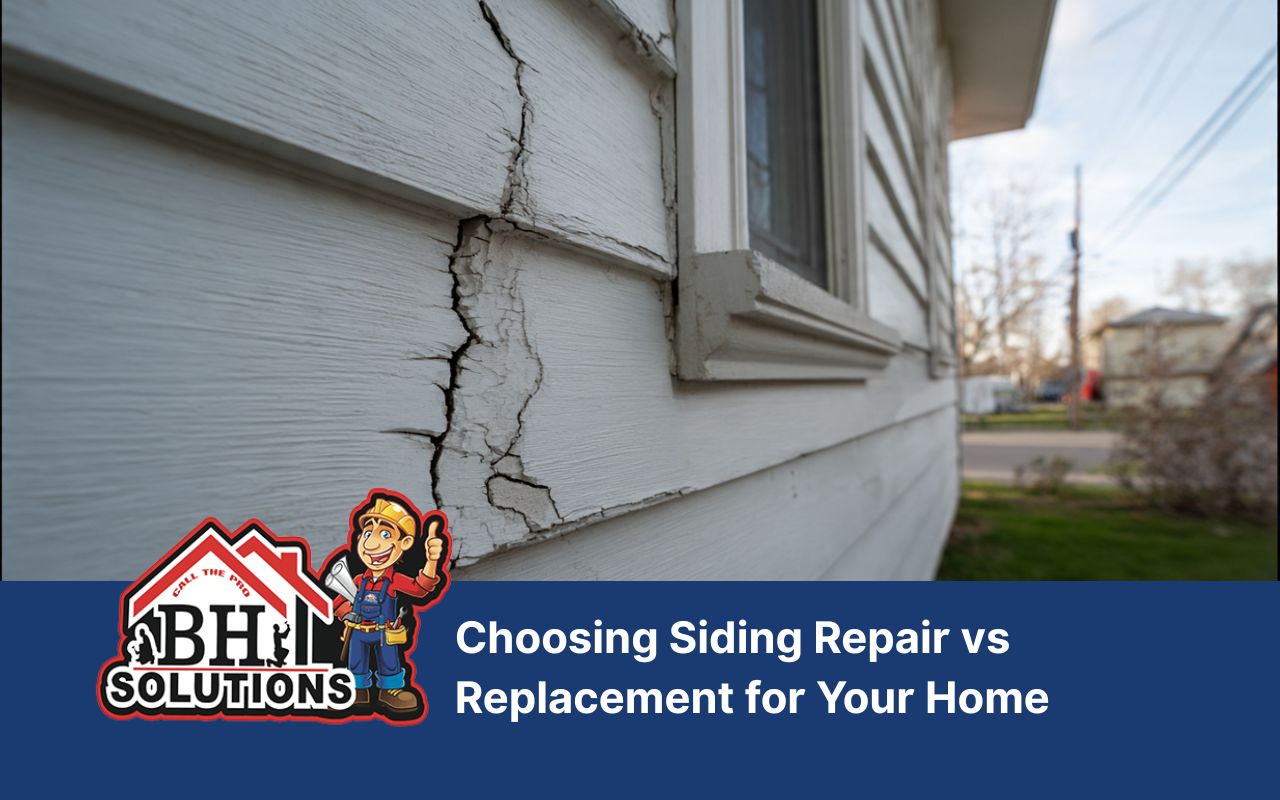
After storm damage, walk around your home and look closely. Check for cracked panels, dents, and missing sections. Also, look for warped boards and loose trim near windows, eaves, and the foundation.
- Cracked or broken panels
- Loose trim around windows and doors
- Warped boards near eaves and corners
- Dented sections from hail or debris
However, some problems hide behind the surface. Peeling paint or soft spots can signal water intrusion. If moisture gets under the boards, the moisture barrier can fail. Consequently, mold or wood rot may follow.
Costs to Weigh
Repairs often cost less at first. Replacing a few boards or sealing cracks uses fewer materials and less labor. In addition, quick fixes can restore the moisture barrier and reduce new damage risk.
- Scope of damage and number of boards
- Labor time and access to problem areas
- Hidden moisture issues behind panels
- Future upkeep needs over time
Still, replacement can bring long-term value. New siding can improve insulation and raise overall R-value. As a result, heating and cooling needs may drop over time. When Siding Repair vs Replacement is the choice, include energy use and warranties in the comparison.
How Long It Will Last
Repaired siding can work well, yet age matters. If the boards are older, repairs may only add a few years. Over time, more cracking can return. Therefore, repeated patching can create uneven results and shorten the usable life.
New siding often lasts much longer. Modern options resist weather better and support a stronger moisture barrier. Consequently, you may face fewer repairs and less worry in every season.
Energy Use and Insulation
Start by thinking about the current R-value. Low R-value siding can let heat out in winter and let heat in during summer. As a result, energy bills can rise. Repairing small areas rarely boosts insulation across the full exterior.
However, a full replacement can add advanced insulation layers. This can raise the overall R-value and improve comfort. Over time, lower utility use may help balance a bigger upfront project.
Boosting Look and Curb Appeal
Repair can refresh curb appeal fast. For example, filling cracks, repainting chipped areas, and swapping damaged boards can improve the facade. This keeps your home’s character without a major build.
- Patch cracks and seal gaps
- Replace a few damaged boards
- Repaint faded or chipped areas
- Match trim for a cleaner finish
On the other hand, replacement creates a uniform look. You can choose new colors, textures, and styles. Consequently, the exterior can feel updated and may support resale appeal. For many owners, Siding Repair vs Replacement comes down to this visual impact.
Maintenance Over Time
Repaired areas can need closer monitoring. Small cracks can reopen, and sealant may need new coats. Therefore, you may spend more time checking for leaks to protect the moisture barrier.
New siding is often simpler to maintain. Many modern materials resist fading, mold, and water damage. As a result, you can enjoy longer gaps between inspections and cleaner surfaces.
Environmental Considerations
Repair uses fewer new materials, so it can reduce waste. In addition, reusing parts helps conserve resources. However, repeated repairs may require more paints and sealants over time.
Replacement can support eco-friendly choices. Some products use recycled or responsibly sourced materials. Also, higher R-value systems can cut heating and cooling needs. Consequently, energy savings may lower your home’s overall footprint.
Expert Input That Helps
A professional can spot issues you may miss. They can check the moisture barrier, insulation, and structural condition. Therefore, they can explain whether repairs solve the real problem or only hide it.
Also, compare more than one opinion. Contractors can point out climate risks and product limits. To explore related help for exterior work, review our full service list and see what fits your situation.
Warranties and Coverage
Repair warranties can be limited. Often, labor is covered for a shorter period and only for specific fixes. Material coverage can vary by brand. Therefore, read the terms carefully before you commit.
Replacement warranties are often broader. Many brands cover both materials and installation. As a result, you may feel more confident about long-term performance. Siding Repair vs Replacement can shift when warranties are a priority.
Frequently Asked Questions
How do I know if the damage is only cosmetic?
Look for dents and small cracks that do not feel soft. However, check for peeling paint and spongy spots too. Those can suggest water has moved behind the panels.
Why does the moisture barrier matter so much?
The moisture barrier helps block water from reaching the structure. If it fails, moisture can lead to mold and wood rot. Therefore, hidden damage can become a bigger repair later.
Does new siding always improve R-value?
Not always, yet it often can. Many replacement systems include added insulation layers. As a result, the overall R-value can rise, improving comfort and energy use.
Will repairs hurt curb appeal?
Repairs can help curb appeal when the match is clean. However, mismatched boards or uneven paint can stand out. Therefore, careful color and texture matching matters.
What should I ask a contractor before starting?
Ask about hidden moisture checks, material durability, and maintenance needs. Also, ask what the warranty covers and for how long. In addition, request a clear plan for storm damage areas.
Making the Final Choice
In the end, Siding Repair vs Replacement depends on damage level, goals, and budget. Repairs fit small issues and faster timelines. Meanwhile, replacement can boost insulation, durability, and curb appeal.
Ultimately, balance longevity, energy comfort, upkeep, environmental goals, and warranties. If you want guidance based on your exterior conditions, use contact our team to discuss the best next step for your home.