
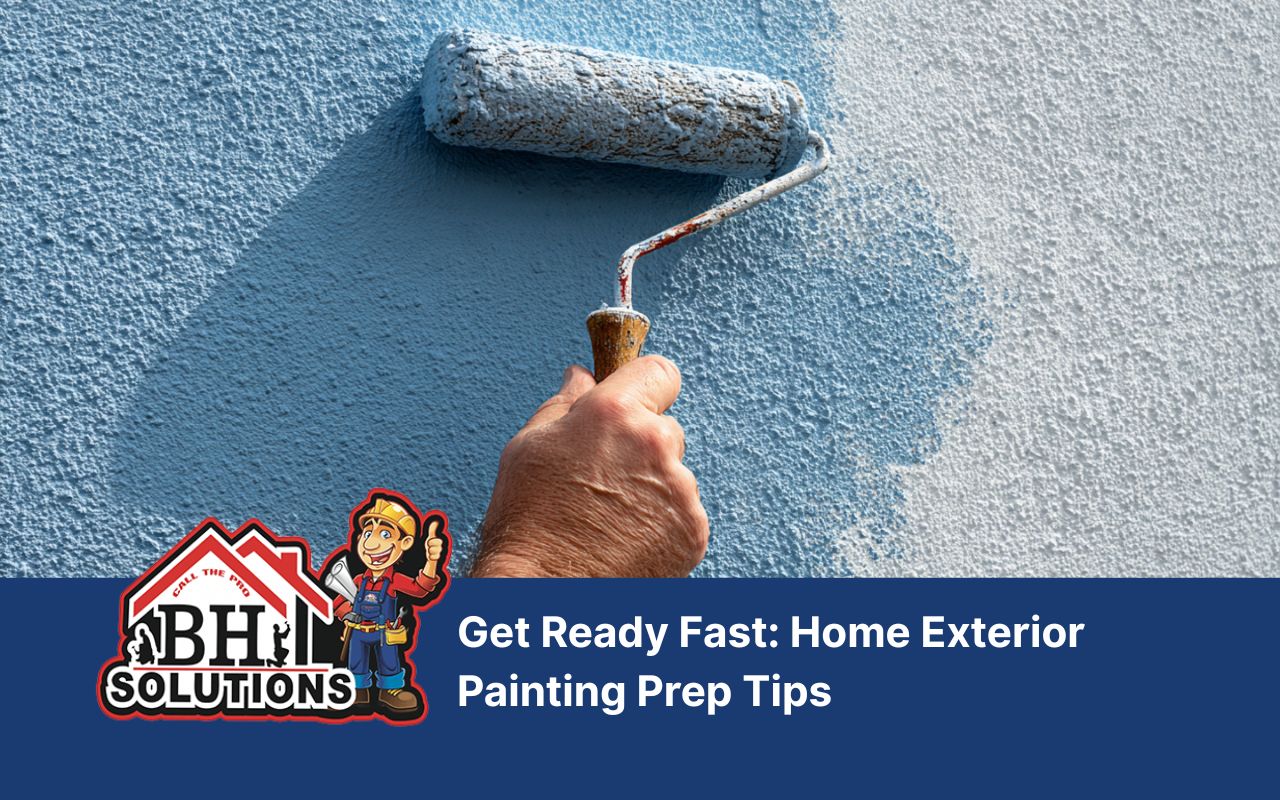
Home exterior painting prep tips help you get a smooth, lasting finish. Therefore, take a little time before you open any paint. A fresh coat boosts curb appeal and shields your home. However, skipping prep often leads to peeling, flaking, or uneven color. So, plan each step with care and keep the work simple.
First, inspect your walls and trim. Next, focus on surface cleaning and smart repairs. Then, add primer where needed and protect edges well. Finally, paint under the right weather. With this approach, your project feels easier and your results look better.
Check Your Exterior Before You Start
Before anything else, walk around your home and look closely. For example, check siding, trim, and masonry for peeling paint and loose pieces. Also, note water stains, rust marks, and soft wood. This step supports your home exterior painting prep tips plan. As a result, you can buy the right supplies and avoid surprises.
- Look for peeling paint, gaps, and dark stains.
- Test small areas with a scraper for loose paint.
- Check caulk near windows and doors for cracks.
- Watch for gutter leaks that drip onto walls.
In addition, write down each problem area. Then, fix the worst spots first. That way, you reduce issues like bubbling and mold later.
Surface Cleaning That Helps Paint Stick
Surface cleaning is the base of a strong paint job. First, rinse walls with a garden hose to remove dust and pollen. Then, scrub tough spots with a mild cleaner and a soft brush. After that, rinse again so no soap stays behind. Consequently, the new paint can bond better.
- Use a hose and spray nozzle for light dirt.
- Scrub mildew with an exterior cleaner and soft brush.
- Rinse well and let the wall dry fully.
For harder grime, use pressure washing tips that protect your siding. For instance, use medium pressure and keep distance from the wall. Moreover, wait 24 to 48 hours for full drying when weather is fair.
Fix Cracks and Small Damage Early
Crack repairs stop water from getting behind the paint. So, fill hairline cracks in stucco or concrete with an exterior filler. For wood, use an exterior wood filler for holes and worn spots. After the filler dries, sand lightly. As a result, the surface looks even and paint goes on smoothly.
- Fill small cracks with exterior patch compound.
- Use wood filler on gaps, then sand after it cures.
- Replace any rotten boards before you prime.
Also, re-check caulk lines after repairs. Then, seal small gaps to reduce drafts and moisture.
Prime for Better Coverage and Grip
Priming exterior walls helps the topcoat hold and last. For example, primer seals bare wood and porous masonry. It also blocks stains and helps color look even. Therefore, you often need fewer paint coats.
Apply primer in smooth strokes and keep a wet edge. Then, let it dry as the label says. After that, you are ready for finish paint. These home exterior painting prep tips reduce peeling later.
Mask Edges for Clean Lines
Masking and taping techniques keep paint off glass, hardware, and trim lines. First, cover windows and fixtures with plastic or paper. Next, press tape down firmly along edges. Then, paint with steady strokes. As a result, you get sharp borders and fewer touch-ups.
On rough wood grain, add extra sealing along tape edges. For instance, use a thin bead of paintable caulk where needed. Also, remove tape while paint is still slightly wet for cleaner lines.
Pick Tools and Prep for Each Material
Material-specific prep helps paint last on different surfaces. For instance, rough siding needs deeper cleaning than smooth trim. Also, choose tools that match your paint type and surface texture. Therefore, you get better coverage with less effort.
- Use nylon or polyester brushes for latex paint.
- Use natural bristle brushes for oil-based paint.
- Choose a medium-nap roller for most siding.
- Use a short-nap roller for smoother areas.
In addition, a sprayer can cover rough surfaces faster. Still, protect nearby areas well before you spray. These paint adhesion tips matter most when surfaces vary.
Work Carefully Around Hard-to-Paint Spots
Tricky areas need smaller tools and a clear order. First, paint recessed spots around vents and trim details. Then, move to wider, flat sections. This way, you avoid dragging into wet edges. Also, keep paint on your brush even, so drips are less likely.
For vertical walls, work from top to bottom. As you go, catch drips early. Consequently, you save time and get a cleaner finish.
Choose the Best Weather Window
Best time to paint exteriors is when weather is mild and steady. Aim for 50°F to 85°F with low humidity. However, strong sun can dry paint too fast and leave marks. So, early morning or late afternoon can work better.
Avoid rain within 24 hours, since water can ruin fresh coats. Also, skip windy days because dust can stick to wet paint. Therefore, check the forecast and plan your layers with care.
Frequently Asked Questions
How long should I wait after washing before painting?
In most cases, wait 24 to 48 hours. However, shaded areas may need longer to dry fully.
Do I always need primer on exterior walls?
Not always. Still, priming exterior walls is important on bare spots, stains, and porous surfaces.
What pressure is safe for washing siding?
Use pressure washing tips like medium pressure and distance. Also, test a small area first.
How do I stop paint from bleeding under tape?
Use masking and taping techniques with firm pressure. Then, seal rough edges carefully before painting.
What is the biggest reason paint peels early?
Often, it is poor prep. So, focus on surface cleaning, dry time, and steady paint adhesion tips.
Keep Your Exterior Looking Fresh
After painting, simple care helps your finish last. For example, wash walls once a year with mild soap and a soft brush. Then, touch up chips quickly to block moisture. Also, refresh caulk every few years as it dries out. With these habits, your results stay bright longer.
If you want more guidance for a durable result, review exterior painting advice for a lasting finish. In addition, if you wonder when to call a pro, read recognizing the signs of professional painters. When you are ready to discuss your project, you can reach BH Solutions, LLC through the contact page.
Home exterior painting prep tips help you finish with confidence. Therefore, inspect, clean, repair, and prime before you paint. Then, protect edges and pick the right weather. As a result, your home looks better and stays protected longer.