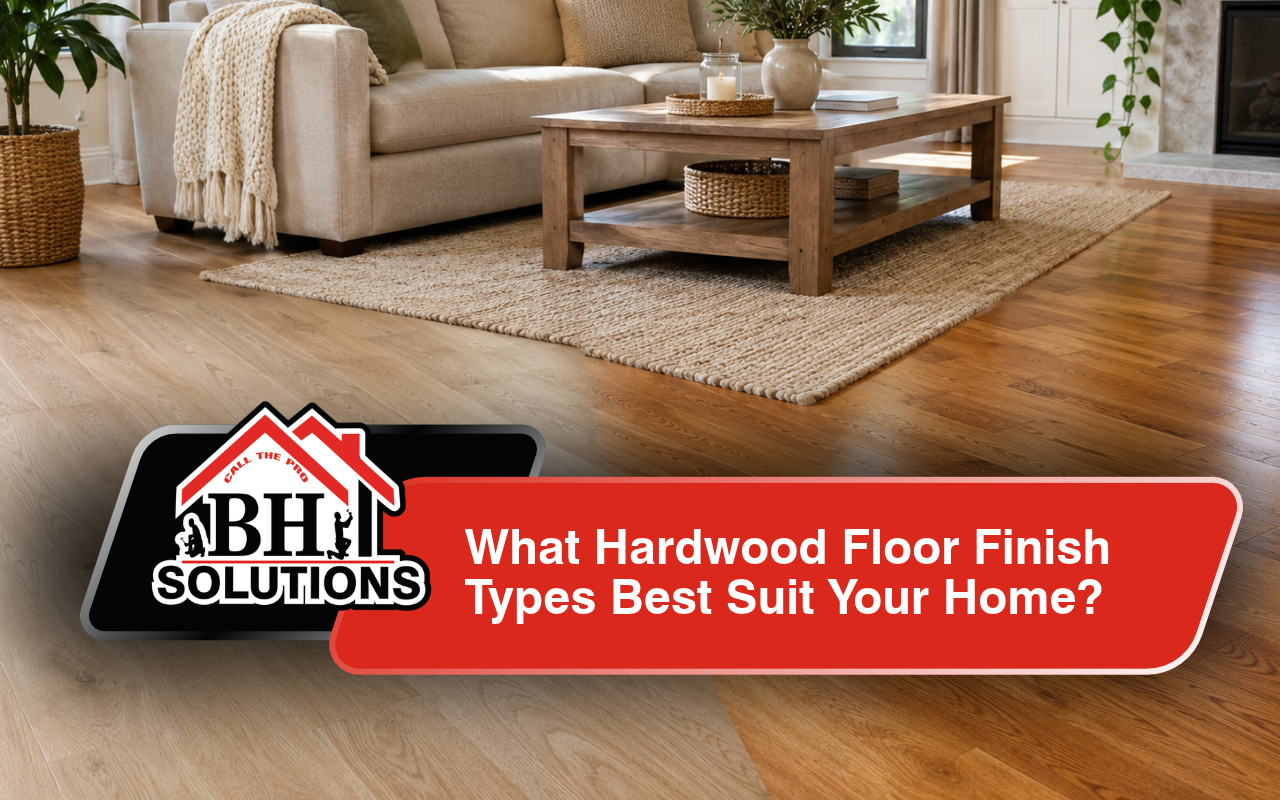
The best hardwood floor finish depends on your preferred color, household activity, and maintenance needs. Water-based polyurethane dries faster and preserves natural wood tones. Meanwhile, oil-based polyurethane creates a warmer appearance but requires more drying time. Both protect hardwood against everyday wear when applied and maintained correctly.
Understand How Hardwood Floor Finishes Protect Your Wood Surfaces
Hardwood finishes create a protective layer against moisture, scratches, and everyday wear. Without proper protection, wood can absorb spills and develop stains. As a result, flooring may lose its original beauty.
At BH Solutions, LLC, we encourage homeowners to consider appearance and protection together. A suitable wood floor coating can preserve the natural grain while supporting long-term floor care.
Before choosing a finish, consider these important factors:
- Appearance: Clear finishes preserve natural tones, while amber finishes add warmth.
- Durability: Strong coatings help reduce damage from normal household activity.
- Drying time: Some finishes allow rooms to return to use sooner.
- Maintenance: Proper cleaning helps extend the protective layer’s useful life.
Furthermore, older flooring may require special attention. Our older home renovation guide explains how preserving original wood features supports thoughtful remodeling.
Discover Why Water-Based Polyurethane Preserves Natural Wood Beauty Better
Water-based polyurethane is popular because it dries clear and maintains the wood’s original color. Therefore, it works especially well with lighter hardwood floors.
Additionally, this finish usually dries faster than oil-based alternatives. Its lower odor can also make interior projects more manageable. However, drying times vary by product and room conditions.
Advantages of Water-Based Finishes
- Faster drying: Multiple coats may be possible within one day.
- Natural appearance: Clear coatings help preserve lighter wood tones.
- Lower odor: Many products release fewer strong smells during application.
- Easy cleanup: Water-based products generally allow water cleanup before drying.
Limitations Worth Considering
However, water-based finishes can dry quickly enough to show application marks. Therefore, careful preparation and even application are important.
Some products also require additional coats. Nevertheless, modern professional-grade options can provide excellent protection, including in busy households.
At BH Solutions, LLC, we believe choosing suitable materials is an important part of responsible renovation planning. Explore our eco-friendly home remodeling ideas for additional approaches to thoughtful home improvements.
Explore How Oil-Based Polyurethane Enhances Warm Hardwood Floor Colors
Oil-based polyurethane creates a rich appearance that highlights wood grain. Consequently, it suits homeowners who prefer traditional interiors and warmer flooring tones.
This finish develops an amber color, which can deepen over time. Furthermore, its protective coating can handle regular household activity when maintained properly.
However, oil-based polyurethane generally requires longer drying periods. Stronger odors also mean ventilation and careful planning are especially important.
Advantages of Oil-Based Finishes
- Warm appearance: Amber tones highlight natural wood character.
- Durable protection: Properly applied coatings resist everyday wear.
- Smooth coverage: Longer working time can support even application.
- Classic style: Rich colors complement many traditional interiors.
Disadvantages to Consider
Nevertheless, oil-based finishes produce stronger fumes and typically need more time between coats. Additionally, their growing amber tint may change the appearance of lighter woods.
Therefore, homeowners should review ventilation requirements, curing instructions, and color expectations before selecting this option.
Follow These Essential Steps for Successful Hardwood Floor Finishing
Proper preparation matters regardless of the selected finish. Otherwise, trapped dirt, uneven sanding, or moisture can affect the finished surface.
At BH Solutions, LLC, we believe planning each renovation stage helps homeowners understand the work involved.
- First, inspect the boards for damage, stains, or loose areas.
- Next, clean and prepare the surface according to its condition.
- Then, sand the flooring when necessary and remove remaining dust.
- Afterward, test the selected finish in a small, suitable area.
- Next, apply coats evenly according to the product manufacturer’s instructions.
- Finally, allow the floor to dry and fully cure before normal use.
Importantly, drying and curing are different. A floor may feel dry before reaching its full strength. Therefore, avoid moving furniture too early.
For a clearer understanding of preparation and finishing stages, read our hardwood floor refinishing process guide.
Compare Finish Durability to Support Better Long-Term Flooring Decisions
When comparing hardwood floor finish types, durability depends on more than the coating category. Product quality, application, foot traffic, and cleaning habits all matter.
Although oil-based polyurethane has a long history of reliable protection, modern water-based formulas can also offer strong scratch resistance.
Meanwhile, polyurethane hardwood floors benefit from regular maintenance regardless of the selected formula. Neither finish makes wood completely waterproof or scratchproof.
Furthermore, the room’s purpose should guide your decision. Busy hallways experience different wear than quiet bedrooms. Therefore, consider furniture movement, pets, footwear, and moisture exposure.
For homeowners planning wider changes, our custom home renovation planning ideas explain how design choices can reflect everyday needs.
Maintain Your Finished Hardwood Floors With Simple Daily Habits
Good refinished floor protection starts with regular cleaning and careful furniture placement. Fortunately, small habits can make a meaningful difference.
First, remove loose dirt before it scratches the finish. Then, clean using products approved for your specific flooring.
Use these practical care methods:
- Sweep regularly: Remove grit before it damages the coating.
- Clean spills promptly: Prevent moisture from reaching board joints.
- Use furniture pads: Reduce scratches from moving chairs and tables.
- Place entrance mats: Limit dirt and moisture entering the room.
- Avoid steam cleaning: Excess heat and moisture can damage hardwood.
- Check worn areas: Identify fading or scratches before damage spreads.
Additionally, avoid harsh chemicals and excess water. Products containing wax may also interfere with future polyurethane recoating.
At BH Solutions, LLC, we encourage checking visible wear before it becomes widespread. Our guide to recognizing worn hardwood floors explains which changes deserve attention.
Select the Right Finish to Match Your Lifestyle Needs
Choosing between hardwood floor finish types becomes easier when you focus on everyday priorities. For example, lighter floors often benefit from water-based products that preserve their original tone.
Meanwhile, homeowners seeking a traditional appearance may prefer oil-based finishes. However, they should prepare for stronger odors and longer curing periods.
At BH Solutions, LLC, we understand that flooring decisions can affect the look of an entire room. Therefore, consider nearby trim, wall colors, lighting, and existing wood details.
Also, think about future cleaning and maintenance. A beautiful finish should complement both your home’s appearance and your daily routine.
If your flooring choices are part of a larger renovation, tell us about your renovation plans so we can discuss your goals.
Frequently Asked Questions
Which hardwood floor finish works best for busy households?
Both polyurethane options can protect busy floors. However, product quality and maintenance greatly affect durability. If you notice existing scratches, our hardwood floor wear assessment guide explains what to check.
How long does polyurethane take to dry completely?
Water-based coatings generally dry faster than oil-based products. However, full curing takes longer than surface drying. Review our floor refinishing steps and preparation guide to understand the stages involved.
Are water-based hardwood floor finishes better for indoor air?
Many water-based products contain fewer volatile organic compounds than traditional oil-based finishes. Nevertheless, proper ventilation remains important. Our sustainable home remodeling considerations offer broader guidance for environmentally conscious projects.
Can original hardwood floors in older homes be refinished?
Often, yes. However, wood thickness, existing damage, and previous refinishing affect suitability. Our historic home restoration planning tips explain why preserving original flooring deserves careful consideration.
Should hardwood flooring match the overall room design?
Yes. Flooring color and shine should complement nearby materials and furniture. Additionally, lighting can change how finishes appear. Explore our personalized home renovation design guide for ideas that connect appearance with daily function.
Enjoy Beautiful Hardwood Floors Through Confident Finish Choices Today
The right finish combines appearance, protection, and practical maintenance. Therefore, compare the benefits of water-based and oil-based polyurethane before making your decision.
At BH Solutions, LLC, we believe informed planning leads to more satisfying home improvements. Whether you prefer natural tones or classic warmth, thoughtful choices help protect your flooring investment.
Ultimately, select a finish that supports your lifestyle, complements your interior, and keeps your hardwood floors attractive for years.
References:
- Water-Based vs. Oil-Based Polyurethane Comparison Guide — The Spruce
- How Often Should You Clean Your Wood Floors? — Better Homes & Gardens