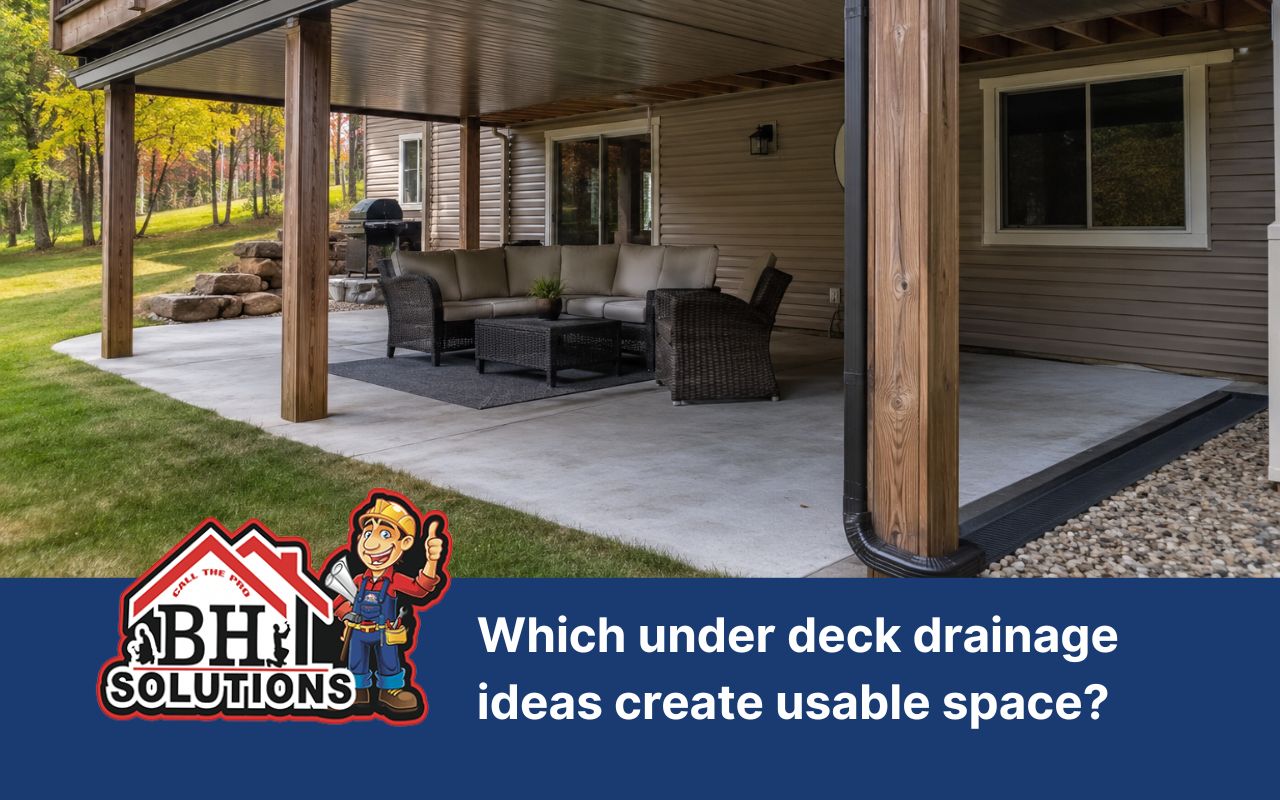
Water dripping through deck boards can make the space below feel wasted. When customers ask BH Solutions, LLC about smarter outdoor upgrades, we look at slope, runoff, ceiling coverage, and how the area should be used before suggesting the right drainage plan.
Which under deck drainage ideas create usable space?
Under deck drainage ideas create usable space by collecting rainwater below deck boards and moving it away through channels, panels, or gutters. For related deck planning, see Deck Builders Fairfield County CT | Custom Deck Construction.
For many homeowners, drainage below deck is the process of guiding rain away from the frame, foundation, and patio area. It helps anyone with an open second-story deck turn a damp space into a cleaner, drier zone for seating, storage, or everyday outdoor use.
Practical under deck drainage ideas support daily use
The best under deck drainage ideas start with how you want to use the space. A storage area needs strong moisture control. A seating area needs comfort and clean overhead coverage. A dining area needs drainage, headroom, lighting, and safe access.
At BH Solutions, LLC, we check how water moves now before discussing the next step. Standing water near posts, stains on the patio, or splashback near siding can show that the system needs better direction.
- Use panels to create a dry patio under deck.
- Add channels to move water toward downspouts.
- Keep drainage exits away from the foundation.
- Plan ceiling access for cleaning and inspection.
According to the U.S. EPA, runoff over hard surfaces can carry pollutants into storm drains and waterways. That is why smart water runoff control should move rain carefully, not just hide it.
A deck drainage system turns rain into safer flow
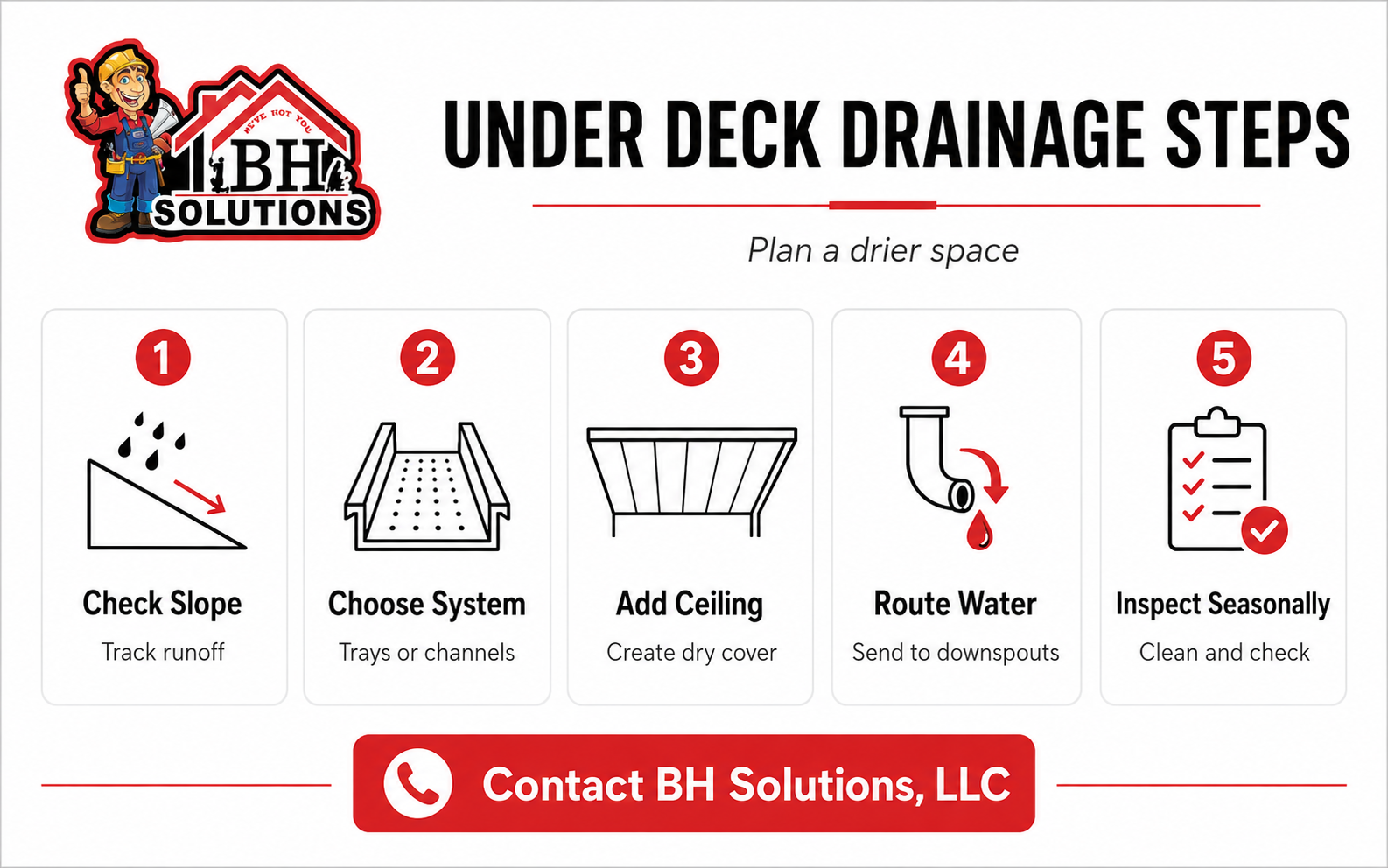
A deck drainage system works by catching water before it falls into the space below. The system may use troughs, membranes, panels, or channels that lead water toward a controlled exit point instead of letting water drip everywhere.
During planning, we review deck board gaps, joist direction, slope, and nearby gutters. A well-planned deck gutter system should move water without creating overflow near doors, stairs, soil, or stored items. Water should leave the area cleanly, not pool under the structure.
Common choices include joist-mounted trays, under-joist ceiling panels, and perimeter gutter channels. For deck care beyond drainage, review Prolonging Deck Lifespan – Tips for Lasting Durability.
An under deck ceiling improves comfort and appearance
An under deck ceiling helps the lower area feel finished while guiding water away. It can hide joists, reduce dripping, and make the space feel more like an outdoor room when the drainage path is planned correctly.
Some ceilings use vinyl or PVC panels. Others use metal panels, trough systems, or removable sections. We explain which options fit the deck height, framing, and planned use. Access matters for future maintenance, so panels should not trap debris or block inspection points.
- Choose lighter colors to brighten shaded areas.
- Use moisture-safe fixtures for lighting.
- Leave access where gutters may need cleaning.
- Match ceiling style to the home exterior.
InspectAPedia notes that deck gaps and flashing details help with drainage and drying. This supports the need for both surface drainage and protected areas below the deck.
Outdoor storage under deck stays safer with planning
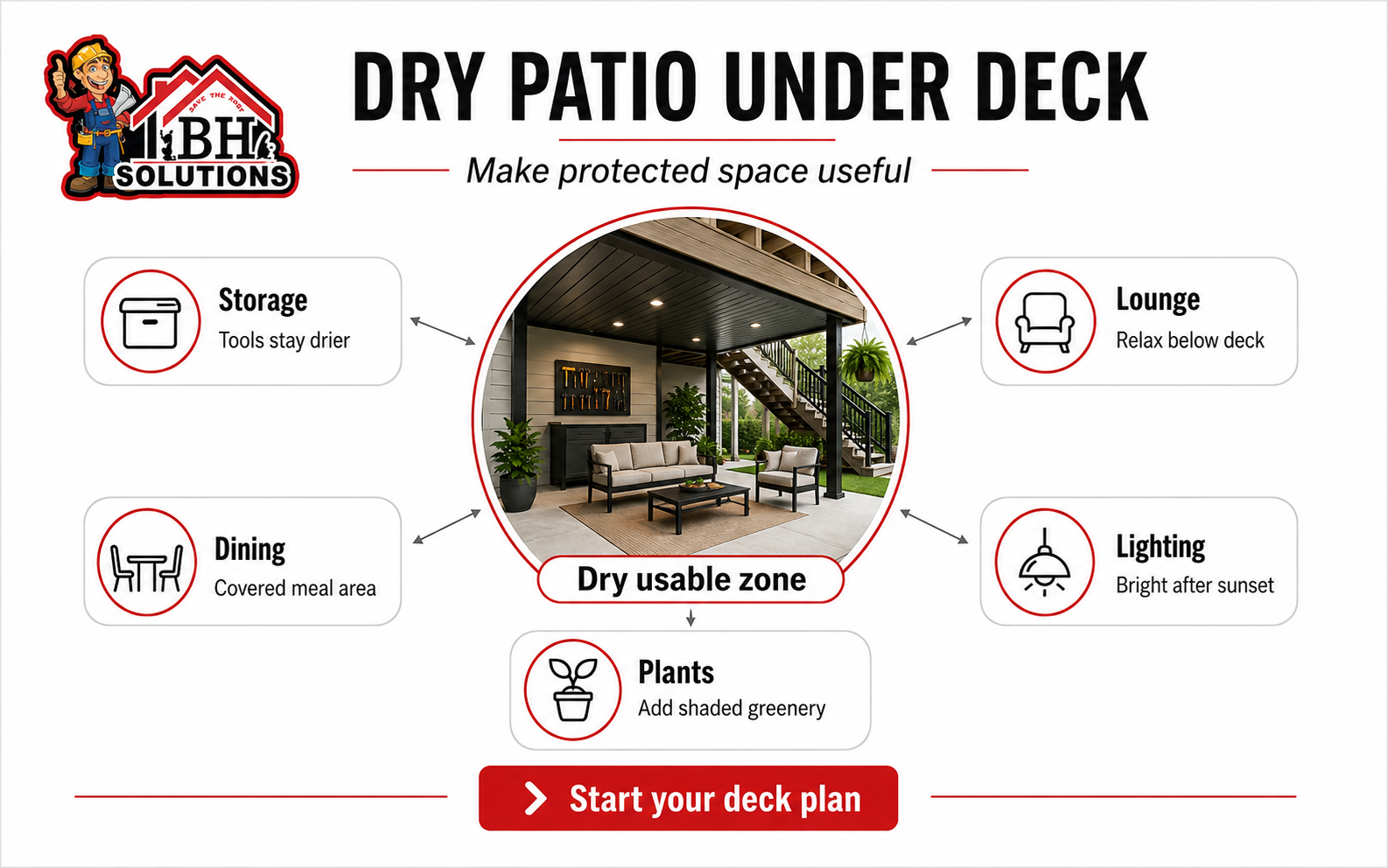
Outdoor storage under deck works best when drainage, airflow, and access are planned together. Even a waterproof deck area should allow ventilation, because humidity can still affect cushions, tools, seasonal décor, and storage cabinets.
Before storage is added, we recommend checking the floor surface, wall clearances, and water exit points. Items should stay raised off the ground when possible. Weatherproof bins, metal shelving, and louvered doors can help reduce moisture risks.
A dry area can support storage benches, bike hooks, garden tool racks, or compact cabinets. However, heavy storage should not block drainage below deck. For a project review or next-step guidance, visit Contact BH Solutions, LLC | Danbury, CT.
Our booking process clarifies each drainage choice early
A clear process helps homeowners understand what is possible before work begins. When customers contact BH Solutions, LLC, we ask about the deck, the water problem, and how the lower space should function after drainage is improved.
After booking, we review photos or project details when available. Then we discuss the deck structure, slope, ceiling goals, and runoff path. The first inspection step is understanding where the water starts and where it should go.
- We ask how the space is used now.
- We check visible runoff and damp areas.
- We explain drainage and ceiling options.
- We review access, cleaning, and finish needs.
- We help plan the next practical step.
This process keeps the project simple. It also helps prevent choices that look good but do not control water well.
Frequently Asked Questions
What is the best drainage option under a deck?
The best option depends on deck height, slope, framing, and how you want to use the area. Many homes use panels, troughs, or a deck gutter system. For full deck planning, visit Deck Builders Fairfield County CT | Custom Deck Construction.
Can I make the space below my deck dry?
Yes, many under deck areas can become much drier with the right system. The drainage must collect water, guide it away, and reduce leaks through the overhead area. The goal is a dry patio under deck that stays more useful after rain.
Does drainage below deck help protect stored items?
Drainage below deck can help protect stored items by reducing direct dripping and puddles. Storage still needs airflow and weather-safe containers. To keep the full deck in better condition, read Prolonging Deck Lifespan – Tips for Lasting Durability.
Should runoff from my deck connect to gutters?
Runoff can connect to gutters when the layout supports safe water movement. The outlet should direct water away from the home, walkways, and soil problems. A good plan also considers downspout capacity, cleaning access, and where water goes during heavy rain.
Who should I contact for under deck guidance?
With BH Solutions, LLC, you can discuss your deck layout, moisture concerns, and outdoor goals before choosing a system. Share what you want the lower space to become, then use Contact BH Solutions, LLC | Danbury, CT to request guidance.
Start your protected outdoor project with clear guidance
Under deck drainage ideas can turn unused space into a cleaner place for relaxing, dining, or storage. With BH Solutions, LLC, you get practical guidance before decisions are made. To plan a drier outdoor area, start with Contact BH Solutions, LLC | Danbury, CT.