
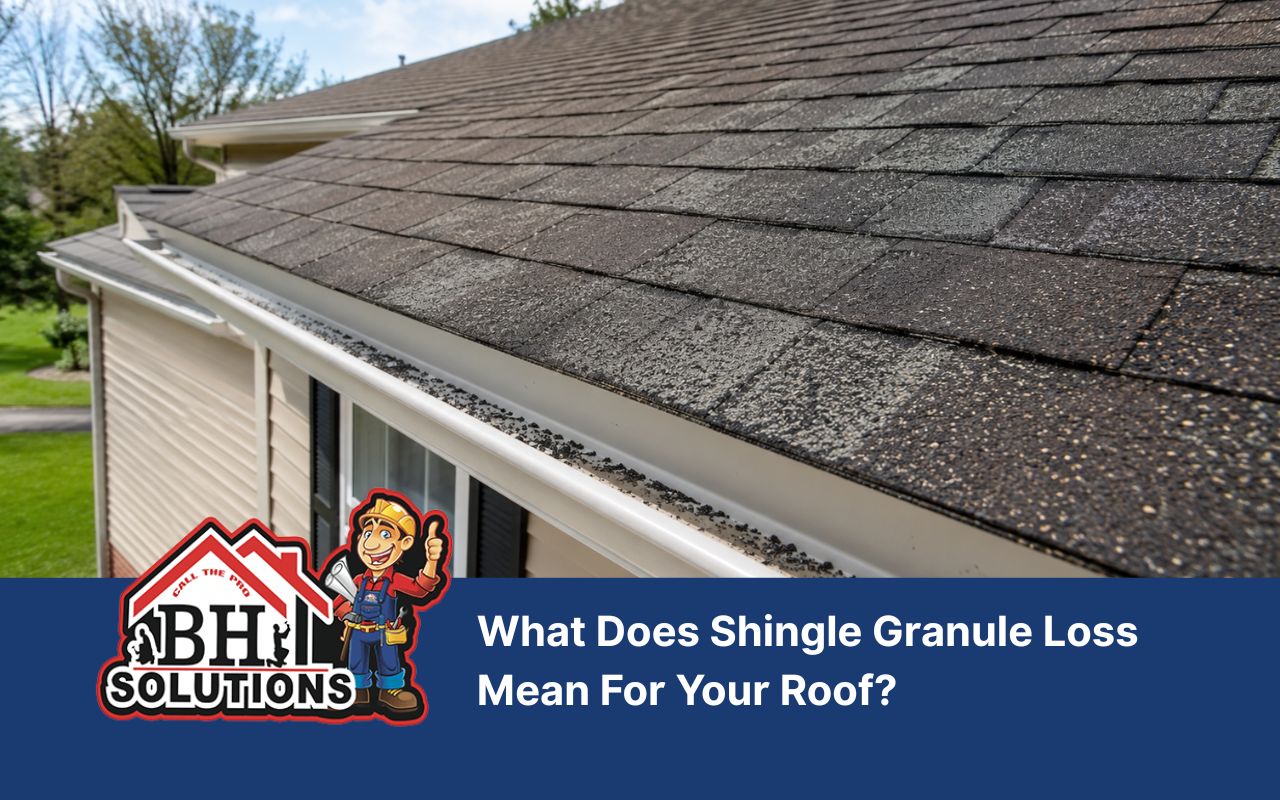
Small roof particles can say a lot about your home. When you notice shingle granule loss, your roof may be showing early wear. Therefore, at BH Solutions, LLC, we guide homeowners with simple signs, safe checks, and clear next steps before small roof concerns become larger problems.
What Does Shingle Granule Loss Mean For Your Roof?
Shingle granule loss means the small stones on asphalt shingles are coming loose. These stones help shield the roof from sun, rain, wind, and daily wear. Therefore, when they fall away, the surface can age faster and lose part of its defense.
At BH Solutions, LLC, we want homeowners to understand this sign early. A few loose granules can be normal after a new roof. However, heavy piles, bald spots, or dark patches may point to deeper roof surface damage.
Learn Why Roof Granules Protect Your Home Daily
Asphalt shingle granules are not just for color. Instead, they form a shingle protection layer over the asphalt below. This layer helps block sun rays, soften impact, and slow daily wear.
When this layer thins, shingles can dry out faster. As a result, cracks, leaks, and weak spots may appear sooner. With BH Solutions, LLC, you get clear guidance when these changes start showing.
- Granules help reduce sun damage.
- Granules help shingles resist rain and wind.
- Granules protect the asphalt layer below.
- Granules help your roof keep a steady look.
Notice Early Roof Aging Signs Before Leaks Spread
Shingle granule loss often appears with other roof aging signs. For example, you may see fading color, shiny spots, or dark areas on the roof. Also, shingles may look thin, curled, cracked, or uneven.
These shingle wear signs matter because they can appear before a leak starts. Therefore, early action can help protect ceilings, walls, insulation, and personal items inside your home.
At BH Solutions, LLC, our team looks for these warning signs with care. For more helpful guidance, visit our page about warning signs.
Check Gutters Carefully For Loose Roof Granules Today
Roof granules in gutters are one of the easiest signs to spot. During rain, loose granules wash from the roof into gutters and downspouts. Therefore, gutter cleaning can also become a simple roof check.
Look for sand-like grit, small dark particles, or colored pieces near the downspout. However, never climb if the area feels unsafe. Instead, view from the ground or ask a trained roofer.
- Check gutters after heavy rain.
- Look near downspout exits.
- Watch for repeated piles of grit.
- Compare new findings after each storm.
Identify Common Granule Loss Causes Around Your Roof
Many granule loss causes can affect your roof. For instance, strong wind can lift shingles and loosen granules. Also, hail can strike the surface and leave small bare spots.
Sun exposure can weaken the bond that holds granules in place. In addition, branches can scrape the roof surface during storms. Over time, age can also make shingles dry and brittle.
At BH Solutions, LLC, we review the roof surface and nearby areas together. This helps us explain whether the issue looks like normal wear, storm damage, or another concern.
- Heavy wind can loosen shingle edges.
- Hail can knock granules away fast.
- Tree branches can scrape the surface.
- Age can weaken older asphalt shingles.
Follow Simple Roof Inspection Tips Without Risky Climbing
Safe checks can help you notice shingle granule loss early. First, stand back from the home and scan the roof. Then, look for uneven color, bald areas, or dark patches.
Next, check the ground near downspouts. Also, review patios, driveways, and walkways for loose grit. If you see many loose particles, schedule a closer review.
- Start from the ground with a clear view.
- Use binoculars for high roof areas.
- Check gutters only when conditions are safe.
- Take photos after storms for comparison.
- Contact a roofer when signs keep returning.
For safe roof care, our roofing services can help you plan the right next step.
Prevent Surface Damage With Smart Roof Care Habits
Good care can slow roof surface damage. Therefore, trim branches that touch the roof. Also, keep gutters clear so water can move away from the shingles.
Regular care also helps protect the shingle protection layer. For example, a planned inspection can find worn areas before water enters the home. At BH Solutions, LLC, we believe small checks can prevent bigger stress later.
However, do not scrub shingles or pressure wash the roof. These actions can remove more granules and make wear worse.
Choose Professional Support When Wear Becomes Widespread Fast
Some small worn spots may only need repair. However, widespread shingle granule loss can mean the roof needs a larger fix. If many shingles look bare, cracked, or weak, a professional inspection is the safest choice.
With BH Solutions, LLC, you can ask clear questions before any work begins. We explain what we see, what it may mean, and what options fit the roof condition.
If you are ready to talk about your roof, contact us through our team page. We can help you decide the next safe step.
Frequently Asked Questions
Is shingle granule loss always a serious problem?
No, light granule loss can happen on newer shingles. However, repeated piles in gutters or bald roof areas need attention. For related roof concerns, read our guide to warning signs.
Why do I see roof granules in gutters?
Rain often carries loose granules into gutters and downspouts. Therefore, roof granules in gutters can show wear, storm impact, or aging shingles. Our roofing services include checks that help find the cause.
Can I inspect shingle wear signs from the ground?
Yes, you can often see dark spots, uneven color, or missing shingles from the ground. However, avoid unsafe climbing. Instead, use photos or ask us through our contact page.
How often should my roof be checked?
A roof should be checked after strong storms and during routine seasonal care. Also, older roofs need closer attention. At BH Solutions, LLC, we can review your roof through our roofing services.
What should I do after finding bald shingle spots?
Take clear photos and avoid walking on the roof. Then, request a professional review. Bald spots can expose the roof surface, so use our contact page to ask for help.
References: