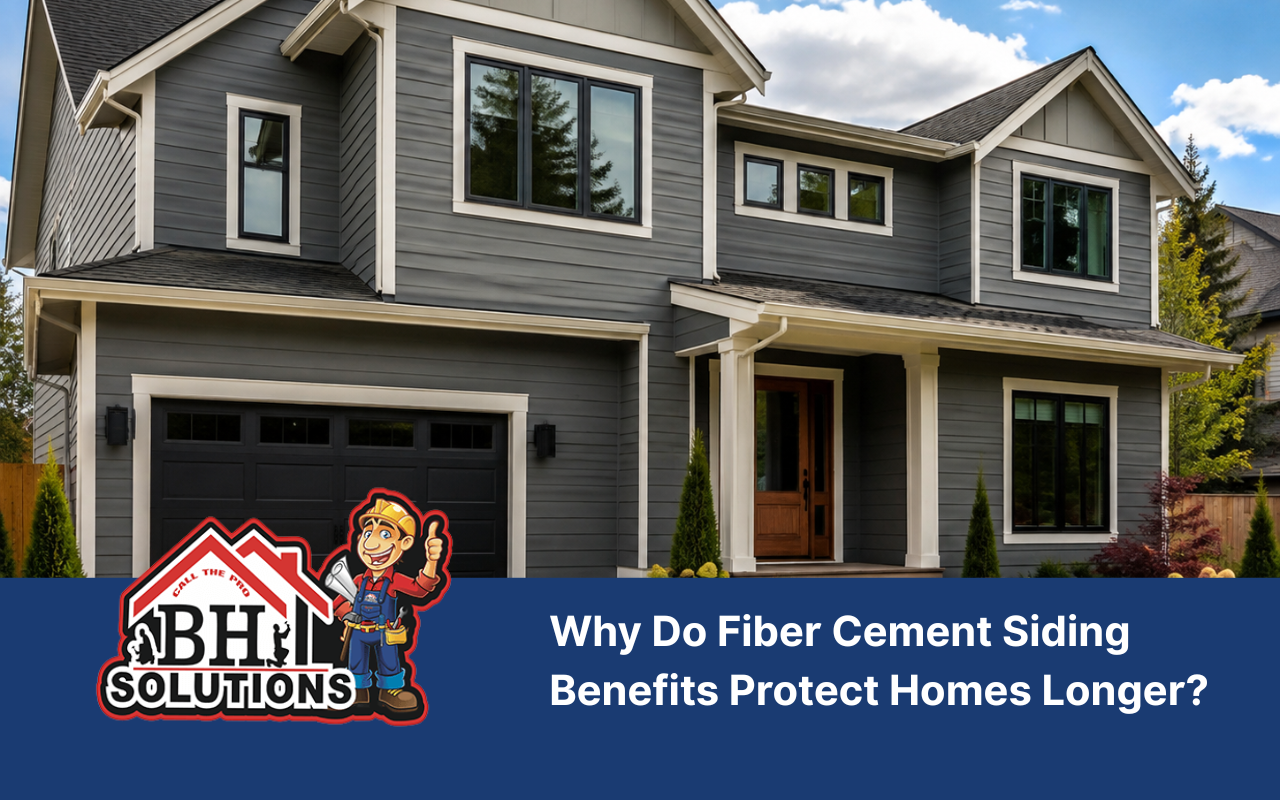
Fiber cement siding benefits protect homes longer because the material resists many common causes of exterior damage. Its cement, sand, and cellulose mix creates a firm surface. Therefore, it handles moisture, insects, heat, and daily wear better than many traditional options.
Moreover, the material can copy the warm appearance of painted wood. However, it does not require the same level of care. Homeowners can enjoy lasting style without frequent staining, sealing, or damaged-board replacement.
At BH Solutions, LLC, we believe siding should support both beauty and practical protection. Therefore, we review the home’s condition, local weather, design, and long-term goals before recommending an exterior plan.
Discover How Strong Materials Defend Your Exterior Longer
Cement board siding is made for demanding outdoor conditions. Because its dense surface stays firm, it resists many dents, cracks, and signs of daily wear. As a result, the home’s exterior can remain stable for many years.
Unlike untreated wood, fiber cement does not provide food for termites. Furthermore, it does not rot like natural wood after repeated moisture exposure. These qualities make it one of the most dependable durable siding materials for many homes.
Important strength advantages include:
- Resistance to termites and other wood-damaging pests
- Protection against rot caused by trapped moisture
- Stable performance during seasonal temperature changes
- Strong resistance to everyday bumps and light impacts
- Reliable support for long-term exterior cladding plans
Still, every siding system depends on correct preparation and installation. Therefore, walls should be checked for moisture, rot, and uneven surfaces first. Proper flashing and clear drainage paths also help prevent hidden water problems.
Our team at BH Solutions, LLC, considers these details before exterior work begins. Consequently, homeowners receive guidance based on the complete wall system, not only the visible siding.
Reduce Routine Upkeep Through Easier Exterior Home Care
Low maintenance siding can give homeowners more time for daily life. Fiber cement usually needs gentle cleaning and regular inspections. Therefore, it avoids many repeated tasks linked with natural wood siding.
Wood may need frequent staining, sealing, or painting. In contrast, fiber cement holds paint well when the surface is prepared correctly. As a result, the finish can remain clean and consistent for longer periods.
Simple care steps usually include:
- Rinsing dirt with a garden hose when needed
- Using a soft brush for stubborn surface marks
- Checking joints, trim, and caulk once each year
- Keeping gutters clear to control flowing water
- Repairing small problems before they spread
However, low maintenance does not mean no maintenance. Homeowners should still inspect shaded and damp areas. Likewise, plants should not press directly against the siding. Good airflow helps the surface dry after rain.
When planning wider improvements, our custom home renovation approach can connect exterior upgrades with other household goals. Therefore, siding, trim, windows, and nearby features can support one clear design.
Strengthen Weather Protection During Changing Seasonal Conditions
Siding weather resistance matters because homes face rain, wind, snow, sunlight, and temperature changes. Fiber cement does not expand and shrink as much as some materials. Therefore, it can keep a more stable shape through changing seasons.
Its moisture resistance also supports the wall beneath it. However, no siding should serve as the home’s only water barrier. Correct flashing, sealed openings, and a suitable weather barrier remain important.
Fiber cement can support protection against:
- Heavy rain and repeated moisture exposure
- Strong sunlight and changing surface temperatures
- Cold conditions that can weaken brittle materials
- Wind-driven debris during severe weather
- Humidity that may encourage rot in wood
Moreover, stable boards can help preserve clean lines around corners, windows, and doors. This consistency supports curb appeal while also reducing visible movement across the exterior.
At BH Solutions, LLC, we look at drainage, roof edges, trim, and nearby landscaping during project planning. Thus, the selected exterior cladding works with the surrounding parts of the home.
Improve Fire Protection With A Noncombustible Exterior Choice
Fire resistant siding can add an important layer of exterior protection. Fiber cement contains mostly mineral-based materials. Therefore, it does not ignite like untreated wood and does not fuel flames like some plastic products.
This benefit can matter in dry areas, wooded locations, or places exposed to wind-driven embers. However, siding alone cannot make an entire house fireproof. Roof materials, vents, windows, landscaping, and nearby structures also affect risk.
Even so, a noncombustible outer surface can support a broader safety plan. It may slow flame movement across the exterior. Furthermore, it can reduce the amount of burnable material attached to the home.
When customers contact BH Solutions, LLC, we discuss practical exterior choices without making unrealistic promises. Therefore, homeowners can understand what the material can do and where other safety steps remain necessary.
Prevent Pest Damage While Limiting Moisture Related Decay
Termites and carpenter ants can damage wood because it becomes a food source or nesting area. Fiber cement does not attract these insects in the same way. Consequently, it lowers one common risk to the home’s outer walls.
The material also resists rot. Nevertheless, poor installation can still allow moisture behind the boards. Therefore, installers must create proper gaps, flashing, and drainage around openings and wall edges.
These qualities support siding durability in humid or rainy conditions. In addition, fewer damaged boards can mean fewer repair interruptions. Homeowners can then focus on basic inspections instead of repeated pest or rot treatment.
For homeowners who value thoughtful material choices, our eco-friendly home remodeling guidance can connect long-lasting exterior decisions with wider renovation priorities. Longer-lasting materials may reduce how often major sections need replacement.
Enhance Curb Appeal Through Flexible Colors And Textures
Fiber cement siding is available in smooth panels, lap boards, shingles, and wood-style textures. Therefore, it can suit traditional, modern, coastal, farmhouse, and craftsman homes.
Homeowners can also combine different profiles. For example, lap siding may cover the main walls while shingles highlight upper sections. Likewise, strong trim colors can frame windows and doors.
This design range allows homeowners to improve curb appeal without choosing fragile materials. Furthermore, quality paint can create a clean finish that stays attractive with reasonable care.
With BH Solutions, LLC, homeowners can discuss how siding colors relate to roofing, masonry, doors, and landscaping. As a result, the final exterior feels balanced instead of pieced together.
Compare Fiber Cement With Other Common Siding Choices
Every siding option has strengths and limits. Therefore, the right choice depends on the home, climate, care expectations, and design goals.
- Wood: It gives natural warmth, but it needs regular protection from moisture and pests.
- Vinyl: It is easy to clean, but strong heat or cold may affect some panels.
- Metal: It resists fire, but impacts may leave visible dents.
- Fiber cement: It balances strength, style, fire resistance, and manageable care.
Siding longevity also depends on installation quality. Even a strong material may fail early when water reaches the wall system. Therefore, homeowners should not compare products by appearance alone.
Instead, review the material, wall preparation, moisture control, finish, and future upkeep together. This complete view creates a more useful comparison.
Follow Clear Steps For A Reliable Siding Installation
A careful process helps fiber cement perform as intended. Because the boards are heavier than many alternatives, proper handling and fastening are important.
- First, inspect the existing walls for rot, leaks, or uneven areas.
- Next, repair damaged surfaces before covering the exterior.
- Then, install the correct weather barrier and flashing system.
- Afterward, measure and cut each board with suitable tools.
- Next, fasten the boards while following required clearances.
- Finally, seal, finish, and inspect all edges and openings.
Moreover, installers should control dust while cutting cement board siding. They should also follow the product maker’s instructions. These steps help protect workers and support warranty requirements.
At BH Solutions, LLC, we understand that small installation details affect long-term results. Therefore, our planning focuses on alignment, drainage, joints, trim, and a clean finished appearance.
Frequently Asked Questions
How long can fiber cement siding usually last?
Fiber cement may last several decades with correct installation and regular care. However, climate, paint, drainage, and maintenance affect siding longevity. For guidance on combining exterior work with wider upgrades, explore our custom home renovation planning.
Does fiber cement siding require frequent maintenance?
No. It is generally considered low maintenance siding. Still, gentle cleaning and yearly checks help protect its finish. To discuss the right care plan for your property, use our contact page.
Can fiber cement siding handle wet weather?
Yes, the material has strong moisture and siding weather resistance. Nevertheless, flashing and drainage remain essential. Our custom home renovation process can include a wider review of exterior conditions.
Is fiber cement a fire resistant siding material?
Yes. Its mineral-based composition does not burn like untreated wood. However, the whole home must support fire safety. For project-specific guidance, stop by our consultation page and share your exterior concerns.
Can fiber cement match different home designs?
Yes. It comes in many colors, profiles, and textures. Therefore, it can complement several architectural styles. Our eco-friendly home remodeling guidance can also support thoughtful material and design choices.
Choose Lasting Protection For A More Confident Home
The main fiber cement siding benefits include strong weather performance, pest resistance, fire resistance, and easier care. Moreover, the material combines these practical qualities with many attractive finishes.
Therefore, homeowners seeking reliable exterior cladding should consider more than the first appearance. Correct preparation, installation, drainage, and maintenance protect the final result.
With BH Solutions, LLC, you receive clear guidance based on your property and goals. To discuss siding durability and your next exterior project, reach out our team and tell us what your home needs.
References:
- How Long Does Siding Last? An Expert Weighs In — Southern Living
- 13 Common House Siding Options—Plus How to Pick the Right One — Better Homes & Gardens