
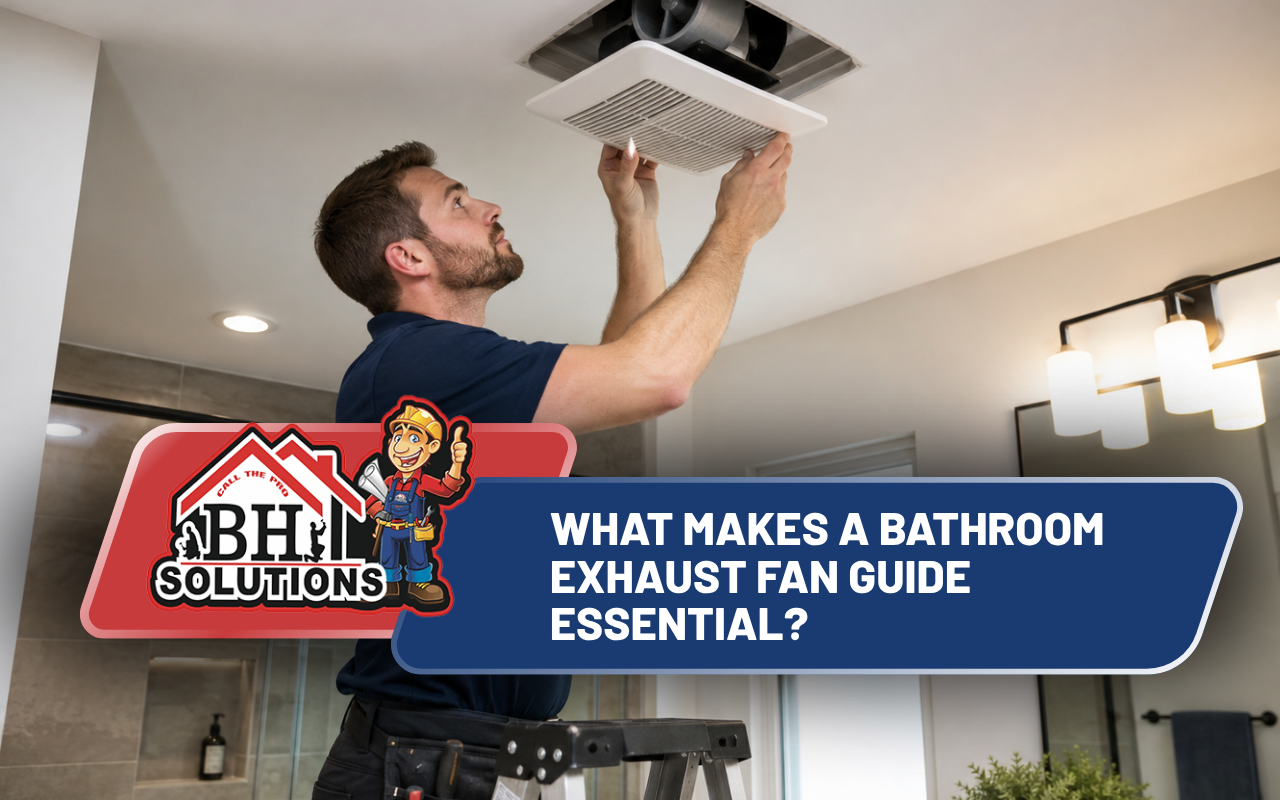
A bathroom exhaust fan guide helps homeowners choose the right airflow, placement, noise level, and features. Therefore, it supports better moisture control, cleaner surfaces, and more comfortable bathroom ventilation. At BH Solutions, LLC, we look at airflow, room size, fan location, and daily shower habits together. That simple approach supports a drier room and easier care.
Select the Right Fan for Better Bathroom Ventilation
First, focus on airflow and noise instead of the grille style. Fan airflow is measured in cubic feet per minute, or CFM. In many standard bathrooms, a common starting point is about one CFM per square foot. Still, high ceilings, long ducts, and larger wet areas may require more capacity.
Noise also matters because a loud fan often gets switched off too soon. Therefore, a quiet bathroom exhaust fan can support better daily use. Sone ratings describe fan noise. Lower numbers mean quieter operation.
- Check the bathroom size before selecting CFM.
- Compare sone ratings for quieter daily use.
- Look for humidity sensors when moisture often lingers.
- Choose efficient models that fit the existing duct system.
At BH Solutions, LLC, we prefer practical choices that fit the room rather than oversized features that add little value.
Match Airflow Capacity to Your Bathroom Size Correctly
Next, measure the floor area by multiplying room length by width. For a standard ceiling height, that result can provide a useful CFM starting point. For example, an 80-square-foot room often needs about 80 CFM.
However, larger bathrooms need closer planning. Separate shower stalls, tubs, and enclosed toilet areas can create extra moisture. Also, long duct runs and several bends can reduce real airflow. Therefore, the fan should be sized for both the room and the path outdoors.
Position Your Fan to Capture Shower Moisture Faster
Correct exhaust fan placement helps remove steam near its source. Therefore, a ceiling location near the shower or tub often works well. The fan should pull damp air toward the duct instead of letting it spread across the room.
For shower ventilation, placement must also follow the fan maker’s wet-area instructions. Electrical protection and local code requirements matter, especially near a shower. When direct wet-area placement is allowed, the unit must be rated for that use.
- Place the fan near the main source of steam.
- Keep the intake free from cabinets or tall barriers.
- Vent moist air outdoors, not into an attic.
- Keep the duct route as short and straight as practical.
At BH Solutions, LLC, we also consider how waterproofing and ventilation work together. Our bathroom waterproofing tips for lasting protection explain how moisture barriers support wet areas.
Compare Fan Types for Easier Everyday Moisture Control
Several fan styles can support bathroom ventilation. Ceiling-mounted fans are common because steam rises. Wall-mounted fans may fit rooms where ceiling ducting is difficult. Inline fans sit farther inside the duct system, which can help reduce room noise.
Combination models can include lights, timers, or sensors. Meanwhile, smart fans may respond to humidity or motion.
Install Your Exhaust Fan With Fewer Airflow Problems
Proper installation protects fan performance from the first day. Therefore, avoid crushed or sharply bent ducting. Smooth, rigid, or approved semi-rigid ducting usually lets air move more freely. All connections should also be sealed well.
Use these steps as a simple how-to overview:
- Turn off power and confirm the work area is safe.
- Choose a fan location near the main moisture source.
- Plan the shortest practical duct route to the outdoors.
- Install the housing securely to reduce vibration.
- Seal duct joints and insulate ducts in cold spaces.
- Connect wiring according to local electrical requirements.
- Test airflow after the grille is installed.
If electrical or duct work is outside your experience, professional help is the safer choice. With BH Solutions, LLC, you can discuss the room and project needs before work begins through our contact page.
Maintain Cleaner Air With Simple Fan Care Habits
Dust on the grille can slowly reduce airflow. Therefore, clean the cover every few months, especially in a busy bathroom. Always turn off power before opening the fan housing.
Next, vacuum loose dust and wipe the grille. Also, check for rattles, weak airflow, or moisture that lingers after showers.
At BH Solutions, LLC, we also recommend watching nearby painted surfaces. Persistent dampness can weaken coatings over time. Our painting tips for humid areas cover simple ways to protect walls in steamy rooms.
Upgrade Your Bathroom With Quieter Smarter Fan Features
Modern fans can make ventilation easier to manage. Humidity sensors can start or extend operation when moisture rises. Timers can keep the fan running after a shower without requiring another trip to the switch.
A quiet bathroom exhaust fan may also encourage longer use because the sound is less distracting. Meanwhile, efficient motors can move air with less energy. Some models also include adjustable speeds, lights, or motion sensing.
Before upgrading, check your current duct size. Therefore, match the new fan to the whole ventilation path.
Strengthen Moisture Protection Beyond the Exhaust Fan Alone
A fan works best when simple habits support it. For example, leave the bathroom door slightly open after use when privacy is no longer needed. This allows replacement air to enter more easily.
- Run the fan during showers and afterward.
- Wipe standing water from shower walls and floors.
- Repair cracked caulk and leaking fixtures quickly.
- Keep air paths around doors and vents clear.
These habits improve bathroom airflow and support a moisture control bathroom plan.
Frequently Asked Questions
How long should a bathroom exhaust fan run?
Run the fan during the shower and afterward until excess humidity clears. The needed time can vary by room size and airflow. For added wet-area protection, review our bathroom waterproofing tips for lasting protection.
Where should a bathroom exhaust fan be placed?
Place it near the shower or tub so steam is captured early. However, follow wet-area ratings and local electrical rules. For project-specific help, connect with us .
What CFM should I choose for my bathroom?
For many standard bathrooms, start near one CFM per square foot. Then, adjust for ceiling height, fixtures, and duct resistance. Our contact page can help you discuss remodeling needs.
Can an exhaust fan help prevent bathroom mold?
It can reduce the damp conditions that support mold growth. However, leaks and wet surfaces also need attention. Our bathroom waterproofing tips for lasting protection cover added moisture defenses.
Why does bathroom paint peel despite using a fan?
The fan may be undersized, dirty, poorly ducted, or used too briefly. Hidden moisture can also affect coatings. Read our painting tips for humid areas for more surface-care guidance.
Protect Your Bathroom With Reliable Ventilation Every Day
A good fan should match the room and vent moisture outdoors. Therefore, sizing, placement, and cleaning matter. This bathroom exhaust fan guide supports better bathroom ventilation and shower ventilation. Use this bathroom exhaust fan guide when comparing options.
At BH Solutions, LLC, we believe moisture control should support the whole bathroom, not just one fixture. When you combine reliable airflow with sound waterproofing and surface care, the room becomes easier to protect. If you are planning an update, get in touch with us to discuss the next step.
References:
- Remodeling Your Home and Indoor Air Quality — U.S. Environmental Protection Agency
- Solved! What Size Bathroom Fan Best Supports Your Space — Bob Vila