
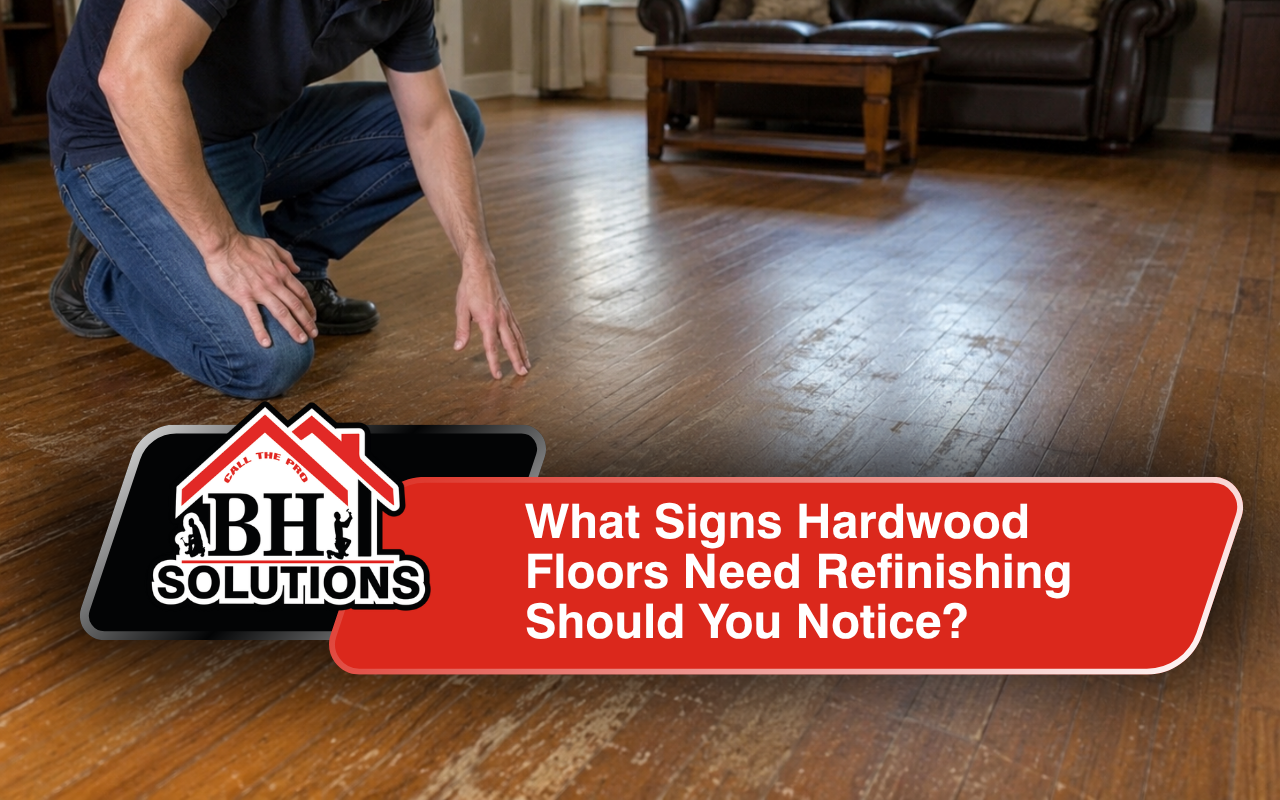
Hardwood floors can lose their beauty slowly, so early wear is easy to miss. However, scratches, fading, dull areas, stains, and rough boards can signal deeper finish problems. At BH Solutions, LLC, we believe noticing these changes early can protect your flooring, support your home’s appearance, and help you plan the right next step.
The most common signs hardwood floors need refinishing include deep scratches, faded color, dull surfaces, stains, rough texture, and visible wear. Therefore, checking these changes early can help prevent more serious damage. Refinishing removes worn surface layers and adds new protection, which can improve both appearance and durability.
Recognize Surface Damage Before Small Problems Grow Worse
Scratches and scuff marks often appear before other flooring problems. For example, pet claws, shoes, furniture, and daily traffic can slowly damage the surface. At first, these marks may seem cosmetic. However, deeper scratches can break through the protective coating.
Once that layer becomes weak, scratched hardwood floors can collect dirt inside the damaged areas. In addition, moisture may reach exposed wood more easily. As a result, cleaning alone may no longer restore the smooth appearance.
Look closely at busy areas, especially hallways, entrances, and living rooms. Also, run your hand gently across the floor. Rough lines or exposed areas can show that the finish has worn thin.
Common surface warnings include:
- Visible scratches that remain after cleaning
- Deep scuff marks in busy walking areas
- Small dents caused by furniture or impact
- Areas where bare wood begins to appear
- Rough sections that feel different from nearby boards
Therefore, these changes should not be ignored. When customers contact BH Solutions, LLC, we can discuss how visible surface wear may fit into a wider old home renovation plan.
Identify Color Changes That Reveal Failing Floor Protection
Color changes can also show that a floor needs attention. For example, sunlight may lighten areas near windows. Meanwhile, heavy foot traffic can make other sections appear darker or uneven.
This hardwood discoloration often develops slowly. Therefore, homeowners may not notice it until furniture moves or rugs are removed. Faded hardwood floors can then show clear differences between protected and exposed areas.
Also, changing color may mean the finish no longer protects the floor evenly. As a result, daily light, dirt, and wear can affect the wood more directly.
Watch for these common color changes:
- Lighter sections near sunny windows
- Darker paths through high-traffic rooms
- Gray or tired-looking areas
- Uneven tones under rugs or furniture
- Stains that remain after normal cleaning
At BH Solutions, LLC, we understand that flooring affects the look of the whole room. Therefore, homeowners considering broader updates can explore ideas for homes to renovate before planning several improvements together.
Restore Lost Shine Before Bare Wood Becomes Vulnerable
A healthy floor finish usually reflects some light. However, that shine can slowly disappear as the protective layer wears away. A worn floor finish may leave the surface looking flat, cloudy, or tired.
Loss of shine is especially important when dull areas appear only in certain locations. For example, walkways between rooms often lose protection faster. Therefore, uneven shine can help reveal which areas receive the most wear.
Several changes may appear together:
- Dull patches that stay dull after cleaning
- A chalky or dry-looking surface
- Less reflection in busy areas
- Visible wear around doors and furniture
- Small scratches becoming easier to see
Consequently, loss of shine can be one of the clearest signs hardwood floors need refinishing. Hardwood floor restoration can renew the surface when the boards remain suitable for refinishing. At BH Solutions, LLC, we recommend looking at the full condition before deciding what work makes sense.
Check Uneven Boards For Deeper Flooring Damage Early
Texture changes can reveal problems that are harder to see. Therefore, walking barefoot across the floor can sometimes help you notice rough sections, raised edges, or worn spots.
Damaged wood flooring may feel uneven when some boards have lost more finish than others. In addition, dents and exposed grain can make one area feel rougher than the surrounding floor.
Gaps between boards can also become more visible over time. Wood naturally moves as indoor conditions change. However, larger gaps, loose boards, or noticeable movement deserve closer attention.
Squeaks may also appear when boards move against nearby materials. Still, noise alone does not always mean refinishing is the only solution. Therefore, checking the floor condition first can help separate surface wear from other repair needs.
Our team at BH Solutions, LLC can help homeowners discuss visible home concerns as part of a larger improvement plan. For direct project questions, you can reach our home improvement team and explain what you are seeing.
Prevent Moisture Problems From Warping Beautiful Hardwood Boards
Water stains deserve quick attention because moisture can affect both the finish and the wood. For example, spills, leaks, and humid areas may leave dark spots or rings. Therefore, these marks should be checked instead of covered with rugs.
Moisture can also contribute to boards that curve or change shape. As a result, edges may rise, surfaces may feel uneven, or sections may no longer sit flat.
These conditions can be more serious than normal surface wear. Therefore, the moisture source should be understood before new finish work begins. Refinishing may improve worn surfaces, but deeper damage may require additional repairs.
In addition, stains that keep returning can signal an active issue. At BH Solutions, LLC, we prefer to understand the condition before recommending the next step. Homeowners can use our home project contact page to describe stains, warping, or other concerns.
Follow Simple Steps To Decide When Refinishing Fits
A simple inspection can help you understand whether normal wear has become a refinishing concern. Therefore, review the entire room instead of focusing on one scratch.
- First, clean the floor gently so dirt does not hide the surface.
- Next, inspect high-traffic areas for scratches, dullness, and exposed wood.
- Then, compare floor color near windows, rugs, and furniture.
- Afterward, check for stains, rough texture, gaps, or raised boards.
- Finally, request professional guidance when several warning signs appear together.
Architectural Digest notes that visible wear, scratches, and discoloration can indicate that refinishing may be appropriate. Likewise, Better Homes & Gardens explains that extensive scratches and gouges can sometimes make full refinishing the better option.
Therefore, homeowners should consider the pattern and depth of the damage. One light scratch may need simple care. However, widespread wear across several rooms can point toward hardwood floor restoration.
With BH Solutions, LLC, you can discuss your flooring concerns within the larger condition of your home. This approach can be especially useful when several rooms need updates at the same time.
Protect Floor Beauty Through Timely Professional Assessment Today
Early attention can help keep hardwood floors looking attractive for longer. Therefore, check them regularly for dullness, scratches, fading, stains, and uneven areas.
When several signs hardwood floors need refinishing appear together, professional assessment can clarify the next step. An inspection can also help identify whether the issue involves surface finish, moisture, or damaged boards.
Acting early may also make planning easier. For example, floor work can sometimes fit naturally within a larger remodeling project. Our team at BH Solutions, LLC can discuss the condition of your space and the improvements you are considering.
Therefore, do not wait until worn areas become difficult to ignore. If your floors look tired, uneven, or heavily marked, request home improvement guidance and share your concerns with our team.
Frequently Asked Questions
How do I know when hardwood floors need refinishing?
Look for deep scratches, dull areas, fading, stains, and exposed wood. Also, several problems appearing together can signal worn protection. For help reviewing your home project, connect with us.
Can scratched hardwood floors always be refinished?
Many surface scratches can improve through refinishing. However, deep gouges or damaged boards may need additional repair. If the flooring belongs to an older property, review our older home renovation guidance for broader planning ideas.
Does fading mean the floor finish is worn?
Fading can happen from sunlight and daily wear. Therefore, uneven color may indicate that protection has weakened in certain areas. Homeowners planning several updates can explore our home renovation planning ideas.
Should water stains be checked before refinishing begins?
Yes. Moisture problems should be understood before a new finish is applied. Otherwise, stains or movement may return. You can share the condition through our project consultation page.
When should I request a professional floor assessment?
Request guidance when you see widespread wear, deep scratches, stains, warping, or several warning signs together. To discuss the next step with our team, visit our professional home project consultation page.
References:
- Refinishing Hardwood Floors: A Step-by-Step Guide — Architectural Digest
- How to Get Scratches Out of Wood Floors: 5 DIY Solutions — Better Homes & Gardens