At BH Solutions, LLC, deck sealing techniques help us protect wood, improve curb appeal, and support a longer deck life. A careful plan also makes each step easier, from cleaning to final care.
With the right product, timing, and tools, BH Solutions, LLC can help you avoid common problems and keep your outdoor space looking clean, warm, and ready for daily use.
Choose the Right Finish for Lasting Deck Protection
Choosing the right finish shapes how your deck looks and how well it stands up to rain, sun, and daily wear. At BH Solutions, LLC, we review wood type, weather, and traffic before we seal any surface.
Sealer protects wood from moisture, while stain adds color and some surface defense. Because both products serve different goals, BH Solutions, LLC recommends picking the option that fits your deck’s condition and your maintenance plans.
Compare deck sealing techniques with oil and water-based options
When we compare products, deck sealing techniques often depend on how deeply the finish should soak in and how quickly the deck needs to dry. In many cases, the right choice depends on climate and wood age.
- Oil-based sealers sink deeper and often bring out a richer wood tone.
- Water-based sealers dry faster and usually have a lighter odor.
- Oil vs water-based sealers should be compared by weather, upkeep, and finish style.
Before you choose, explore our deck sealing tips to see which finish may suit your project best.
Follow smart prep steps before you start sealing
Good prep supports better results, and deck sealing techniques work best when the surface is clean, dry, and stable. For that reason, BH Solutions, LLC starts by removing dirt, old residue, and damaged boards.
- Clear furniture, leaves, and loose debris from the deck.
- Wash the surface gently and let the wood dry fully.
- Fix loose boards, sand rough areas, and check for rot.
These prep steps help the sealer absorb more evenly. As a result, the finish looks better and lasts longer through changing seasons.
Use reliable tools to apply an even coat
The tools you use can change the final look. At BH Solutions, LLC, we prefer tools that help spread product smoothly, especially on large boards, tight corners, and railing details.
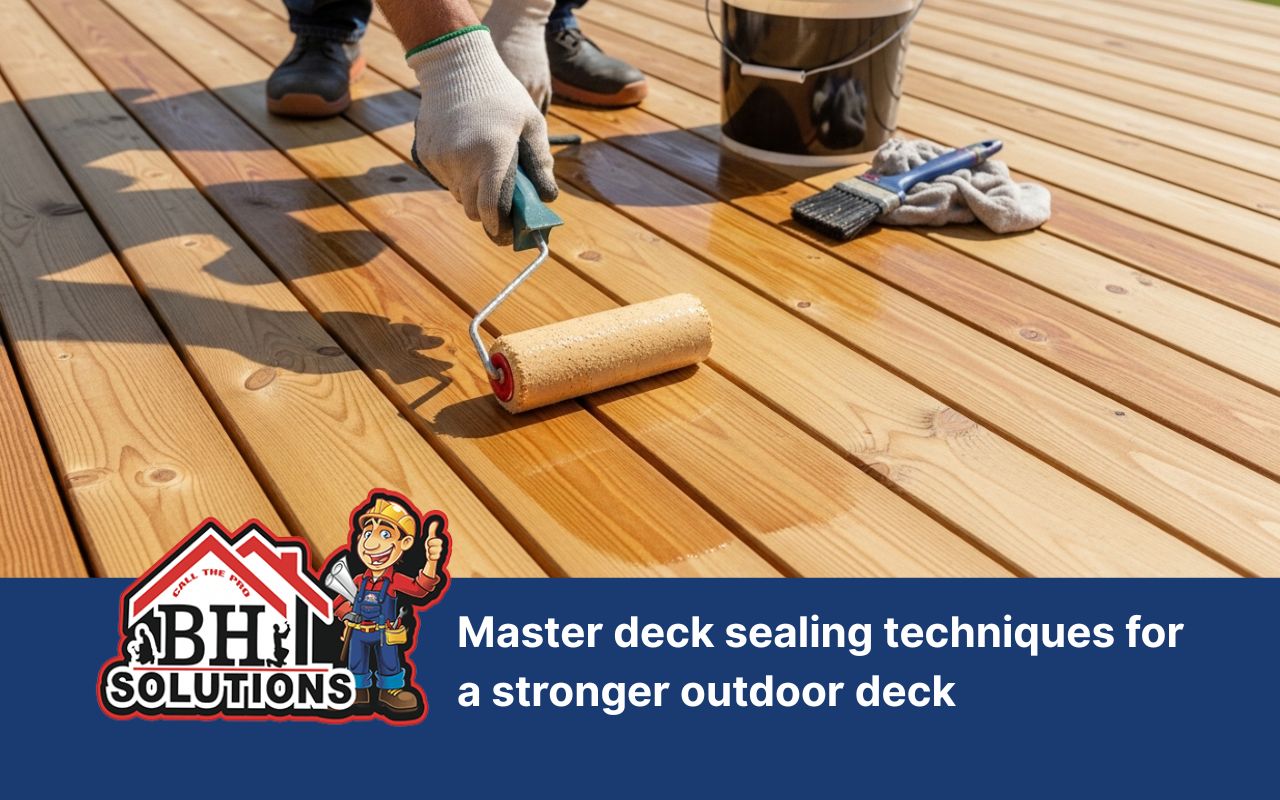
- Rollers help cover wide deck boards with steady movement.
- Brushes work well on edges, corners, and railings.
- Sprayers can save time, although back-brushing helps improve coverage.
Application tools matter because uneven spread can lead to streaks, blotches, or pooling. Therefore, choosing the right setup makes the job easier and the finish more consistent.
When should you seal a deck for best results?
Weather plays a big role in project success. We usually look for mild, dry days because the best temperature to seal often falls between 50°F and 90°F, with no rain expected soon after application.
Drying time also changes with heat, shade, wind, and humidity. Because of that, BH Solutions, LLC plans sealing work when conditions support proper curing instead of rushing the process.
Answer common questions about deck care and sealing
What is the difference between stain and sealer?
Stain adds color and some protection, while sealer mainly helps block moisture and sun damage. In some cases, hybrid products do both, but performance can vary by surface and weather.
How often should a deck be resealed?
Resealing frequency depends on climate, foot traffic, and product type. Many decks need fresh protection every one to three years, although strong sun and heavy rain can shorten that cycle.
How can I tell when sealing is needed again?
If water stops beading and soaks into the wood, the protective layer may be wearing out. Fading color, rough texture, and worn traffic paths can also signal that it is time to reseal.
Which application method gives the most even finish?
Brushes and rollers both work well, depending on the area. Sprayers can speed up the job, yet back-brushing often helps push product into the grain and reduce uneven buildup.
How do I keep the deck in good shape after sealing?
Regular sweeping, quick spill cleanup, and routine inspections help prevent damage. You can also learn more from our guide on prolonging deck lifespan for better long-term maintenance.
Plan resealing cycles to keep wood protected longer
Even a well-sealed deck needs ongoing attention. At BH Solutions, LLC, we suggest checking the surface in spring and fall so small issues do not turn into costly repairs later.
Consistent deck sealing techniques, paired with simple inspections, help protect boards from deep moisture damage, fading, and surface wear. Over time, this approach supports better long-term maintenance and a more reliable finish.
Maintain your outdoor surface for long-term beauty
Routine care keeps the deck looking fresh after the work is done. Sweep often, clean spills early, and avoid trapping moisture under rugs, planters, or furniture pads for long periods.
At BH Solutions, LLC, we believe smart deck sealing techniques and steady upkeep create a deck that stays attractive, safer to use, and easier to protect year after year. For project help, reach us through our contact page.