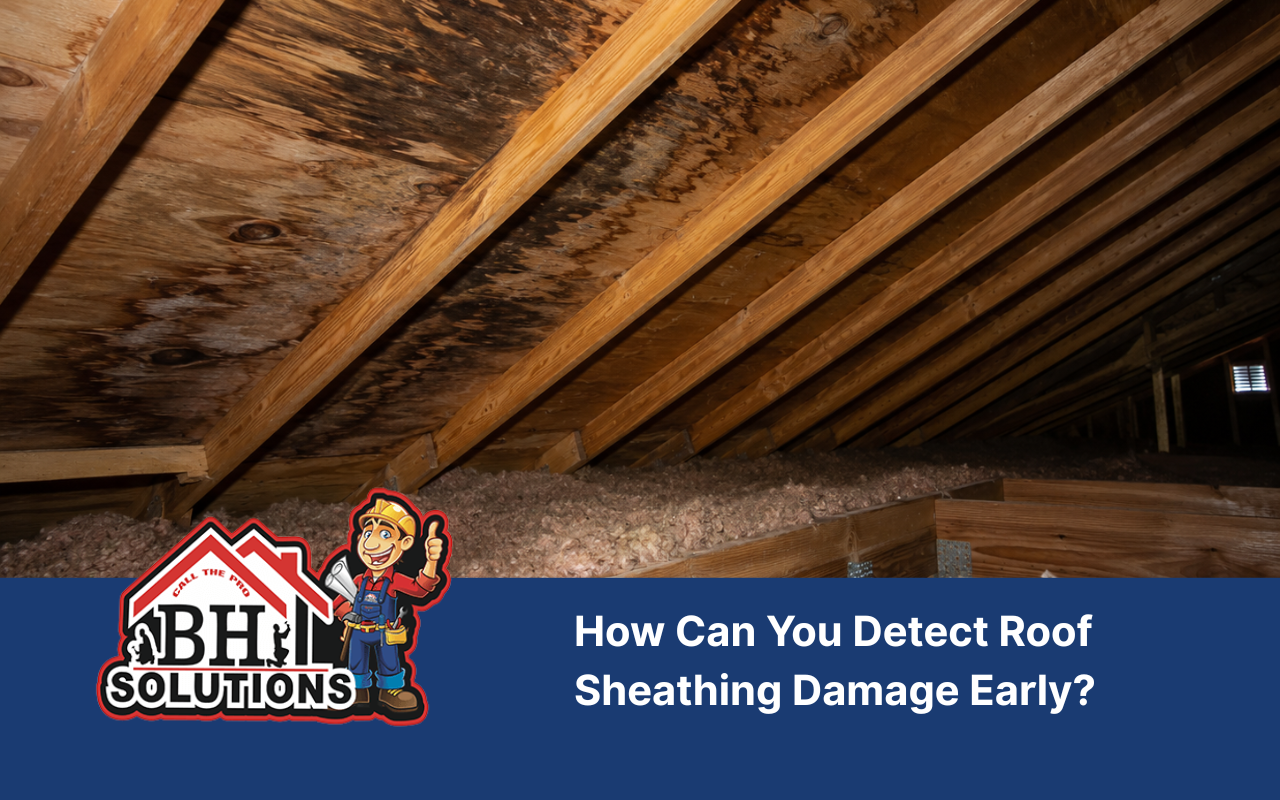
You can detect roof sheathing damage by checking for attic stains, soft wood, mold, leaks, and uneven roof areas. Also, watch for shingles that dip or stop lying flat. These signs often mean moisture has reached the roof deck. Therefore, a professional inspection can confirm the cause before the damage spreads.
Understand How Roof Sheathing Supports Your Entire Home
Roof sheathing forms the solid surface beneath shingles and underlayment. Therefore, it connects the roofing materials to the rafters or trusses. It also spreads weight across the roof structure.
Most homes use a plywood roof deck or OSB roof sheathing. Both materials can perform well when they stay dry. However, long exposure to water can weaken either material.
At BH Solutions, LLC, we inspect the full roofing system instead of viewing one surface alone. This approach matters because a damaged panel may point to another problem. For example, failed flashing, poor airflow, or missing shingles may allow moisture inside.
Moreover, strong sheathing helps the roof resist movement during wind and storms. It also keeps shingles supported and properly aligned. Therefore, protecting this layer supports the safety of the entire home.
Recognize Warning Signs Before Damage Spreads Further
Early roof inspection signs often appear inside the home first. Therefore, check ceilings, upper walls, and attic surfaces after heavy rain. Small changes may reveal a growing problem.
- Dark stains appear on sheathing, rafters, or insulation.
- Musty smells remain inside the attic.
- Mold grows near vents, nails, or roof joints.
- Ceiling paint bubbles or changes color.
- Shingles appear uneven, dipped, or raised.
- Wood feels soft, swollen, or weak.
A sagging roof deck is one of the clearest warning signs. However, sagging may indicate advanced decay or weakened supports. Therefore, avoid walking across that section.
Also, rusted nail tips may show ongoing roof deck moisture. Damp insulation can provide another clue. Meanwhile, daylight around flashing or roof openings may reveal gaps where water enters.
With BH Solutions, LLC, you can arrange a careful roof and attic assessment when these signs appear. Prompt action can limit damage and protect nearby materials.
Identify Common Causes That Weaken Roof Decking
Moisture causes many sheathing problems. However, water may enter through several areas. A cracked shingle, loose flashing, blocked gutter, or damaged vent can create a path.
Condensation can also cause attic moisture problems. Warm indoor air may rise and meet a cold roof surface. As a result, water can collect on nails, rafters, and panels.
- Roof leaks keep wood wet after storms.
- Blocked gutters push water beneath roof edges.
- Poor ventilation traps warm, damp attic air.
- Missing insulation increases condensation during cold weather.
- Tree branches damage shingles and protective layers.
- Pests create holes or disturb weakened wood.
OSB roof sheathing may swell along its edges after repeated wetting. Meanwhile, plywood layers may separate when moisture remains trapped. Both conditions can reduce strength.
At BH Solutions, LLC, we look for the entry point and the affected materials. Therefore, our goal is not only covering the visible stain. We also help homeowners understand why the problem developed.
Inspect Attic Areas Safely Using Simple Steps
A basic attic check can reveal useful signs. However, never enter an unsafe or unstable area. Also, avoid stepping between ceiling joists because the surface may not support your weight.
- Choose a dry day with safe visibility.
- Use a bright flashlight or headlamp.
- Look above ceiling stains and damp insulation.
- Follow moisture marks upward toward the roof.
- Check panel edges, vents, and nail tips.
- Photograph changes for future comparison.
Next, inspect the roof from the ground. Binoculars can help you spot missing shingles, bent flashing, or uneven lines. However, do not climb onto a wet or damaged roof.
If wood looks dark, press nothing with your hands. Decayed material may break without warning. Instead, note the location and request a professional review.
Our team at BH Solutions, LLC can explain whether the issue needs repair, monitoring, or roof decking replacement. For broader help, review our roof installation and repair services.
Prevent Moisture Problems Through Regular Home Maintenance
Routine maintenance can lower the risk of roof sheathing damage. Therefore, clear gutters before water backs up near the roof edge. Also, keep downspouts open and directed away from the home.
Proper attic airflow is equally important. Intake vents bring fresh air inside, while exhaust vents release warm air. However, insulation should not block soffit vents.
- Clean gutters during spring and fall.
- Trim branches that touch the roof.
- Replace missing or broken shingles promptly.
- Keep attic vents clear of stored items.
- Check flashing around chimneys and roof openings.
- Review attic surfaces after strong storms.
In addition, bathroom fans should release air outdoors. They should not send humid air into the attic. Likewise, kitchen exhaust should follow a safe outdoor path.
At BH Solutions, LLC, we believe preventive care makes roofing decisions easier. It can also reduce the chance of roof structural damage. Moreover, early maintenance may protect insulation, ceilings, and interior finishes.
Address Minor Leaks Before They Reach Structural Materials
A small leak can travel along rafters before becoming visible. Therefore, the ceiling stain may not sit below the entry point. Careful tracing is often needed.
Temporary patches may slow some leaks. However, they do not always solve damaged flashing or hidden openings. They may also trap water against the roof deck.
For that reason, monitor repaired areas during the next rainfall. Also, check whether stains grow, insulation remains damp, or odors return. These changes may show continuing moisture.
When customers contact BH Solutions, LLC, we explain the safest next step clearly. Sometimes a focused repair can stop the leak. However, weakened panels may require removal and replacement.
Homeowners planning wider improvements can also explore guidance for planning a home construction project. Good planning helps connect roofing needs with other structural work.
Choose Professional Support When Safety Risks Increase
Professional help becomes important when sagging, mold, or widespread staining appears. Likewise, repeated leaks may indicate a deeper roofing failure. These conditions can become unsafe without proper evaluation.
A roofer can inspect the covering, underlayment, flashing, ventilation, and sheathing. Therefore, the inspection can separate surface damage from deeper concerns. It can also identify how far moisture has moved.
Roof decking replacement may involve one damaged section or several panels. However, the final scope depends on wood strength and the leak source. Nearby rafters may also need review.
With BH Solutions, LLC, homeowners receive clear guidance before work begins. We focus on the visible concern and the cause behind it. Therefore, you can make a more informed decision about your home.
Do not delay when the roofline looks uneven or the attic smells damp. Instead, schedule a professional roofing evaluation before the affected area grows.
Frequently Asked Questions
What does damaged roof sheathing look like?
Damaged sheathing may look dark, swollen, soft, moldy, or uneven. Also, panel edges may lift or separate. You can request help with visible roofing concerns when these changes appear.
Can wet roof sheathing dry without replacement?
Light moisture may dry when the leak stops and airflow improves. However, soft, rotten, or separated wood may need replacement. Our roof repair and inspection information explains available roofing support.
Why does my roof deck appear to sag?
Sagging may result from wet panels, weak supports, or heavy loads. Therefore, avoid walking over the area. Instead, arrange a safe structural review as soon as possible.
How often should homeowners inspect attic sheathing?
Check the attic during spring and fall. Also, inspect it after major storms or visible leaks. For complete property support, explore our home improvement and roofing solutions.
When should damaged roof decking be replaced?
Replacement may be needed when panels feel soft, sag, split, or lose strength. However, an inspection should confirm the affected area. Contact us to discuss the next repair step.
References:
- Consumer Guide to Durable Attics — U.S. Department of Energy
- A Brief Guide to Mold, Moisture and Your Home — U.S. Environmental Protection Agency