

Roof leaks often start below the surface, long before stains appear indoors. At BH Solutions, LLC, we help homeowners understand the hidden layers that support a safer roof. For a deeper look at complete roof work, visit Roofing Services before planning your next project.
What Should a Roof Underlayment Guide Explain First?
A roof underlayment guide should explain how underlayment protects the roof deck, supports shingles, and reduces moisture risk. With BH Solutions, LLC, you can compare felt, synthetic materials, and ice barrier options before choosing the right roof system.
Underlayment sits between the roof deck and the outer roofing material. Homeowners need it when replacing shingles, repairing roof damage, or improving leak protection. It helps solve water intrusion risks by adding a backup layer beneath the visible roof covering.
Roofing Layers Protect Homes From Hidden Moisture Damage
Roofing layers work together to move water away from the home and protect the deck below. Shingles handle the first impact, while underlayment supports roof moisture control when rain, snow, or wind-driven water gets under the top surface.
A clear roofing layers guide starts with the deck, underlayment, flashing, ventilation, and final roof covering. Each part has a job. When one layer fails, water can move into wood, insulation, ceilings, and walls. That is why we check more than the shingles during roof planning.
- Roof deck protection helps prevent wood damage.
- Flashing directs water away from edges and openings.
- Underlayment adds a secondary moisture barrier.
- Shingles protect against daily weather exposure.
The International Residential Code notes that ice barriers may be required in areas with a history of ice forming along eaves. That makes underlayment selection especially important in cold and mixed climates.
Synthetic Roof Underlayment Supports Stronger Roof Deck Protection
Contractors often choose synthetic roof underlayment for strength, lighter weight, and better tear resistance during installation. It can help when a roof project needs durable roof deck protection under asphalt shingles or other approved roof coverings.
During roof planning at BH Solutions, LLC, we review the roof slope, surface condition, local weather, and material compatibility. Manufacturers usually make synthetic products from woven or non-woven polymers. Many options shed water well and resist damage better than traditional felt during handling.
- Choose synthetic when tear resistance matters.
- Review exposure limits before installation begins.
- Check product compatibility with the chosen shingles.
- Ask how the crew will handle seams, edges, and fasteners.
Synthetic underlayment is not a shortcut around careful installation. The material still needs correct overlaps, secure fastening, and clean transitions around vents, valleys, and edges.
Felt Underlayment Fits Simple Projects With Clear Limits
Felt underlayment can still work for some roofing projects when crews install it correctly and protect it from long exposure. It is a traditional shingle underlayment option, but it needs careful handling because moisture and tearing can affect performance.
Felt is usually asphalt-saturated, and roofers have used it for many years. However, it can wrinkle, absorb moisture, or tear if weather changes before the crew installs the shingles. For that reason, we explain where felt may fit and where a stronger material may be smarter.
A roof underlayment guide should compare felt and synthetic materials based on roof design, weather risk, and installation timing. The right choice depends on the whole roof system, not only the product name. To understand how material choices may affect a larger project, review roof replacement cost factors in Connecticut.
Ice And Water Shield Strengthens Leak-Prone Roof Areas
Ice and water shield protects areas where leaks are more likely, such as eaves, valleys, chimneys, skylights, and roof penetrations. This self-adhering waterproof roof barrier helps seal around fasteners and reduce water entry during ice dams or wind-driven rain.
Cold weather can create ice dams when heat loss melts snow and the water refreezes near roof edges. Building Science Corporation explains that attic ventilation and air control help manage moisture and ice dam risk. Underlayment still matters because vulnerable roof areas need added defense.
We often review these higher-risk areas before recommending a roof assembly:
- Eaves where backed-up water can collect.
- Valleys where roof planes meet.
- Chimneys, vents, and skylight openings.
- Low-slope sections where water drains more slowly.
Crews do not use ice and water shield the same way on every roof. The best placement depends on climate, roof shape, code needs, and the condition of the deck.
Our Booking Process Prepares Your Roof Replacement Clearly
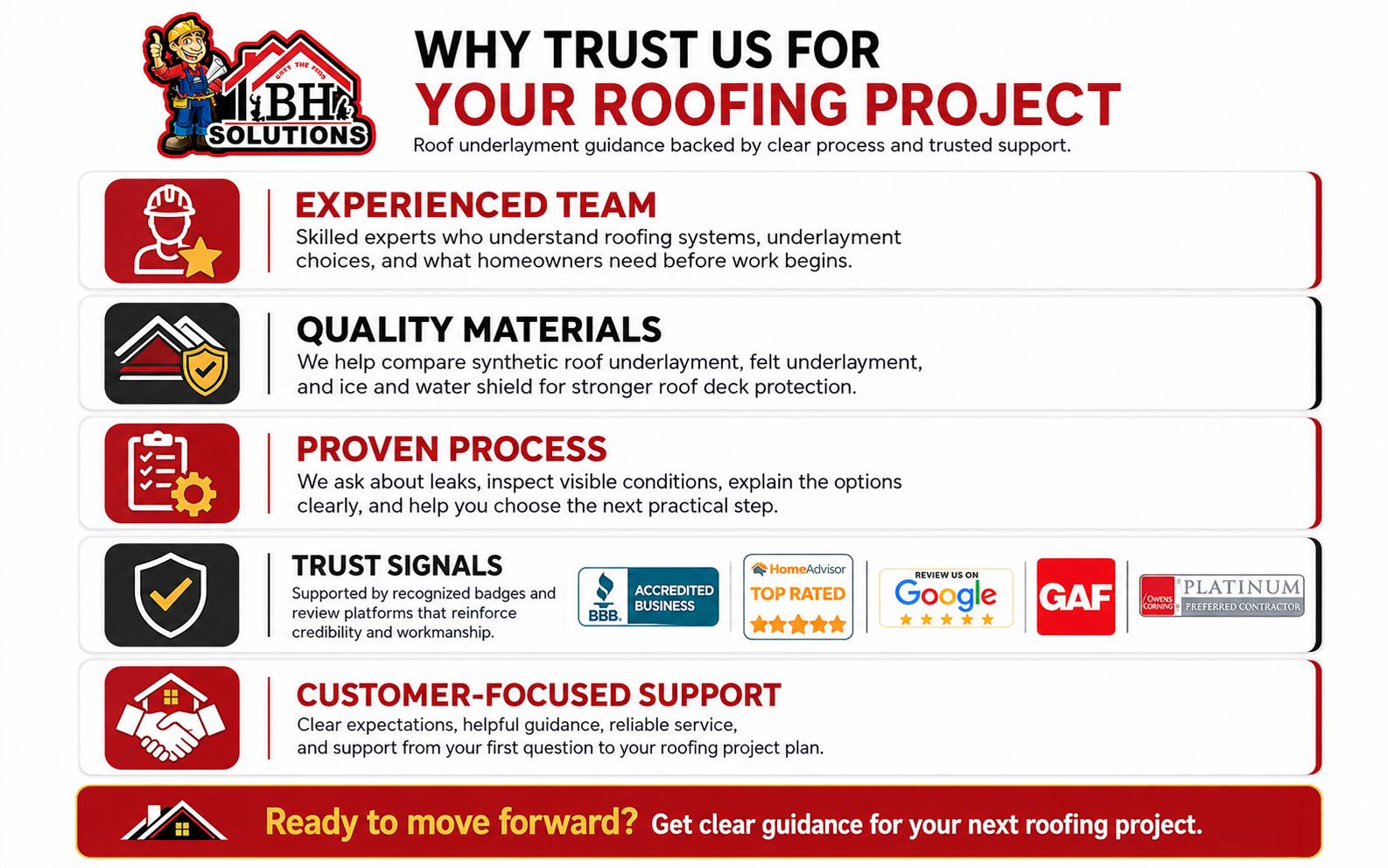
A clear roofing process helps homeowners know what happens before crews install any roof material. When homeowners contact BH Solutions, LLC, we ask about leaks, roof age, visible damage, recent storms, and the type of roof work being considered.
After that first conversation, we review the project needs and explain the next step. During the inspection or project review, we look at the roof surface, decking concerns, moisture signs, and problem areas. Then we explain underlayment options in simple terms.
- We ask about leaks, stains, and weather damage.
- We check visible roof conditions and access points.
- We explain felt, synthetic, and ice barrier options.
- We review safe repair or replacement paths.
- We help you decide the next practical step.
This process keeps the project easier to understand. It also helps prevent rushed choices that may affect long-term roof moisture control.
Frequently Asked Questions
What type of underlayment works best under shingles?
The best shingle underlayment depends on roof slope, climate, deck condition, and project goals. Synthetic materials often provide better tear resistance, while felt can work for simpler projects. For complete roof planning, visit Roofing Services.
Is synthetic roof underlayment better than felt underlayment?
Synthetic roof underlayment is often stronger, lighter, and more resistant to tearing than felt underlayment. Felt may still be suitable when crews handle it carefully and cover it quickly. The better choice depends on weather exposure, roof design, and the installer’s recommendation.
Where should ice and water shield be installed?
Crews commonly install ice and water shield at eaves, valleys, chimneys, skylights, vents, and other leak-prone areas. These areas handle more water stress. To plan next steps, use Contact Us and share your roof concerns.
Can underlayment stop every roof leak by itself?
Underlayment reduces leak risk, but it does not replace shingles, flashing, ventilation, or proper installation. A waterproof roof barrier works best as part of a complete system. Homeowners should check roof leaks early before deck damage spreads.
When should roof deck protection be replaced completely?
Roofers usually replace roof deck protection during a full roof replacement or when damage, moisture, or age affects performance. A project review can reveal soft decking, torn material, or poor layering. Learn planning factors at roof replacement cost factors in Connecticut.
Start Your Roofing Project With Clear Material Guidance
A helpful roof underlayment guide gives you confidence before work begins. With BH Solutions, LLC, you can ask clear questions, compare materials, and understand how each layer protects your home. When you are ready to review your roof, use Contact Us to request guidance from our team.